Surnames: The History and Evolution of Family Names
A surname, also known as a family name, is the hereditary portion of a person's name that identifies their family lineage. While often referred to as a "last name" in English, the placement and structure of these names vary significantly across global cultures. In most modern societies, surnames are passed down through generations, though legal frameworks in many countries now allow individuals to change their names.
The composition of a full name typically combines a given name with one or more surnames. However, naming customs are diverse; for instance, in many Spanish- and Portuguese-speaking countries, individuals legally carry two surnames—one from each parent. In other cultures, the family name is placed at the beginning of the full name rather than the end.
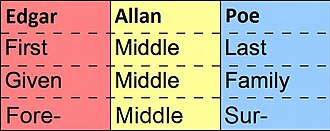
Key Facts
- Global Variation: Surnames can appear at the start or end of a name depending on the culture.
- Diverse Origins: Family names often derive from occupations, locations, parentage, or physical characteristics.
- Legal Evolution: Many countries have updated laws to allow gender-neutral name transmission and the right to change surnames.
- Cultural Specifics: Some languages use gender-specific suffixes (e.g., Slavic and Baltic languages) to distinguish male and female family members.
The Origins of Family Names
Ancient Traditions in China
Legend suggests that Chinese family names began with Emperor Fu Xi around 2000 BC to streamline census-taking. While originally matrilineal (passed through the mother), the system shifted to patrilineal (passed through the father) by the Shang dynasty (1600 to 1046 BC). Notably, Chinese women traditionally do not change their surnames upon marriage.
The Development of Surnames in the British Isles
In England, the widespread adoption of surnames is largely linked to the Norman Conquest and the creation of the Domesday Book in 1086. Initially used by the nobility and gentry, surnames eventually spread to the general population. Early Norman nobles often used territorial surnames, adding "de" (meaning "of") before the name of their French village to denote landownership.
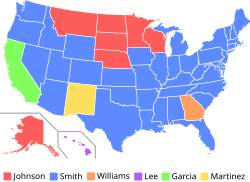
A comprehensive study by the University of the West of England, concluding in 2016, analyzed over 45,000 surnames. The research found that more than 90% of surnames in Britain and Ireland are native. Common UK names like Smith, Jones, Williams, Brown, Taylor, Davies, and Wilson fall into several distinct categories:
- Occupational: Based on a trade (e.g., Smith, Baker).
- Toponymic: Linked to a place or landmark (e.g., Hill, Green).
- Patronymic: Derived from the father's name (e.g., Jackson, Jenkinson).
- Descriptive: Based on a physical trait or nickname (e.g., Brown, Short, Thin).
Global Naming Systems and Gender Variations
Patronymics and Matronymics
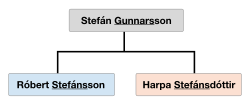
Many cultures use patronymics (names derived from the father) or matronymics (names derived from the mother). In Iceland, this system is central to identity, where children take a name based on their parent's first name rather than a fixed family surname.
Gender-Specific Suffixes
In several languages, surnames change form based on the gender of the bearer. This is common in Slavic, Baltic, and Greek traditions.
| Language | Male Form | Female Form |
|---|---|---|
| Icelandic | Suffix -son | Suffix -dóttir |
| Greek | Suffixes -os, -as, -is | Suffixes -ou, -a, -i |
| Lithuanian | Suffixes -as, -ys, -is, -us | Suffixes -ienė, -uvienė, -aitė, -utė, -iūtė, -ytė, -ė |
| Bulgarian/Macedonian | Suffixes -ov, -ev, -ski | Suffixes -ova, -eva, -ska |
| East Slavic | Suffixes -ov, -ev, -in, -y | Suffixes -ova, -eva, -ina, -aya |
| Czech/Slovak | Suffixes -ov, -ý, -ský, -cký | Suffixes -ová, -á, -ská, -cká |
Surname Laws and Modern Changes
Legal requirements regarding surnames have evolved to promote equality. In France, a law change on January 1, 2005, ended the requirement for children to take only the father's name; parents can now choose the father's, mother's, or a hyphenated combination of both.
Similarly, the Czech Republic saw a significant shift on January 1, 2022. Previously, women were legally required to use the feminine ending -ová (a practice known as přechýlení). Women can now choose between the feminine or neutral form of their family name.
Frequently Asked Questions
What is a patronymic surname?
A patronymic surname is a family name that is derived from the given name of a father or male ancestor, such as "Jackson" (son of Jack).
Do all cultures place the surname last?
No. While common in Anglophonic cultures, many societies place the family name at the beginning of the full name.
How do surnames work in Spanish-speaking countries?
In many Spanish-speaking cultures, individuals use two surnames for legal purposes: one inherited from the father and one from the mother.
What are toponymic surnames?
Toponymic surnames are names derived from a specific geographical location, village, or landmark, such as "Hill" or "Green."
Can a person legally change their surname?
Yes, in most modern countries, individuals have the legal right to change their surname, often through a formal legal process.