Understanding Cognates: How Words Share a Common Ancestry
Have you ever noticed how the English word "night" sounds remarkably similar to the German "Nacht" or the French "nuit"? These linguistic similarities are often more than just coincidences; they are clues to the shared history of human speech. In historical linguistics, these related words are known as cognates.
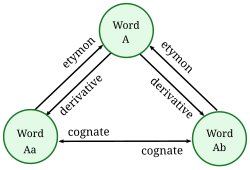
Cognates, or lexical cognates, are sets of words that have been inherited in direct descent from a common ancestor in a parent language. The term itself is derived from the Latin cognatus, which literally means "blood relative." Just as family members share DNA, cognates share an etymon—the original ancestor word from which they all descend.
Key Facts
- Definition: Cognates are words in different languages that descend from the same ancestral word.
- Etymology: The term comes from the Latin cognatus, meaning "blood relative."
- Identification: Linguists use the comparative method to prove words are cognates, as sound and meaning can change significantly over time.
- Distinction: Cognates are different from loanwords (words borrowed from another language) and false cognates (words that look similar but have different origins).
Real-World Examples of Cognates
Because languages evolve over thousands of years, cognate sets can vary in how clearly they resemble one another. Some are nearly identical, while others require deep study to uncover their connection.
The Indo-European "Night"
One of the most famous examples involves the Proto-Indo-European root *nókʷts, which meant "night." This single ancestor gave rise to a vast array of cognates across major languages:
- German: Nacht
- Swedish: natt
- Russian: ночь (noch)
- Latin: nox
- French: nuit
- Sanskrit: नक्त (nakt-)
- Greek: νύχτα (nychta)
The Semitic "Peace"
In the Semitic language family, the Proto-Semitic root *šalām- produced several recognizable cognates, all maintaining the meaning of "peace":
- Arabic: سلام (salām)
- Hebrew: שלום (shalom)
- Amharic: ሰላም (selam)
- Assyrian Neo-Aramaic: ܫܠܡܐ (shlama)
The Tupi "Butterfly"
In the Tupi language family, the word panapana from Old Tupi has branched into several descendant words, such as the Paraguayan Guarani panambi and the Eastern Bolivian Guarani panapana. Interestingly, the Brazilian Portuguese word panapanã (referring to a flock of butterflies) is actually a borrowing rather than a true cognate.
Why Cognates Aren't Always Obvious
It is a common misconception that cognates must look and sound the same. In reality, language change can be radical, affecting both the sound and the meaning of a word.
Semantic Change (Shifting Meanings)
As languages develop independently, the meanings of cognates can drift. This is known as semantic change. For example, the English word starve and the Dutch word sterven both descend from the Proto-Germanic verb *sterbaną (meaning "to die"). However, through a process called semantic narrowing, the English word now refers specifically to death caused by malnutrition, while the Dutch word retains the broader meaning of "to die."
Phonetic Change (Shifting Sounds)
Words can also undergo significant phonetic change—the alteration of sounds over time. English father, French père, and Armenian hayr all descend from the Proto-Indo-European *ph₂tḗr. In more extreme cases, such as English two and Armenian erku, the connection is only visible through the study of regular sound changes from their common ancestor, *dwóh₁.
Morphosyntactic Evidence
Sometimes, even when the sounds of words have changed beyond recognition, linguists can identify cognates through morphosyntax—the complex relationship between grammar and sentence structure. For instance, the Tangut language and the Geshiza language (spoken in Sichuan) share specific verbal patterns to indicate tense. Even without matching phonetic stems, these shared structural rules suggest the languages share a common origin.
Distinguishing Cognates from Other Word Relationships
To study linguistics accurately, one must distinguish cognates from several other types of linguistic connections.
False Cognates
False cognates are words that appear to be related because they look or sound similar, but actually stem from different roots. A classic example is the comparison between Latin habēre and German haben (both meaning "to have"). While they look alike, haben comes from the PIE root *kh₂pyé- ("to grasp"), whereas habēre comes from *gʰabʰ ("to give/receive"). Similarly, English much and Spanish mucho are not cognates, despite their similarity.
Loanwords and Doublets
A loanword is a word taken directly from one language and incorporated into another, such as English beef, which was borrowed from Old French boef. This is different from a doublet, which refers to two words in the same language that come from a single source. For example, because cow is the native English word and beef is the borrowed version of the same ancestor, they are considered doublets.
Translations
Translations (or semantic equivalents) are words in different languages that share the same meaning but have no historical connection. For instance, the English cow and the French vache mean the same thing, but they are not cognates.
Etymons, Roots, and Derivatives
In linguistic analysis, it is important to distinguish between the source of a word and the variations created from it.
An etymon is the ultimate ancestor word. For example, the Proto-Celtic *kaballos is the etymon for both the Welsh ceffyl and the Irish capall. As these descendants move across language barriers, they often undergo phonetic erosion, a natural wearing away of sounds over time.
In contrast, a root refers to the source of related words within a single language. When new words are created from that root using morphological derivation—the use of prefixes, suffixes, or vowel changes—they are called derivatives. For example, unhappy, happily, and unhappily are all derivatives of the root word happy.
Summary of Linguistic Relationships
| Term | Definition | Example |
|---|---|---|
| Cognate | Words in different languages from a common ancestor. | English night / German Nacht |
| Loanword | A word borrowed from one language into another. | English beef (from French) |
| Doublet | Two words in one language from the same source. | English cow / beef |
| False Cognate | Words that look similar but have different origins. | English much / Spanish mucho |
| Translation | Words with the same meaning but different origins. | English cow / French vache |
Frequently Asked Questions
What is the difference between a cognate and a loanword?
Cognates are words that are inherited from a common ancestor language (like "descendants" of a family), whereas loanwords are words that one language has intentionally borrowed from another (like "adopting" a new word).
Can cognates have different meanings?
Yes. Through a process called semantic change, the meaning of a word can shift as it evolves in different languages. For example, English starve and Dutch sterven share an ancestor, but their meanings have narrowed or changed differently.
What is a false cognate?
A false cognate is a pair of words that look or sound similar but actually come from completely different ancestral roots. They are linguistic "look-alikes" rather than actual relatives.
What is an etymon?
An etymon is the original ancestor word from which one or more cognates are derived. It is the "source" word in the historical lineage.
What is the difference between a root and a derivative?
A root is the core part of a word within a single language. A derivative is a new word created from that root by adding elements like prefixes or suffixes, such as turning happy into unhappy.