Sun Belt: The Growth and Evolution of America's Southern Tier
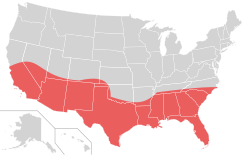
The Sun Belt is a vast region stretching across the southern tier of the United States, encompassing the Southeast and Southwest. Defined broadly as the area south of the 36°30′ north parallel, this region has transformed from a primarily agricultural landscape into a global powerhouse of industry, technology, and population growth.
The region is characterized by its diverse climates, ranging from the arid deserts of Nevada and Arizona to the humid subtropical environments of Georgia and Florida, and the tropical warmth of South Florida. This environmental variety supports a wide array of lifestyles and industries, making it a primary destination for millions of Americans.
Key Facts
- Geography: Spans the southern U.S., including the "Sand States" (Arizona, California, Florida, Nevada, and Texas).
- Growth Drivers: Air conditioning, retiring baby boomers, and expanding economic opportunities in aerospace, defense, and oil.
- Migration: Significant population shift from the "Frost Belt" and "Rust Belt" toward the South and West.
- Biodiversity: Home to some of the highest biodiversity in the U.S., featuring ecosystems from temperate rainforests to deserts.
- Economic Power: Texas and California are among the top five states for Fortune 500 company headquarters.
Defining the Sun Belt
While definitions vary, the Sun Belt generally includes Alabama, Arizona, Florida, Georgia, Louisiana, Mississippi, New Mexico, South Carolina, and Texas. It also covers roughly two-thirds of California (up to Greater Sacramento) and southern portions of Arkansas, North Carolina, Nevada, Oklahoma, Tennessee, and Utah. Some definitions extend to include parts of Colorado, Kansas, Missouri, and Virginia.
The term was first coined by political analyst Kevin Phillips in 1969. By the early 1970s, it became synonymous with a shift in economic and political power away from the Midwest and Northeast toward the South and West.
Drivers of Population and Economic Growth
Post-World War II, the Sun Belt experienced a massive influx of residents. This migration was fueled by a desire for warmer climates and the surge of retiring baby boomers. However, a critical technological catalyst was the advent of air conditioning, which made summer temperatures bearable and allowed manufacturing and heavy industry to relocate to the region.
Economic Evolution
The region's economy grew through several distinct waves:
- Agriculture and Labor: Early growth was spurred by a booming agricultural sector and the migration of workers from Mexico.
- Defense and Energy: The aerospace and defense industries flourished due to the proximity of military installations and a lower prevalence of labor unions. Simultaneously, the oil industry propelled Texas and Louisiana.
- High Tech: In recent decades, the "new economy" and high-tech sectors have driven growth in California, Texas, and Florida.
Recent data highlights this ongoing trend. Between July 2024 and July 2025, 10 of the 15 fastest-growing cities (by percentage) and 11 of the 15 largest numeric increases were located in the Sun Belt. Furthermore, 86% of the top 50 zip codes with the largest population increases since the start of the COVID-19 pandemic were in Texas, Florida, and Arizona.
Environmental Diversity and Challenges
The Sun Belt is an ecological treasure, boasting the highest number of distinct ecosystems in the U.S., including chaparral, deciduous forests, grasslands, and both temperate and tropical rainforests. Eight of the region's states exhibit extremely high biodiversity, with species counts ranging from 3,800 to 6,700.
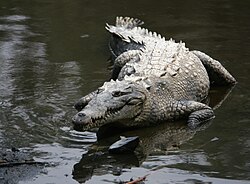
This biodiversity includes several endangered species, such as the California condor, the Florida panther, the West Indian manatee, and the Whooping crane.
The Water Crisis
Rapid growth has brought significant environmental strain, most notably water shortages. California has pursued the construction of desalination plants (facilities that remove salt from seawater to create fresh water) to avoid crises. Texas, Georgia, and Florida also face serious shortages due to high per-capita consumption and expanding populations.
Politics and Demographics
Historically, the Sun Belt has been more conservative than the rest of the U.S., a trend often linked to the high percentage of evangelical Christians in the region. However, increasing racial diversity and a growing divide between urban and rural political leanings have made several states more competitive.
While most Sun Belt states (excluding California and New Mexico) continue to vote to the right of the national average, recent elections have shown shifts. For example, Joe Biden narrowly won Arizona and Georgia in the 2020 election, though Donald Trump won Arizona, North Carolina, Nevada, and Georgia in 2024.
Major Metropolitan Hubs
The region is home to some of the largest and most economically productive cities in the world. Los Angeles remains the largest metro area, followed by Dallas, Houston, Atlanta, and Miami.
| Principal City | Metro Population (Millions) | GMP (2022 US$ Billion) |
|---|---|---|
| Los Angeles | 13.9 | $1,227 |
| Dallas–Fort Worth | 7.9 | $688.9 |
| Houston | 7.3 | $633.5 |
| Atlanta | 6.2 | $525.9 |
| Miami | 6.1 | $483.8 |
| San Francisco | 4.6 | $729.1 |
| Phoenix | 5.0 | $362.5 |
Frequently Asked Questions
What are the "Sand States"?
The Sand States are Arizona, California, Florida, Nevada, and Texas, so named because of their abundance of deserts and beaches.
Why did so many people move to the Sun Belt after WWII?
Migration was driven by the appeal of warm weather, the arrival of retiring baby boomers, new economic opportunities, and the widespread adoption of air conditioning, which made the climate manageable for industry and residents.
What is the primary environmental threat to the region?
Water shortages are the greatest threat, caused by rapidly expanding populations and high per-capita water usage, particularly in states like California, Texas, Georgia, and Florida.
How has the political landscape of the Sun Belt changed?
While historically conservative, the region has become more politically competitive in certain states due to increasing racial diversity and political realignment along urban and rural lines.
Which industries originally fueled the Sun Belt's economy?
Early economic growth was driven by agriculture, followed by a boom in the aerospace, defense, and oil industries, and more recently, high-tech and "new economy" sectors.