Streckfus Steamers: The Legacy of Riverboat Excursions and Jazz
For decades, the rhythmic chug of paddle wheels and the distant wail of a calliope defined the atmosphere of the Mississippi and Ohio Rivers. At the center of this era was Streckfus Steamers, a company that transformed the utilitarian business of river transport into a floating entertainment empire. Founded in 1910 in St. Louis, Missouri, by John Streckfus Sr., the company bridged the gap between the industrial age of packet boats and the golden age of riverboat jazz.
Key Facts
- Founded: 1910 in St. Louis, Missouri, by John Streckfus Sr.
- Primary Service Areas: The Mississippi and Ohio Rivers.
- Business Pivot: Transitioned from freight "packet" service to entertainment excursions around 1900.
- Musical Influence: Provided a critical early platform for jazz legends, including Louis Armstrong.
- Operational Span: Operated through 1978.
From Freight to Floating Festivals
John Streckfus Sr. began his career in the 1880s operating a steam packet business—vessels used primarily for transporting freight and passengers. His first boat, the 120-foot Verne Swain, purchased in 1889, ran daily between Davenport and Clinton, Iowa. While efficient, Streckfus found the profit margins for freight meager.
Around 1900, Streckfus envisioned a new business model: the river excursion. He began by installing a calliope (a steam-powered organ) on the City of Winona to attract crowds. This led to the commissioning of the J.S. in 1901, the first Mississippi steamboat built specifically for excursions. The J.S. featured a massive maple dance floor, electric lights, and sleeping berths for entertainers, setting the standard for future luxury vessels.
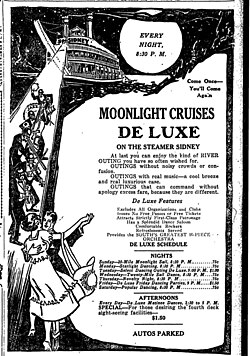
Expanding the Fleet: The Diamond Jo Acquisition
In 1911, Streckfus Steamers capitalized on the decline of the packet industry by purchasing a fleet from the Diamond Jo Line for $200,000. This acquisition included the Dubuque, the Sidney, the St. Paul, and the Quincy, along with various docks and warehouses.
Notable Vessels of the Fleet
- SS St. Paul: A 300-foot side-wheeler converted for excursions in 1917, later renamed the Senator.
- J.S. Deluxe: A conversion of the Quincy designed specifically for the wealthy elite of St. Louis.
- S.S. Capitol: Born from the Dubuque, this boat served the Upper Mississippi and New Orleans, hosting legendary New Orleans bands.
- Sidney: A 221-foot sternwheeler that served as a vital training ground for early jazz musicians in New Orleans.
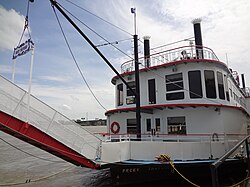
The Golden Era of Riverboat Jazz
Streckfus Steamers did more than move people; they moved music. Starting in 1901, the company hired live entertainment, eventually employing Fate Marable, a disciplined bandleader and talent scout. Marable was instrumental in hiring a young Louis Armstrong, as well as other pioneers like Baby Dodds and Johnny St. Cyr.
The musical environment was one of strict professionalism. John Streckfus demanded total decorum, forbidding gambling and drunkenness. Marable enforced these rules with an iron fist, often firing musicians by leaving a hatchet on their chair—a literal "giving them the axe." While the company insisted on playing arrangements exactly as written, the sheer talent of musicians like Armstrong occasionally broke through these rigid constraints.
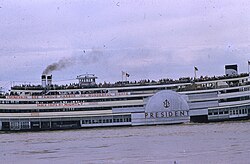
Modernization and the Final Voyages
As the industry evolved, the company introduced steel-hulled vessels to increase safety and capacity. The President, launched in 1934, could accommodate 3,100 passengers and eventually moved to New Orleans, where it became a venue for the New Orleans Jazz Festival.
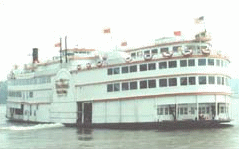
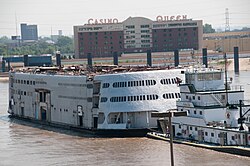
The SS Admiral, debuting in 1940, represented the pinnacle of the fleet's luxury. It featured an Art Deco finish, an air-conditioned cabin, and a fifth deck equipped with coin-operated telescopes for sightseeing. However, by the late 1970s, the popularity of river excursions waned, and hull weaknesses led to the retirement of the Admiral in 1979.
Streckfus Steamers Fleet Summary
| Vessel Name | Type/Origin | Key Feature/Role | Notable Detail |
|---|---|---|---|
| J.S. | Custom Built | First dedicated excursion boat | Lost to fire in 1910 |
| S.S. Capitol | Converted Packet | New Orleans/Upper Mississippi | Hosted Fate Marable's band |
| President | Steel-hulled | High-capacity luxury | Accommodated 3,100 passengers |
| SS Admiral | Steel superstructure | Art Deco luxury | Featured air-conditioned cabin |
Frequently Asked Questions
Who founded Streckfus Steamers?
The company was founded in 1910 by John Streckfus Sr., who had previously operated a steam packet business starting in the 1880s.
How did the company influence the history of jazz?
Streckfus Steamers provided steady employment and a high-profile platform for early jazz musicians. Through bandleader Fate Marable, the company hired and developed legendary talents, most notably Louis Armstrong.
What was a "packet" boat?
A packet boat was a type of steamboat used primarily for the scheduled transport of freight and passengers between specific river ports.
Why did the company transition from freight to excursions?
John Streckfus Sr. found that running freight was not very profitable, especially when competing with the growing railroad industry, leading him to pivot toward the entertainment and tourism market.
What happened to the SS Admiral?
The SS Admiral was retired in 1979 due to weaknesses in its hull and was later sold to John E. Connelly in 1981.