Fate Marable: The Jazz Bandleader of the Mississippi Riverboats
Fate Marable was more than just a musician; he was a pivotal figure in the evolution of American jazz. As a pianist and bandleader, Marable transformed the musical landscape of the Mississippi River, turning the luxury steamboats of the early 20th century into floating conservatories for some of the greatest jazz talents in history.
Early Life and Musical Foundations
Born Fate Clifford Marable on December 2, 1890, in Paducah, Kentucky, Marable was raised in a household where music was a priority. His mother, Elizabeth "Lizzie" Marable, was a piano teacher who provided him with a formal education in both reading music and piano performance. This foundation of literacy in music would later become a hallmark of his leadership style.
Conquering the Calliope
Marable's professional journey began at age 17 when he was hired by John and Joseph Streckfus to replace their pianist on the Mississippi River steamboats. However, the job came with a daunting requirement: Marable had to play the calliope, a musical instrument that produces sound by sending steam through whistles.
Operating a calliope was a physically demanding and hazardous task. The machine operated at 80 pounds of steam pressure, making the keys hot and difficult to depress. Because the pitch fluctuated based on steam pressure, staying in tune was a constant struggle. Furthermore, the instrument was designed to be heard from the shore, meaning the volume was deafening to the operator. To survive the environment, Marable wore raingear, stuffed his ears with cotton, and wore gloves to protect his hands from the heat and steam.
The Streckfus Line and the "Riverboat Conservatory"
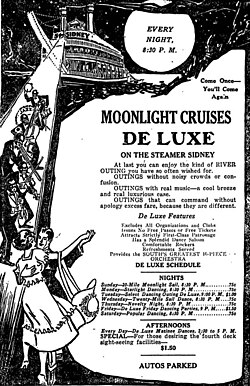
In 1907, Marable ascended to the role of bandleader for a paddlewheeler on the Streckfus Line, which operated between New Orleans, Louisiana, and St. Paul, Minnesota. He held this prestigious position for 33 years, using the riverboats as a platform to scout and refine musical talent.
Marable was known as a strict disciplinarian who demanded high levels of musical proficiency. While many of the musicians he recruited played by ear, Marable insisted they learn to read sheet music on sight. This rigorous training was so well-regarded that New Orleans musicians often joked that getting a job with Marable was equivalent to attending a conservatory.
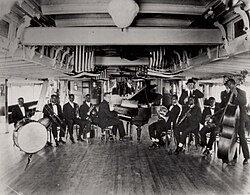
His ability to balance discipline with artistic freedom allowed his musicians to flourish. For example, he recognized the unique improvisational genius of a young Louis Armstrong, whom Marable discovered in New Orleans clubs and recruited for evening excursions. Rather than forcing Armstrong to play note-for-note, Marable encouraged him to improvise his breaks.
Legacy and Influence
The influence of Fate Marable extended far beyond the riverboats. His alumni went on to join the orchestras of legendary bandleaders including Duke Ellington, Count Basie, Cab Calloway, Fats Waller, Chick Webb, and Jimmie Lunceford. His mentorship helped shape the careers of jazz icons such as Baby Dodds, Johnny Dodds, and Erroll Garner.
Though he spent most of his career performing and leading others, Marable co-wrote one original composition with Clarence Williams in 1916 titled Barrell House Rag. His music also left a lasting impression on future theorists, including George Russell, the creator of the Lydian Concept.
Key Facts
- Active Years: 1907–1940.
- Primary Instruments: Piano and calliope.
- Key Contribution: Trained numerous jazz musicians in sight-reading and professional discipline.
- Notable Discovery: Recruited Louis Armstrong for riverboat excursions.
- Major Composition: "Barrell House Rag" (1916).
- Career Tenure: Led the Streckfus Line band for 33 years.
| Category | Details |
|---|---|
| Born | December 2, 1890 (Paducah, Kentucky) |
| Died | January 16, 1947 (St. Louis, Missouri) |
| Role | Jazz Pianist and Bandleader |
| Key Employer | Streckfus Steamers Line |
| Musical Style | Diverse (Hot jazz to light classics) |
Frequently Asked Questions
What was a calliope and why was it difficult to play?
A calliope is a steam-powered instrument that uses whistles to produce sound. It was difficult to play because the keys were hot, the volume was overwhelming, and the pitch changed based on the steam pressure, requiring the player to wear protective gear and ear protection.
How did Fate Marable influence Louis Armstrong?
Marable discovered Armstrong in New Orleans and hired him for riverboat excursions. He provided Armstrong with a professional platform and allowed him the freedom to improvise his musical breaks rather than strictly following the sheet music.
Why was Marable's band called a "conservatory"?
It earned this nickname because Marable required all his musicians—many of whom previously played only by ear—to learn how to read and perform music from sheet music on sight.
What was the only original song Fate Marable published?
Marable co-wrote the "Barrell House Rag" with Clarence Williams in 1916.
Where did Fate Marable spend the majority of his career?
He spent 33 years as a bandleader for the Streckfus Line, performing on paddlewheelers that traveled between New Orleans, Louisiana, and St. Paul, Minnesota.