Still Life Art: A History of Inanimate Beauty
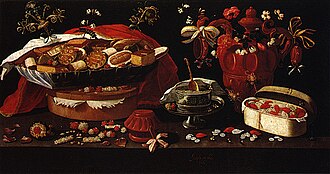
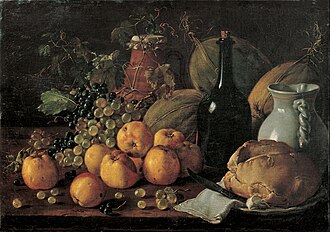
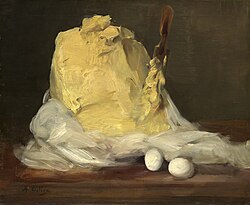
A still life is a work of art that focuses on inanimate subject matter. These compositions typically feature commonplace objects, which can be natural—such as food, flowers, dead animals, plants, rocks, and shells—or human-made, including drinking glasses, books, vases, jewelry, coins, and pipes. While the genre allows artists immense freedom to experiment with composition and arrangement, it has evolved from simple decoration to a complex vehicle for symbolism and technical innovation.
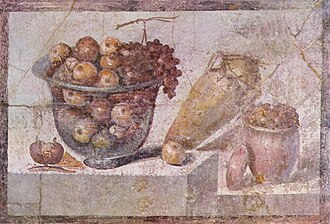
The origins of still life can be traced back to Ancient Greco-Roman art and the Middle Ages. However, it emerged as a distinct professional specialization in Western painting by the late 16th century. The English term "still life" is derived from the Dutch word stilleven, while Romance languages typically use terms meaning "dead nature" (such as nature morte).

Key Facts
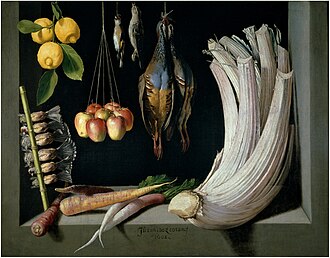
- Definition: Art depicting mostly inanimate, commonplace objects.
- Origins: Rooted in Greco-Roman art; formalized as a genre in the 16th-century Low Countries.
- Vanitas: A sub-genre using symbols like skulls to represent mortality and the fleeting nature of life.
- Evolution: Progressed from religious symbolism to pure aesthetics, then to geometric deconstruction (Cubism) and commercial commentary (Pop Art).
- Modern Media: Now includes photography, 3D computer graphics, video, and installation art.
Antecedents and Early Development
Before still life became an autonomous genre, inanimate objects often served as symbols. By the 16th century, food and flowers were frequently used to represent the five senses or the changing seasons. A significant tradition beginning in Roman times was the use of the skull as a symbol of mortality, often accompanied by the phrase Omnia mors aequat ("Death makes all equal"). These are known as vanitas images, which were later re-interpreted by Dutch painters around 1600.
Middle Ages and Early Renaissance
During this period, still-life elements appeared primarily as borders in illuminated manuscripts or within larger tapestries. Flemish artists in the 1470s, for example, included detailed vessels in the borders of books of hours, showcasing an early interest in the precise rendering of objects.
![Hans Memling (1430–1494), Vase of Flowers (1480), Museo Thyssen-Bornemisza, Madrid. According to some scholars the Vase of Flowers is filled with religious symbolism.[10]](/images/8a/10/8a1046548fb151f0da84ea0fe1a2b6bc904b7bbfd14ba08936aacb2d90147324.jpg)
The Rise of the Genre: 16th and 17th Centuries
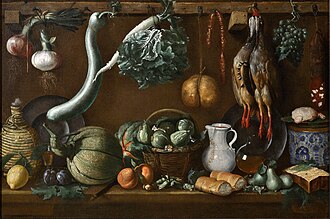
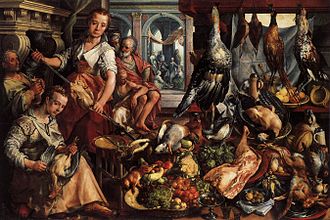
The 16th century saw the rise of the "monumental still life," particularly in Antwerp. Artists like Pieter Aertsen and Joachim Beuckelaer created large-scale paintings of kitchen or market scenes. These works often featured an abundance of food and kitchenware in the foreground, while a small religious scene or a theme like the Four Seasons was tucked into the background to elevate the subject matter.
The Dutch and Flemish Golden Age
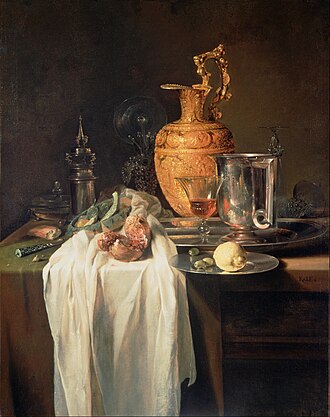
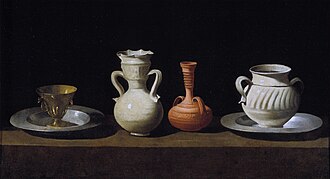
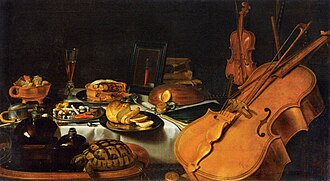
In the Low Countries, still life became a separate category in the late 16th century. This region led Europe in both botany and botanical illustration, which heavily influenced the precision of flower paintings. Early works before 1700 often contained religious or allegorical symbolism. Over time, the religious content diminished, and artists focused more on the illusionistic quality of the objects.
Southern European Influence
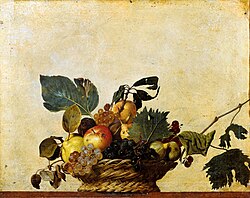
In Italy, Caravaggio applied a powerful form of naturalism to the genre. His Basket of Fruit (c. 1595–1600) is considered one of the first examples of "pure" still life, rendered precisely at eye level. Other Italian artists, such as those influenced by the Antwerp style, began removing moral messages in favor of aesthetic study.
From the 18th Century to the Modern Era
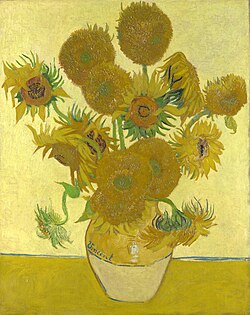
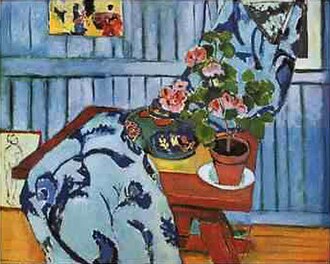
By the 18th century, artists like Jean-Baptiste-Siméon Chardin focused on the quiet beauty of everyday objects. The 19th century brought a shift toward emotional and personal expression. Vincent van Gogh, for instance, used bold yellows and flat rendering in his famous Sunflowers series, and created "self-portraits in still-life form" by painting objects from his personal life.
The 20th Century Revolution
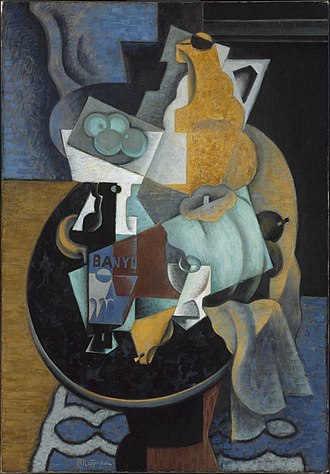
The 20th century saw a radical deconstruction of the genre. Cubists, including Pablo Picasso and Georges Braque, broke objects down into geometric planes, often featuring musical instruments. This was a stark contrast to traditional still life, as objects merged into the background and lost their surface texture.
Following the era of total abstraction in the 1950s, Pop Art returned to the subject matter in the 1960s. However, artists like Andy Warhol focused on the commodified image of commercial products (such as soup cans) rather than the physical object itself.
Still Life in the 21st Century
![Diego Velázquez, Old Woman Frying Eggs (1618), (National Gallery of Scotland), is one of the earliest examples of bodegón.[43]](/images/31/c1/31c131e9c32c8d5d347c33311f2d5ca489885492d7a6faa7ac56a5d4424f643f.jpg)
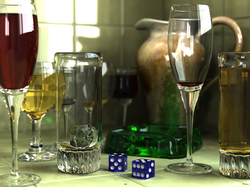
Today, still life extends beyond the canvas. It encompasses 3D sculpture, performance, and installation art. Digital technology has introduced synthetic still lifes, where 2D and 3D computer graphics create photorealistic images. Some contemporary works use mixed media, incorporating sound, video, and found objects to fill entire gallery rooms.
| Period | Primary Focus | Key Characteristics |
|---|---|---|
| Ancient/Middle Ages | Symbolism & Borders | Decorative elements in manuscripts and mosaics. |
| 16th-17th Century | Naturalism & Allegory | Vanitas symbols, monumental kitchen scenes, botanical precision. |
| 18th-19th Century | Aesthetics & Emotion | Everyday objects, bold colors, personal expression. |
| 20th Century | Deconstruction & Consumerism | Cubist geometry, Pop Art commercial imagery. |
| 21st Century | Digital & Multimedia | Computer-generated graphics, installations, video art. |
Frequently Asked Questions
What is the difference between still life and animal art?
Still life focuses on inanimate subjects, which includes dead animals (such as game). Live animals are categorized as animal art, although historically, many artists used dead models to paint live animals.
What does "Vanitas" mean in the context of still life?
Vanitas refers to a type of still life painting that uses symbols—most notably skulls—to remind the viewer of mortality, the fleeting nature of life, and the worthlessness of worldly goods.
How did Cubism change still life painting?
Cubism moved away from the traditional goal of realistic representation. Instead, it deconstructed objects into pure geometrical forms and overlapping planes, often merging the subject with the background.
Is digital art considered still life?
Yes. Modern still life includes computer-generated graphics, 3D photorealistic effects, and digital manipulations, extending the genre into the virtual realm.
Why was the Dutch Golden Age so important for this genre?
The Low Countries were leaders in botany and scientific illustration. This expertise, combined with the development of highly illusionistic painting techniques, allowed still life to emerge as a professional specialization.