Steven Weinberg: Architect of the Electroweak Theory
Steven Weinberg (1933–2021) was a titan of 20th-century theoretical physics whose work fundamentally reshaped our understanding of the universe's basic building blocks. An American physicist known for his intellectual rigor and prolific writing, Weinberg provided the theoretical framework that unified two of the four fundamental forces of nature, earning him the Nobel Prize in Physics in 1979.
His journey from a curious student in the Bronx to a world-renowned professor at the University of Texas at Austin is a testament to the power of mathematical inquiry. Weinberg's legacy extends beyond a single discovery; he authored definitive textbooks and popular science works that bridged the gap between complex academic research and public understanding.
Key Facts
- Nobel Prize: Shared the 1979 Nobel Prize in Physics for the unification of weak and electromagnetic interactions.
- Major Contribution: Developed the electroweak unification theory, which predicted the existence of the Higgs boson and the Z boson.
- Academic Legacy: Authored the seminal three-volume series The Quantum Theory of Fields.
- Key Concepts: Pioneered the modern view of effective field theories through his "folk theorem."
- Education: Earned a BA from Cornell University and a PhD from Princeton University.
Early Life and Intellectual Awakening
Born in New York City in 1933 to Jewish immigrant parents, Weinberg's fascination with science began with popular literature. He was particularly influenced by the works of George Gamow and James Jeans. A pivotal moment occurred when he encountered Heisenberg's uncertainty principle; the mathematical contradiction of the equation qp-pq=ih/2π sparked a lifelong drive to master the "deep stuff" of physics.
Weinberg graduated from the Bronx High School of Science in 1950. Interestingly, his classmate was Sheldon Glashow, with whom he would later share the Nobel Prize, although their research into unification was conducted independently.
The Path to Electroweak Unification
After completing his PhD under Sam Treiman and holding postdoctoral positions at Columbia University and the University of California, Berkeley, Weinberg began exploring the high-energy behavior of quantum field theory (the theoretical framework combining classical field theory, special relativity, and quantum mechanics).
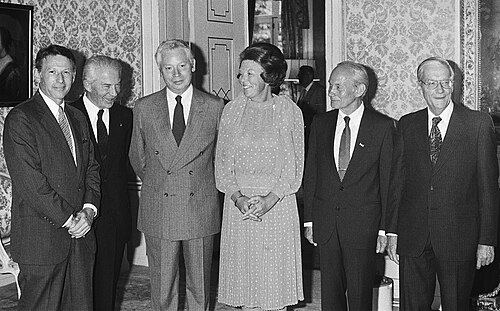
In 1967, while a visiting professor at MIT, Weinberg proposed a model that unified electromagnetism and the nuclear weak forces—the forces responsible for processes like beta-decay. He utilized spontaneous symmetry breaking to explain why the force-carriers of the weak interaction have mass, while the photon (the carrier of electromagnetism) remains massless. This model predicted the existence of the Higgs boson and a new mechanism called the neutral current, mediated by the Z boson.
The experimental discovery of weak neutral currents in 1973 provided critical verification of his theory. This work became a cornerstone of the Standard Model, the overarching theory that describes three of the four known fundamental forces in the universe.
Expanding the Horizons of Physics
Weinberg's contributions extended far beyond the electroweak theory. He made significant strides in general relativity, cosmology, and quantum gravity. He developed the soft graviton theorem and explored the concept of asymptotic safety.
In 1979, he introduced what became known as the "folk theorem," which shifted the paradigm of quantum field theory. He argued that all such theories should be viewed as effective field theories—approximations that work at a certain energy scale—rather than requiring absolute renormalizability. This insight paved the way for modern research in low-energy QCD and quantum gravity.
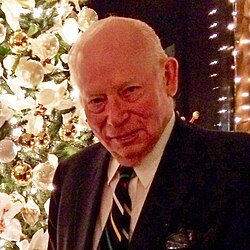
Throughout his career, Weinberg held prestigious positions at Harvard University and the University of Texas at Austin, where he remained until his passing in 2021.
Scientific Contributions Summary
| Contribution | Description | Impact |
|---|---|---|
| Electroweak Theory | Unified electromagnetic and weak nuclear forces | Foundation of the Standard Model; Nobel Prize 1979 |
| Effective Field Theory | Proposed the "folk theorem" on renormalization | Enabled new approaches to quantum gravity and QCD |
| Higgs Boson Prediction | Predicted a particle to explain mass via symmetry breaking | Confirmed experimentally in 2012 |
| The Quantum Theory of Fields | Comprehensive three-volume textbook series | Regarded as the leading reference in the field |
Frequently Asked Questions
What was Steven Weinberg's most significant discovery?
His most significant achievement was the unification of the weak nuclear force and electromagnetism into a single "electroweak" interaction, a discovery that earned him the 1979 Nobel Prize in Physics.
What is the "folk theorem" in the context of Weinberg's work?
The folk theorem is the idea that quantum field theories should be treated as effective field theories. This means they are valid descriptions of nature within a specific energy range, rather than being fundamentally "complete" or renormalizable at all scales.
How did Weinberg contribute to the Standard Model?
Weinberg, along with Sheldon Glashow and Abdus Salam, provided the theoretical basis for the electroweak part of the Standard Model, predicting the Z boson and the Higgs boson.
What are some of Weinberg's most influential books?
For specialists, his three-volume The Quantum Theory of Fields is essential. For the general public, The First Three Minutes and To Explain the World are highly regarded works of science communication.
Where did Steven Weinberg spend the latter part of his career?
Weinberg served as a professor at the University of Texas at Austin from 1982 until his death in 2021.