State Succession in International Relations
In the complex arena of international relations, the birth and death of nations are rarely simple events. When a sovereign state forms over a territory and population previously governed by another entity, it enters the legal realm of state succession. This concept, rooted in 19th-century diplomacy, determines how rights, obligations, and legal identities are transferred when borders shift or governments collapse.
At the heart of this process is the distinction between a successor state and a continuing state. A successor state is a new entity that acquires an international legal personality. In contrast, a continuing state (also known as a continuator or historical heir) retains the original legal personality, maintaining all the rights and obligations of the predecessor state without interruption.
Key Facts
- Universal Succession: Occurs when a predecessor state is completely extinguished and replaced by one or more successor states.
- Partial Succession: Occurs when a state loses only part of its territory and sovereignty, while the original state continues to exist.
- Legal Personality: The capacity of a state to possess international rights and duties.
- Vienna Convention: The 1978 convention aimed at codifying succession rules, which entered into force on November 6, 1996.
- Asset Transfer: Succession can involve the transfer of diplomatic missions, foreign-exchange reserves, and museum artifacts.
Types of State Succession
Universal State Succession
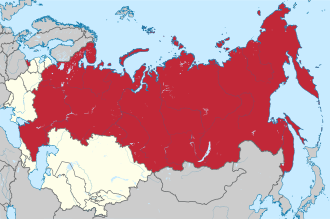
Universal succession happens when a state ceases to exist entirely. Its sovereignty is fully replaced by new entities. A primary example is the dissolution of the Soviet Union in 1991, where the overarching entity vanished, leaving behind several independent republics.
Partial State Succession
Partial succession occurs when a portion of a state's land and sovereignty is transferred to a new entity, but the original state survives. A clear example is the secession of Bangladesh from Pakistan. Pakistan remained a continuator, retaining its United Nations membership, while Bangladesh was recognized as a new successor state and had to apply for its own UN membership.
Rights, Obligations, and Legal Challenges
When a state acquires a new international legal personality, the transfer of treaty rights and obligations becomes a critical issue. This includes not only diplomatic agreements but also physical assets such as overseas embassies and financial reserves. To bring order to these transitions, the international community developed the 1978 Vienna Convention.
However, the application of these rules is often inconsistent. Some states adopt a "clean slate" approach, arguing they are not bound by the predecessor's obligations unless they explicitly accept them. Others maintain that administrative and commercial treaties should remain in force to ensure stability.
Case Studies in State Succession
The Russian Federation and the USSR
Following the 1991 dissolution of the Soviet Union, the Russian Federation succeeded to the USSR's UN membership, including its permanent seat on the Security Council. This was seen as a logical choice because Russia held over 75% of the Soviet land mass, population, and economy. All Soviet embassies were subsequently converted into Russian embassies.
The People's Republic of China (PRC) and the ROC
The PRC was established in 1949 and claimed succession from the Republic of China (ROC). While the ROC continued to represent "China" in the UN for decades from Taiwan, General Assembly Resolution 2758 in 1971 replaced the ROC with the PRC. Today, the ROC exercises sovereignty over the Taiwan Area but remains unrepresented in the UN.
The Breakup of Yugoslavia
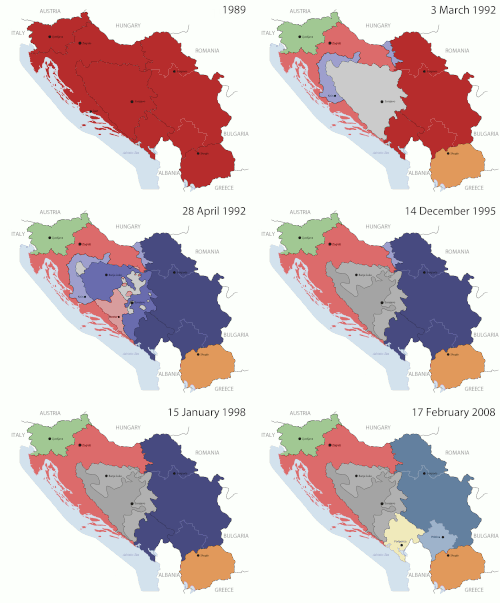
The dissolution of the Socialist Federal Republic of Yugoslavia was highly contentious. The rump state (Federal Republic of Yugoslavia) initially claimed to be the sole continuator, a claim rejected by the UN and the US. Eventually, in 2001, five sovereign equal successor states—Slovenia, Croatia, Bosnia and Herzegovina, North Macedonia, and the Federal Republic of Yugoslavia (later Serbia and Montenegro)—signed an agreement to divide assets and liabilities based on economic contribution.
Other Notable Examples
- Israel: Upon its 1948 declaration of independence, Israel viewed itself as a new personality distinct from Mandatory Palestine, starting with a "clean slate."
- Republic of Ireland: After seceding from the UK in 1922, Ireland determined its treaty obligations on a case-by-case basis, though it kept most commercial and administrative treaties.
- South Korea: Claims continuity from the Korean Empire (pre-1910), viewing the Japanese colonial period as an illegal occupation.
- Turkey: There is ongoing debate whether the Republic of Turkey is a successor to or a continuation of the Ottoman Empire, given the conflict during the Turkish War of Independence.
Summary of Succession Models
| Category | Legal Personality | UN Membership | Example |
|---|---|---|---|
| Continuing State | Retained | Maintained | Pakistan (after Bangladesh secession) |
| Successor State | New/Acquired | Must apply for new membership | Bangladesh |
| Universal Succession | Predecessor extinguished | Transferred or redistributed | Russian Federation (from USSR) |
| Partial Succession | Predecessor survives | Predecessor retains seat | South Sudan (from Sudan) |
Frequently Asked Questions
What is the difference between a successor state and a continuing state?
A successor state is a new legal entity that forms over previous territory, while a continuing state is the original entity that survives a territorial change, retaining its existing international rights and obligations.
How does the "clean slate" doctrine work?
The clean slate doctrine is the view that a newly independent state is not automatically bound by the treaties or international obligations of its predecessor state and may choose which ones to accept.
Why did Russia keep the Soviet Union's UN Security Council seat?
Russia was considered the logical successor because it possessed the vast majority of the USSR's land, population, and economy, and the Soviet state had originally begun in Russia.
What happened to the assets of the former Yugoslavia?
After initial disputes, the successor states agreed to divide assets and liabilities based on a model developed by the International Monetary Fund, which accounted for each republic's economic power and contribution to the federal budget.
Is the Republic of Turkey a successor to the Ottoman Empire?
This is a subject of academic and legal debate. Some argue it is a new nation-state created after a war of independence, while others view it as a regime change within a continuing state.