International Law: The Framework of Global Governance and State Relations
International law, frequently referred to as public international law or the law of nations, serves as the essential architecture for global interaction. It consists of a complex system of rules, norms, legal customs, and standards that states and other global actors recognize as binding obligations in their mutual relations. Unlike domestic law, which governs individuals within a specific territory, international law manages the behavior of entities on a global scale.
In the realm of international relations, actors include individuals and collective entities such as sovereign states, international organizations, and non-state groups. These actors operate based on two primary types of guidelines: rules, which are formal, typically written expectations of required behavior, and norms, which are informal, unwritten guidelines shaped by social practice and custom.

Key Facts

- Consent-Based: International law operates primarily through the consent of sovereign states rather than a central governing authority.
- Broad Scope: It establishes standards for diplomacy, war, economic relations, and human rights.
- Enforcement: While there is no universal police force, violations can lead to diplomatic disapproval, economic sanctions, or coercive military action.
- Peremptory Norms: Certain fundamental principles are considered non-derogable, meaning no state is permitted to ignore them.
The Nature of International Legal Systems
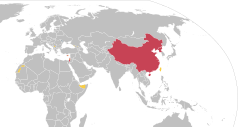
The most significant distinction between international law and state-based domestic legal systems is the absence of a universally accepted authority to enforce laws upon sovereign states. Because states are sovereign, they may choose whether or not to abide by specific laws or treaties.
This decentralized structure means that states often interpret international law in ways that align with their own interests. Such interpretations can lead to significant local effects and geopolitical friction. However, the breach of a treaty or a violation of a peremptory norm often triggers international backlash, ranging from diplomatic pressure to economic sanctions.
Sources and Foundations of International Law
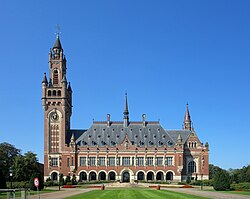
International law is derived from several primary sources that ensure consistency and legitimacy across different jurisdictions.
Treaties
Treaties are formal written agreements between actors. These can be bilateral (between two parties) or multilateral (between many parties). The Vienna Convention on the Law of Treaties provides the framework for how these agreements are created and interpreted.
International Custom
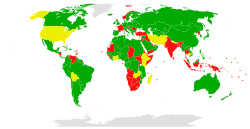
Customary international law arises from a general and consistent practice of states followed out of a sense of legal obligation. These customs often evolve into recognized standards before they are ever formally written into a treaty.
![The Hittite version of the Treaty of Kadesh, among the earliest extant examples of an international agreement[14]](/images/b3/82/b382be100798079bc1c4c104b8e7db1b833876cab11b594df8c1b25df4c18339.jpg)
International Actors and Institutions
The application of international law involves a diverse array of participants, each with different levels of legal standing.
- States: The primary subjects of international law, possessing sovereignty and the capacity to enter into treaties.
- International Organizations: Entities like the United Nations that facilitate cooperation and create multilateral frameworks.
- Individuals: While traditionally not the primary focus, individuals are increasingly recognized as subjects of international law, particularly regarding human rights and international criminal law.
The Role of International Courts
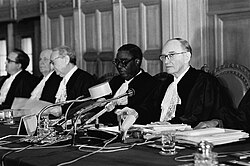
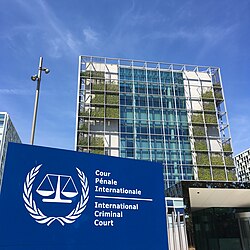
To resolve disputes, the international community relies on judicial bodies. The International Court of Justice (ICJ) handles disputes between states, while the International Criminal Court (ICC) prosecutes individuals for the most serious international crimes.
Major Domains of International Law
International law is not a single code but a collection of specialized fields that address specific global challenges.
Human Rights and Humanitarian Law
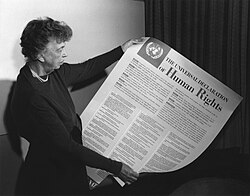
This domain protects the fundamental rights of all humans regardless of nationality. Key instruments include the Universal Declaration of Human Rights and various conventions addressing racial discrimination, torture, and the rights of the child.
Territory, Sea, and Environment
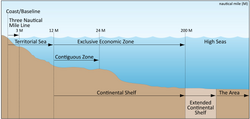
International law defines maritime zones and the rights of states to utilize the oceans. Additionally, environmental law addresses global crises, such as greenhouse gas emissions, through international cooperation.

Conflict and Force
The laws of war, or International Humanitarian Law, seek to limit the effects of armed conflict. The Geneva Conventions are foundational to this effort, establishing protections for non-combatants and prisoners of war.

Summary of International Law Components
| Component | Description | Example/Instrument |
|---|---|---|
| Formal Rules | Written expectations of behavior | Treaties / Conventions |
| Informal Norms | Guidelines shaped by custom | Customary International Law |
| Judicial Bodies | Courts for dispute resolution | ICJ and ICC |
| Humanitarian Law | Rules governing armed conflict | Geneva Conventions |
Frequently Asked Questions
What is the difference between a rule and a norm in international law?
Rules are formal, typically written expectations that outline required behavior. Norms are informal, often unwritten guidelines about appropriate behavior that are shaped by custom and social practice.
How is international law enforced if there is no global government?
Enforcement occurs through consent and mutual pressure. Violations can be met with diplomatic disapproval, economic sanctions, or, in extreme cases, coercive military action.
Who are the primary actors in international law?
The primary actors are sovereign states, but the system also includes international organizations (like the UN) and, in specific contexts, individuals and non-state groups.
What are peremptory norms?
Peremptory norms are fundamental principles of international law that are considered so essential that no state is permitted to deviate from them, regardless of treaty agreements.
What is the role of the International Court of Justice?
The International Court of Justice (ICJ) serves as the principal judicial organ of the United Nations, primarily settling legal disputes submitted to it by member states.