State of Palestine
The State of Palestine is a UN observer state currently under Israeli occupation, recognized by 157 UN member states. Comprising the West Bank and the Gaza Strip, it is a region of immense historical, religious, and political significance. While Jerusalem is claimed as its capital, Ramallah serves as the de facto administrative center.
The Palestinian people possess a rich cultural identity rooted in a diverse landscape, ranging from the coastal plains of Gaza to the highlands of the West Bank. Despite ongoing sovereignty disputes and political challenges, the state maintains a structured government and a vibrant societal life.
Key Facts
- Status: UN observer state recognized by 157 member states.
- Territories: West Bank (5,655 km²) and Gaza Strip (365 km²).
- Population: Approximately 5,483,450 (2023 estimate).
- Official Language: Arabic.
- Official Religion: Islam.
- Government: Unitary semi-presidential republic under a provisional government.
- Currency: Israeli new shekel, Jordanian dinar, and Egyptian pound.
Geography and Administrative Divisions
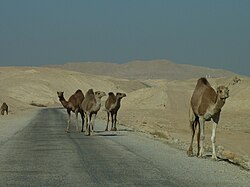
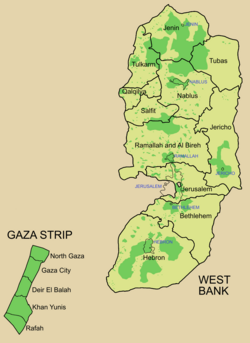
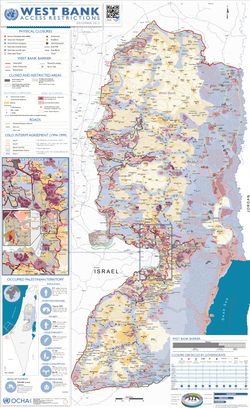
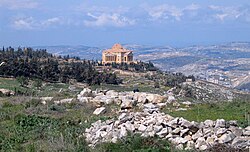
Palestine covers a total area of 6,020 km², with the vast majority of its land located in the West Bank. The geography is varied, featuring the Judaean Desert and the Samarian Hills.
The state is divided into several governorates (administrative districts). The most populous areas include Gaza, Jerusalem, and Hebron. In the West Bank, cities like Nablus and Ramallah serve as critical economic and political hubs, while the Gaza Strip is characterized by extremely high population density.
Major Cities and Population Centers
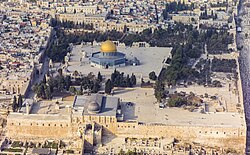
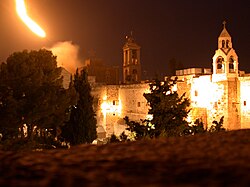
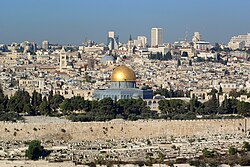
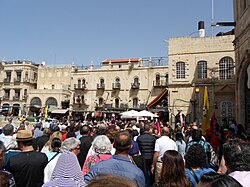
Gaza remains the largest city, though its status has been in flux since 2023. Jerusalem is a focal point of global religious importance, housing the Al-Aqsa Mosque and the Dome of the Rock, the third holiest site in Islam.
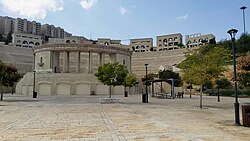
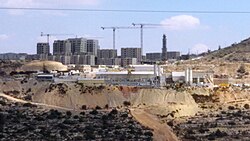
Other significant urban centers include Hebron, Nablus, and Khan Yunis. Modern developments, such as the city of Rawabi, showcase contemporary Palestinian architecture and urban planning, including the largest Roman amphitheater in the Middle East.
Government and Politics
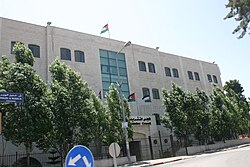
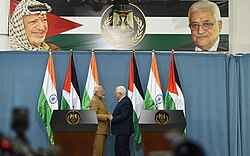
The State of Palestine operates as a unitary semi-presidential republic. The current leadership includes President Mahmoud Abbas, Vice President Hussein al-Sheikh, and Prime Minister Mohammad Mustafa. The legislative body is the Legislative Council.
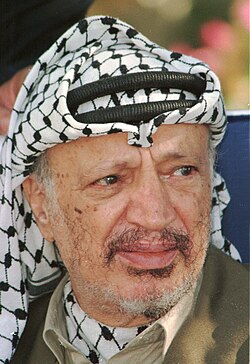
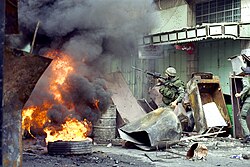
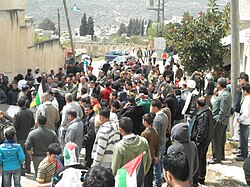
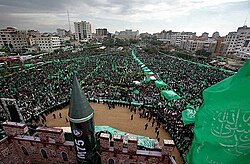
The political landscape has been shaped by a long history of struggle, including the 1988 Declaration of Independence and various periods of unrest known as Intifadas (uprisings). The government continues to navigate complex foreign relations and seeks full international recognition of its statehood.
Economy and Infrastructure
The Palestinian economy is diverse but heavily impacted by Israeli policies. The nominal GDP was estimated at $18.109 billion in 2023, with a per capita GDP of $3,464. The economy relies on several key sectors:
- Agriculture: A traditional pillar of the economy.
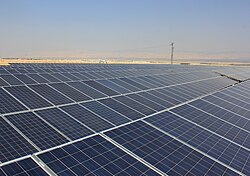
- Energy: Recent shifts toward sustainability, including the establishment of solar plants in Jericho.
- Financial Services: Managed through the Palestine Monetary Authority, which has introduced electronic payment services.
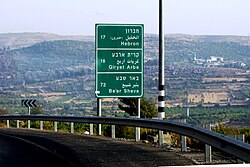
Transportation and tourism are also vital, with the West Bank seeing significant tourism growth in recent years. However, infrastructure development is often hindered by roadblocks and settlements.
Demographics and Culture
The population is predominantly Palestinian Arab (91.2%), with a small minority of Israeli settlers (8.8%). Religiously, the majority are Muslim (80.73%), primarily Sunni, followed by Jewish (13.07%) and Christian (0.88%) populations.
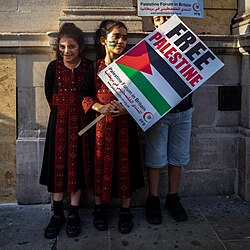
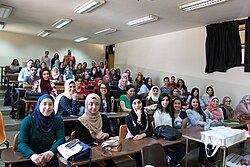
Palestinian culture is expressed through traditional dress, music, and art. Education is highly valued, with institutions like Birzeit University and the Islamic University of Gaza producing a highly educated workforce.
The region is also a global center for faith, where Jerusalem serves as a holy city for Christianity, Islam, Judaism, and Mandaeism.
Summary of Palestinian Territories
| Feature | West Bank | Gaza Strip |
|---|---|---|
| Area | 5,655 km² | 365 km² |
| Primary Hubs | Ramallah, Nablus, Hebron | Gaza City, Khan Yunis |
| Geography | Hilly, mountainous, desert | Coastal plain |
| Population Density | Moderate to High | Extremely High |
Frequently Asked Questions
![State of Palestine Countries that have recognized Palestine[j] Countries that have not recognized Palestine](/images/d2/b1/d2b1c04cb7eb4847f058550af3cb0789fda5579324986748131ba0434832194d.webp)

What is the current international status of the State of Palestine?
Palestine is a UN observer state and is recognized as a sovereign state by 157 UN member states, although it remains under Israeli occupation.
Which cities are the largest in Palestine?
The largest cities are Gaza, Jerusalem, and Hebron, followed by Nablus and Khan Yunis.
What are the official languages and religions of Palestine?
The official language is Arabic. The official religion is Islam, though there are significant Jewish and Christian communities.
Who are the current leaders of the Palestinian government?
The government is led by President Mahmoud Abbas, Vice President Hussein al-Sheikh, and Prime Minister Mohammad Mustafa.
What currencies are used in the Palestinian territories?
The Israeli new shekel, Jordanian dinar, and Egyptian pound are all used within the territories.