Palestinians: History, Identity, and Global Diaspora
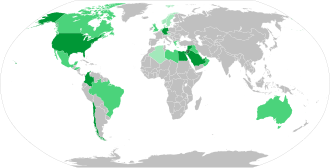
The Palestinians are an Arabic-speaking ethnic group with deep roots in the Levant. With a global population of approximately 14.3 million, they maintain a vibrant cultural identity that spans their ancestral homeland and a vast international diaspora. Their history is a complex tapestry of ancient Levantine origins, Ottoman administration, and a modern struggle for national consciousness.
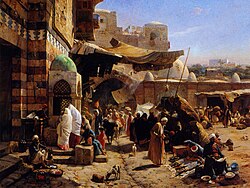
From the bustling markets of Jaffa to the modern cities of the diaspora, Palestinian identity is defined by a shared language, rich artistic traditions, and a resilient connection to the land.
Key Facts
- Total Population: Approximately 14.3 million worldwide.
- Primary Language: Palestinian Arabic.
- Major Religions: Predominantly Sunni Islam, with a significant Christian minority and smaller Druze and Samaritan communities.
- Core Regions: Significant populations reside in the West Bank, Gaza Strip, Jordan, Israel, Syria, and Chile.
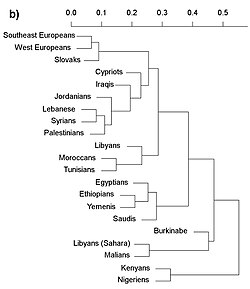
- Genetics: Clustered within the Middle Eastern genomic group, sharing ties with Samaritans, Bedouins, and Jordanians.
Origins and Genetic Heritage
Palestinians originate from the Levant, a geographical region in the Eastern Mediterranean. Genetic studies provide insight into this heritage; whole-genome research indicates that Palestinian samples cluster within a broader "Middle Eastern genomic group." This group includes populations such as Samaritans, Bedouins, Jordanians, and both Iraqi and Yemenite Jews.
![In a whole-genome study of modern-day ethnic groups in the world, Palestinian samples clustered in the "Middle Eastern genomic group" (shown as "GG5" in left image), which included samples from populations such as Samaritans, Bedouins, Jordanians, Iraqi Jews and Yemenite Jews. Left image shows clustering following principal component analysis with three dimensions. Top right image shows geographical locations where samples were collected.[122]](/images/f1/94/f1948e105cf5b22bae00019b9f543a073c3d1d6c5884ab0b50d94ae54146031a.png)
Further analysis of mitochondrial DNA (mtDNA) haplogroups—genetic markers passed from mothers to offspring—further illustrates these ancestral connections to the surrounding region.
The Evolution of Palestinian Identity
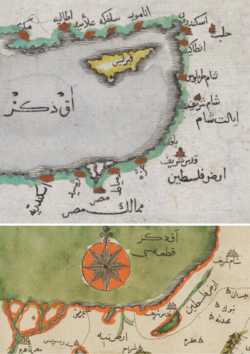
![1732 copy of the map by Ottoman geographer Kâtip Çelebi (1609–57) from the first printed atlas in the Ottoman Empire, and represented the first detailed mapping of the Asian provinces of the empire.[147] with the term ارض فلسطين ("Land of Palestine") extending vertically down the length of the Jordan River](/images/56/39/563926cd0ed7cce17a7d8478f11a2ca21dc3044ff77c28b8acf35a6daeb43c94.jpg)
The emergence of a distinct Palestinian national identity was a gradual process. Historical records, including 17th-century maps by Ottoman geographer Kâtip Çelebi, used the term ارض فلسطين ("Land of Palestine"), indicating a recognized regional entity long before the modern era.
Rise of Nationalism
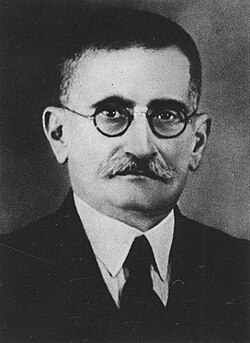
Palestinian nationalism gained momentum in the late 19th and early 20th centuries. Intellectuals like Khalil Beidas played a pivotal role in developing a national consciousness. By the early 1900s, publications such as the Falastin newspaper (established in 1911) were explicitly addressing their readers as "Palestinians."
![1936 issue of the Palestinian Arab Christian Falastin newspaper addressed its readers as "Palestinians" since its establishment in 1911.[72]](/images/8b/de/8bde304fe32202d25c87b4e5a1e29919a8bc9d8c1e2869b8ffee005b5ab81da2.png)
Political Transitions
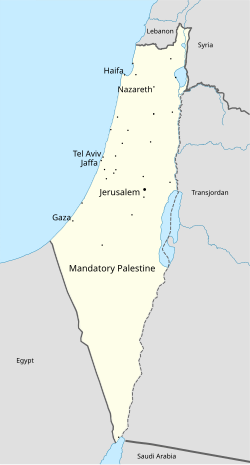
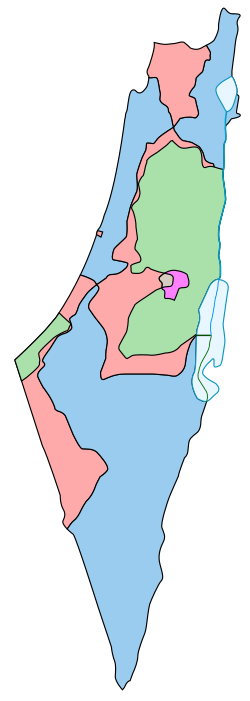
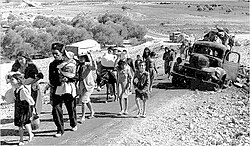
The period between 1917 and 1947, known as the British Mandate, was a transformative era of political mobilization. This was followed by the conflicts of 1947–1949 and the subsequent displacement of many Palestinians, leading to a significant refugee crisis and the "lost years" between 1949 and 1967.
Demographics and Global Distribution
![A 1930 Palestinian women's protest in Jerusalem against the British Mandate. The sign reads "No dialogue, no negotiations until termination [of the Mandate]"](/images/c6/db/c6db156cb24dd0f98d55577c14bc787192bb000608482e391bbfc7471b3f7e35.jpg)
The Palestinian population is distributed across several countries, with a significant portion living as registered refugees under the care of international agencies.
| Region | Estimated Population | Notes |
|---|---|---|
| West Bank | 3,190,000 | Includes 912,879 registered refugees (2024) |
| Gaza Strip | 2,170,000 | Includes 1,476,706 registered refugees (2024) |
| Jordan | 2,307,011 | Registered refugees only (2024) |
| Israel | 2,037,000 | As of 2022 |
| Chile | 500,000 | Significant diaspora community |
| Syria | 568,530 | Registered refugees only (2021) |
Culture and Society
Palestinian society is characterized by a blend of traditional values and modern intellectual pursuits. Family remains the central unit of social organization, and education is highly prioritized.
Religion and Faith
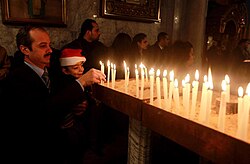
While the majority of Palestinians are Sunni Muslims, the community is religiously diverse. Palestinian Christians maintain a historic presence, particularly in cities like Bethlehem and Ramallah, and the Church of the Holy Sepulchre in Jerusalem remains one of the holiest sites in Christianity.
Arts and Literature
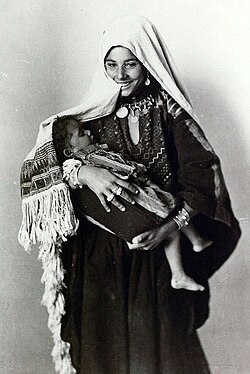
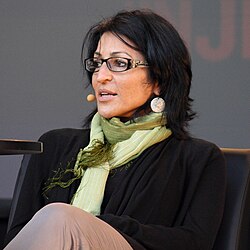
The arts are a primary vehicle for expressing identity and resilience. This includes traditional Dabke folk dance, intricate embroidery (tatreez) on traditional costumes, and a rich literary tradition featuring poets like Mahmoud Darwish and novelists like Susan Abulhawa.

Cuisine and Music
Palestinian cuisine is celebrated for its use of local ingredients, with dishes like hummus and kufta being staples. In music, the tradition ranges from the classical sounds of the kamanjeh to modern Palestinian hip hop and the contemporary works of artists like Saint Levant.

Frequently Asked Questions


![Kamanjeh performer in Jerusalem, 1859[293]](/images/12/35/123543372342321380fb6f7bd4a21165136a00f53481646a700d6d065be61704.jpg)
What is the primary language spoken by Palestinians?
The primary language is Arabic, specifically the Palestinian Arabic dialect. In the diaspora, many Palestinians are bilingual, speaking both Palestinian Arabic and the language of their host country.
Are all Palestinians Muslim?
No. While the majority are Sunni Muslims, there is a significant minority of Christians. There are also smaller communities of Druze, Samaritans, and Shia Muslims.
Where are the largest Palestinian populations located outside of Palestine?
The largest populations outside the West Bank and Gaza are found in Jordan, Israel, Syria, and Chile.
What are some key symbols of Palestinian identity?
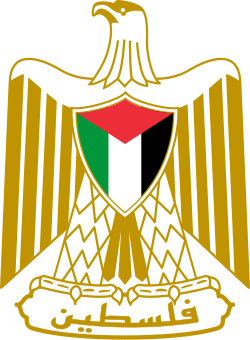
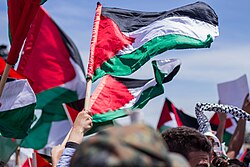
Key symbols include the Eagle of Saladin (the emblem of the Palestinian Authority), traditional embroidery, and the Dabke folk dance.
How is Palestinian identity defined genetically?
Genetically, Palestinians cluster within the Middle Eastern genomic group, showing close ties to other Levantine populations such as Jordanians and Samaritans.