Stanley S. Bergen Jr.: Architect of New Jersey's Public Health Education
Dr. Stanley Silvers Bergen Jr. was a visionary physician, educator, and administrator who fundamentally reshaped the landscape of medical education in the United States. Best known as the founding president of the University of Medicine and Dentistry of New Jersey (UMDNJ), Bergen dedicated his career to the belief that healthcare is a basic human right and that public institutions should lead the way in scientific research and community service.
Key Facts
- Role: Founding President of UMDNJ (1971–1998).
- Achievement: Developed UMDNJ into the nation's largest public health and science university.
- Education: AB from Princeton University; MD from Columbia University.
- Legacy: Instrumental in creating the Cancer Institute of New Jersey and the UMDNJ Foundation.
- Philosophy: A staunch advocate for healthcare as a basic human right.
Early Life and Academic Foundation
Born on May 2, 1929, in Princeton, New Jersey, Stanley S. Bergen Jr. pursued a rigorous academic path from the start. He earned his undergraduate degree from Princeton University before attending the Columbia College of Physicians and Surgeons, where he received his medical degree in 1955.
Following his medical education, Bergen specialized in internal medicine through a residency at Philadelphia General Hospital and further refined his expertise with a fellowship in hematology—the study of blood and blood-forming tissues—at the University of California, San Francisco. His early professional years also included service in the New Jersey National Guard and a tenure as an Army doctor at Fort Jay on Governors Island in New York Harbor.
Rise in Healthcare Administration
Before taking the helm of a university, Bergen built a diverse portfolio in clinical and administrative leadership. He served as the Medical Director at St. Luke's Hospital in New York from 1962 to 1964 and later led community medicine as the chief of the Brooklyn-Cumberland Center from 1968 to 1970.
His trajectory toward high-level administration accelerated in 1970 when he was appointed Senior Vice President of the New York City Health and Hospitals Corporation. This role served as a precursor to his most significant appointment in 1971: the founding presidency of the College of Medicine and Dentistry of New Jersey (CMDNJ).
The Evolution of UMDNJ
Under Bergen's leadership, the CMDNJ evolved into the University of Medicine and Dentistry of New Jersey (UMDNJ). By the time of his retirement in 1998, he had transformed the institution into the largest public health sciences university in the United States.
The growth of the university was staggering. It eventually encompassed eight schools across five campuses, including three medical schools and a major teaching hospital in Newark. At its peak, the university supported over 6,000 students and 14,000 employees, maintaining affiliations with more than 200 healthcare and higher education institutions across New Jersey.
Bergen focused heavily on inclusivity and accessibility, ensuring UMDNJ maintained one of the largest student minority populations among medical and dental schools in the country. He also established the UMDNJ Foundation to fund research and education and played a pivotal role in the creation of the Cancer Institute of New Jersey.
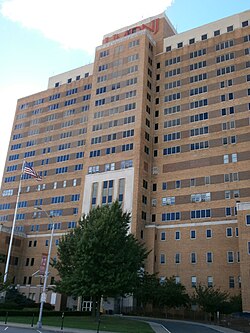
In 2013, the legacy of the institution Bergen built continued as most of UMDNJ's components were integrated to form the Rutgers Biomedical and Health Sciences of Rutgers University.
National Influence and Advocacy
Beyond the campus, Dr. Bergen was a prominent voice in healthcare policy. He contributed his expertise to several prestigious national bodies, including the Institute of Medicine, the National Institutes of Health, and the Association of American Medical Colleges. He also served on the Board of Directors for the American Hospital Association and the Robert Wood Johnson Foundation.
His commitment to academic medicine was recognized through numerous accolades, including the Gold Medal Award from the Medical Society of New Jersey, the Dr. Nathan Davis Award from the American Medical Association, and a Distinguished Alumni Award from the University of Pennsylvania School of Medicine.
| Category | Details |
|---|---|
| Education | Princeton University (AB), Columbia University (MD) |
| Primary Leadership | President of UMDNJ (1971–1998) |
| Key Institutions Founded | UMDNJ, UMDNJ Foundation, Cancer Institute of New Jersey |
| Specializations | Internal Medicine, Hematology |
| Major Honors | Legum Doctor (Princeton), Stanley S. Bergen Medal of Excellence |
Frequently Asked Questions
What was Stanley S. Bergen Jr.'s primary contribution to medical education?
He was the founding president of the University of Medicine and Dentistry of New Jersey (UMDNJ), which he grew into the largest public health and science university in the United States.
What happened to UMDNJ after Dr. Bergen's tenure?
In 2013, most of the components of UMDNJ were integrated into Rutgers University to become Rutgers Biomedical and Health Sciences.
Which medical specialties did Dr. Bergen study?
Dr. Bergen completed a residency in internal medicine and a fellowship in hematology.
How is Dr. Bergen's legacy honored today?
He is honored through the naming of the Dr. Stanley S. Bergen Building in Newark, New Jersey, and the creation of the Stanley S. Bergen Medal of Excellence for achievements in medical science and education.
What was Dr. Bergen's stance on healthcare access?
He was a staunch and early advocate for the belief that healthcare is a basic human right.