UMDNJ: The History and Legacy of the University of Medicine and Dentistry of New Jersey
The University of Medicine and Dentistry of New Jersey (UMDNJ) was a prominent state-run health sciences institution that served as a cornerstone of medical education and research in New Jersey for decades. Operating across six different locations, UMDNJ evolved from a specialized college into a major research university, eventually merging into other state institutions to reshape the landscape of healthcare education in the region.
Key Facts
- Active Years: 1970–2013.
- Scope: A public health sciences university with campuses in Newark, Stratford, New Brunswick, Piscataway, Camden, and Scotch Plains.
- Research Standing: Ranked #71 out of 630 universities by the National Science Foundation for R&D expenditures.
- Scale: Approximately 7,000 students, 13,000 employees, and over 31,000 alumni.
- Dissolution: Most schools merged with Rutgers University in 2013, while the School of Osteopathic Medicine joined Rowan University.
Foundations and Evolution
The origins of UMDNJ trace back to two primary predecessor organizations. The first was the Seton Hall College of Medicine and Dentistry, incorporated in 1954 and enrolling its first class in 1956 at the Jersey City Medical Center. The second was the Rutgers Medical School (RMS), which opened in 1966 as a two-year basic science institution before expanding to a full four-year curriculum in 1972.
In 1965, the State of New Jersey acquired the Seton Hall schools and merged them with the Rutgers school to create the College of Medicine and Dentistry of New Jersey (CMDNJ). By 1981, the institution was renamed the University of Medicine and Dentistry of New Jersey (UMDNJ).
The Newark Relocation and the Newark Accords
In 1966, plans were initiated to move the school from Jersey City to Newark. This decision met significant opposition from local community organizations concerned about the displacement of 20,000 residents and businesses. Under the mandates of President Johnson's Model City Act, which required community involvement in urban development, negotiations took place between the administration and the city.
On March 15, 1968, a landmark agreement known as the Newark Accords was reached. The agreement reduced the university's site to 57.9 acres, designating another 63 acres for community-led housing and facilities. It also mandated that one-third of the construction and operational workforce be Black and Latino, and required the admission of minority students. The University Hospital in Newark is a direct result of these accords.
Academic Structure and Research Impact
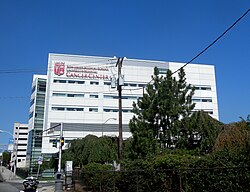
At its peak, UMDNJ comprised eight specialized schools across various New Jersey cities:
- New Jersey Medical School (Newark)
- New Jersey Dental School (Newark)
- Graduate School of Biomedical Sciences (Newark, Piscataway, and Stratford)
- School of Health Related Professions (Newark)
- School of Nursing (Newark)
- School of Public Health (New Brunswick)
- Robert Wood Johnson Medical School (Piscataway)
- School of Osteopathic Medicine (Stratford)
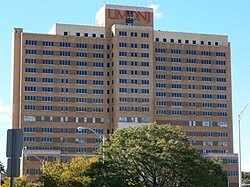
The university operated the University Hospital in Newark and Raritan Valley Hospital in Greenbrook, while maintaining affiliations with Robert Wood Johnson University Hospital, Hackensack University Medical Center, and Cooper University Hospital. UMDNJ was a powerhouse in research, often surpassing other major state institutions in federal research grant funding.
Institutional Challenges and Controversies
Despite its academic success, UMDNJ faced several legal and financial scandals. Between 2001 and 2004, the institution was involved in Medicaid over-billing through the double-billing of physician services in outpatient clinics. This led to a deferred prosecution agreement in 2005 and the appointment of a federal monitor, Herbert Jay Stern, to restore financial integrity.
Further controversies included a "no-show" job scandal involving New Jersey Senator Wayne Bryant and R. Michael Gallagher, the former dean of the School of Osteopathic Medicine. Both were eventually convicted of bribery and fraud. Additionally, in 2010, the university faced backlash from students after the board of trustees implemented tuition increases of up to 21% for out-of-state and 18% for in-state students, far exceeding historical trends.
Dissolution and Legacy
On July 1, 2013, UMDNJ was officially dissolved following legislation signed by Governor Chris Christie. The reorganization distributed its components as follows:
- Rutgers University: Absorbed most schools to form the Rutgers School of Biomedical and Health Sciences.
- Rowan University: Took over the School of Osteopathic Medicine and its Graduate School of Biomedical Sciences.
- University Hospital: Became an independent organization.
The School of Pharmacy was not part of this transfer, as it had already been part of Rutgers University since 1927.
| Category | Details |
|---|---|
| Founded As | Seton Hall College of Medicine and Dentistry (1954) |
| Key Locations | Newark, Stratford, New Brunswick, Piscataway, Camden, Scotch Plains |
| Total Students | ~7,000 |
| Total Employees | ~13,000 |
| Successor Institutions | Rutgers University, Rowan University |
Frequently Asked Questions
What happened to UMDNJ in 2013?
UMDNJ was dissolved by state legislation. Most of its schools merged with Rutgers University, while the School of Osteopathic Medicine became part of Rowan University.
What were the Newark Accords?
The Newark Accords were a 1968 agreement between the university, the city, and community organizations. They ensured a smaller campus footprint to prevent mass displacement and mandated minority hiring and student admissions.
Which medical schools were part of UMDNJ?
The university included the New Jersey Medical School, Robert Wood Johnson Medical School, and the School of Osteopathic Medicine.
Why was UMDNJ placed under a federal monitor?
The institution was placed under a federal monitor following a criminal complaint regarding Medicaid over-billing and healthcare fraud between 2001 and 2004.
Who were some of the notable figures associated with UMDNJ?
Notable figures include Sidney Pestka, known as the "father of interferon," and Eric F. Wieschaus, a Nobel Prize-winning biologist who served as an Adjunct Professor of Biochemistry.