Perelman School of Medicine: A Legacy of American Medical Education
The Perelman School of Medicine, widely known as Penn Med, stands as a cornerstone of medical history and innovation. As the medical school of the University of Pennsylvania—a private Ivy League research university in Philadelphia—it holds the distinction of being the oldest medical school in the United States. Since its inception, the institution has evolved from a small collection of lectures into a global powerhouse of clinical care and biomedical research.
Today, the school is a hub of academic excellence, boasting approximately 2,900 faculty members and securing nearly $1 billion in annual sponsored program awards as of 2024. Its integration with the University of Pennsylvania Health System (UPHS) creates a seamless ecosystem where education, research, and patient care intersect.
Key Facts
- Founded: 1765, making it the first medical school in the original Thirteen Colonies.
- Location: An urban campus in Philadelphia, Pennsylvania.
- Academic Scale: Over 2,100 full-time academic staff and 1,200 residents and fellows.
- Student Body: Includes M.D., Ph.D., and master's students, as well as post-doctoral fellows.
- Major Funding: Renamed in 2011 following a historic $225 million gift from Raymond and Ruth Perelman.
A History of Firsts and Foundations
The 18th Century Origins
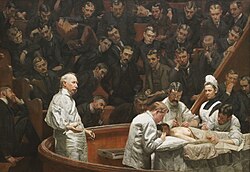
The school was established in 1765 through the vision of John Morgan, a graduate of the University of Edinburgh Medical School. Alongside William Shippen Jr., Morgan persuaded the college trustees to create a model institution that would spread medical knowledge across the American continent. Early instruction took place at Surgeons Hall, where students studied anatomical lectures and the theory and practice of physick.
The school's early faculty included legendary figures such as Benjamin Rush, a Founding Father and signatory of the Declaration of Independence, as well as Philip Syng Physick and Robert Hare. By modeling its approach after the University of Edinburgh, Penn Med pioneered the combination of formal lectures with bedside teaching at the Pennsylvania Hospital.
Evolution Through the 19th and 20th Centuries
By the mid-1800s, the school continued to attract premier medical minds, including Nathaniel Chapman, the founding president of the American Medical Association. The influence of Penn Med extended even to other prestigious institutions; for example, William Osler and Howard Atwood Kelly, two of the "founding four" of Johns Hopkins Hospital, were drawn from Penn's faculty.
In 1910, the Flexner Report—a landmark review of medical education in North America—highlighted Penn as one of the few schools of the era maintaining high standards in research facilities, medical instruction, and admission criteria.
Campus, Hospitals, and Governance
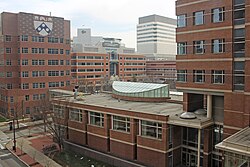
The school's physical presence has shifted over time, moving from Center City to its current location in West Philadelphia. This move allowed for the construction of a teaching hospital adjacent to academic facilities, ensuring that students have immediate access to clinical experience.
The primary teaching hospitals include the Hospital of the University of Pennsylvania, Penn Presbyterian Medical Center, Pennsylvania Hospital, and the Children's Hospital of Philadelphia. Additional clinical training is conducted at various regional hospitals and the Philadelphia VA Medical Center.
Organizational Structure
The term Penn Medicine refers to the integrated organizational structure comprising the Perelman School of Medicine and the University of Pennsylvania Health System (UPHS). This entity is governed by a board of trustees reporting to the university's trustees. As of recent leadership, Kevin B. Mahoney serves as CEO of UPHS, while J. Larry Jameson serves as Dean of Medicine.
Medical Advancements and Curriculum
Pioneering Specializations
Penn Med was an early adopter of medical specialties, including radiology, dermatology, ophthalmology, and neurosurgery. Throughout the 20th and 21st centuries, the institution has led several critical breakthroughs:
- Nutrition: Stanley Dudrick pioneered total parenteral nutrition (TPN) for patients unable to use their gastrointestinal tracts.
- Trauma Surgery: C. William Schwab advanced the concept of damage control surgery for severely injured patients.
- Vaccinology: Paul Offit led the scientific development of the RotaTeq vaccine to combat childhood diarrhea.
- Genetics: In 2006, researchers discovered the causative mutation for fibrodysplasia ossificans progressiva, a rare bone disease.
The Modern Curriculum
To keep pace with scientific evolution, the school frequently updates its teaching methods. In 2022, it introduced the IMPaCT curriculum. This integrated, multidisciplinary approach emphasizes self-directed learning and small group instruction, focusing on three core themes: the Science of Medicine, Technology and Practice of Medicine, and Professionalism and Humanism.
Biomedical Graduate Studies (BGS)
Established in 1985, the BGS program is the academic home for approximately 700 students pursuing a PhD in basic biomedical sciences. With over 600 faculty members across seven Penn schools, the program offers seven specialized "graduate groups":
- Biochemistry and molecular biophysics
- Cell and molecular biology
- Epidemiology and biostatistics
- Genomics and computational biology
- Immunology
- Neuroscience
- Pharmacology
Students typically complete their degree in a median of 5.4 years and receive a full fellowship and stipend.
Institutional Overview
| Category | Details |
|---|---|
| Established | 1765 |
| Parent Institution | University of Pennsylvania |
| Academic Staff | 2,100 full-time; 1,200 residents/fellows |
| Administrative Staff | 3,334 |
| Student Population | 775 M.D., 594 Ph.D., 186 M.D.-Ph.D., 329 Masters |
| Annual Awards | Nearly $1 billion (sponsored programs) |
Frequently Asked Questions
Why is the school called the Perelman School of Medicine?
The school was renamed in 2011 to honor Raymond and Ruth Perelman, who donated $225 million to the institution. This remains the largest single gift in the university's history.
What is the IMPaCT curriculum?
Introduced in 2022, the IMPaCT curriculum is an integrated, multidisciplinary teaching model that prioritizes flexibility, self-directed learning, and small group instruction over traditional lecture-heavy formats.
What is the difference between Penn Med and Penn Medicine?
The Perelman School of Medicine (Penn Med) is the academic and educational arm, while Penn Medicine is the broader organizational structure that integrates the school with the University of Pennsylvania Health System (UPHS) for clinical and research functions.
How long does it typically take to earn a PhD through Biomedical Graduate Studies?
The median time frame for students to complete their PhD in the basic biomedical sciences at Penn is 5.4 years.
Which hospitals serve as the primary teaching sites for the school?
The main teaching hospitals are the Hospital of the University of Pennsylvania, Penn Presbyterian Medical Center, Pennsylvania Hospital, and the Children's Hospital of Philadelphia.