Understanding PubMed: The Essential Guide to Biomedical Literature
In the vast world of medical research, finding reliable, peer-reviewed information quickly is critical for clinicians, researchers, and students. PubMed serves as the primary gateway to this knowledge, providing a free, openly accessible database of references and abstracts focusing on life sciences and biomedical topics. Maintained by the United States National Library of Medicine (NLM) at the National Institutes of Health, PubMed is a core component of the Entrez system—a sophisticated suite of information retrieval tools used to navigate biological data.
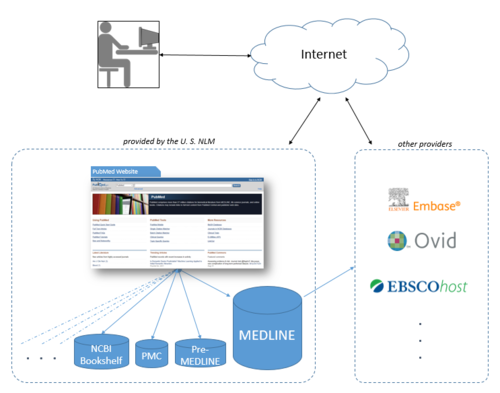
While often used interchangeably with MEDLINE, PubMed is actually a broader resource. It primarily includes the MEDLINE database but also incorporates other vital records to ensure a comprehensive search experience for the global scientific community.
Key Facts
- Scale: As of March 15, 2025, PubMed contains over 40 million citations and abstracts.
- Historical Reach: Records date back to 1809 (highly selective), with a primary focus from 1966 onwards.
- Accessibility: It is a free resource available to the public since June 1997.
- Core Component: The database is built around MEDLINE, the premier bibliographic database for life sciences.
- Full-Text Access: While PubMed provides abstracts, millions of records link to full-text versions, many of which are free via PubMed Central.
The Evolution of PubMed
Before the internet became ubiquitous, accessing the MEDLINE database was a cumbersome process. From 1971 to 1997, researchers relied on phone lines and institutional facilities, such as university libraries, to conduct searches. The launch of PubMed in January 1996 revolutionized this by enabling free, private searching from homes and offices.
Initially released alongside "Internet Grateful Med," PubMed eventually became the sole standard, entirely replacing Grateful Med by 2001. Over the decades, the interface has evolved to meet modern needs, including a 2009 update that introduced "telegram" searches (simplified, Google-like queries) and a more comprehensive design overhaul in May 2020.
What Content is Available in PubMed?
PubMed is more than just a mirror of MEDLINE. It aggregates several types of biomedical data to provide a holistic view of scientific literature:
- MEDLINE: The primary database of references and abstracts.
- Index Medicus: Older references from the print version of this index, dating back to 1951 and earlier.
- Pre-indexed Journals: References to journals like Science, BMJ, and Annals of Surgery before they were officially indexed in MEDLINE.
- Recent Entries: New articles that have been added to the system but have not yet been assigned Medical Subject Headings (MeSH)—the controlled vocabulary used for indexing.
- Specialized Collections: Full-text books via the NCBI Bookshelf and citations from PubMed Central (PMC).
| Metric | Value/Detail |
|---|---|
| Total Citations (March 2025) | 40+ Million |
| Records with Abstracts (2023) | 24.6 Million |
| Records with Full-Text Links (2023) | 26.8 Million |
| Free Full-Text Articles (2023) | 10.9 Million |
| Average Annual Growth (2010-2019) | ~1 Million records per year |
Mastering the Search: From Simple to Comprehensive
Searching PubMed effectively requires understanding how the system processes information. Users can choose between two primary approaches:
Standard Search
For most users, entering keywords into the search window is sufficient. PubMed automatically translates these terms by adding field names, synonyms, and Boolean operators (such as OR and AND). A key feature here is Auto Term Mapping, which links common phrases to their formal MeSH terms. For example, a search for "heart attack" is automatically expanded to include "myocardial infarction," reducing the risk of missing relevant papers.
Comprehensive Search
For systematic reviews or exhaustive research, specialists use a more rigorous approach. This involves the direct use of the MeSH thesaurus, which provides a consistent, controlled vocabulary. Because MeSH is more accurate than free-text searching, it eliminates issues with spelling variations or singular/plural differences. However, since the newest articles are not yet indexed with MeSH, experts recommend a combination of controlled headings and free-text terms to ensure no recent data is missed.
Advanced Tools and Identifiers
PubMed offers several specialized features to enhance the research workflow:
- PMID vs. PMCID: Every PubMed record is assigned a PMID (PubMed Identifier), a unique integer used to locate the citation. This is distinct from a PMCID (PubMed Central Identifier), which is used specifically for works in the free-to-access PubMed Central archive.
- My NCBI: A personalized account system that allows users to save searches, set up email alerts, and configure display formats.
- LinkOut: A service that connects users to their own institution's local journal holdings, often indicated by a university logo in the search results.
- Secondary Identifiers: Since 2005, PubMed has extracted accession numbers for molecular sequences and clinical trial IDs (such as NCT identifiers from ClinicalTrials.gov) to make cross-referencing easier.
The Broader Ecosystem and Data Mining
Because the NLM leases MEDLINE data to private vendors, many alternative interfaces exist. Companies like Ovid, EBSCO, and Embase provide specialized platforms for accessing the same core data. These are often referred to as "PubMed derivatives."
Beyond human searching, PubMed has become a vital resource for data mining. Using programming languages like Python, R, or Matlab, researchers can automate queries to analyze trends in diseases or organs. Furthermore, the database is now a primary resource for training biomedical large language models (LLMs), helping AI understand complex clinical knowledge.
Reliability and Future Outlook
Despite its utility, PubMed is not without challenges. Some articles from predatory journals—publications with questionable peer-review standards—occasionally leak into the system due to weaknesses in indexing criteria. Additionally, the infrastructure is not immune to failure; a global outage on March 4, 2025, highlighted the world's heavy reliance on the database for peer-reviewed literature.
Looking forward, the landscape of biomedical indexing may expand. In 2025, ZBMed (the German National Library of Medicine) announced plans to develop an internationally supported open-source version of PubMed, potentially offering a new alternative for the global research community.
Frequently Asked Questions
What is the difference between a PMID and a PMCID?
A PMID (PubMed Identifier) is a unique number assigned to every record in the PubMed database, regardless of whether the full text is free. A PMCID (PubMed Central Identifier) is specifically assigned to articles that are archived in PubMed Central, the free full-text archive.
Does a PMID prove that a paper is high quality or peer-reviewed?
No. The assignment of a PMID is a bibliographic marker, not a seal of quality. PMIDs are assigned to peer-reviewed papers as well as letters to the editor, editorial opinions, and even papers that have since been retracted for misconduct.
How does MeSH improve search results?
MeSH (Medical Subject Headings) is a controlled vocabulary. Instead of relying on the various ways different authors might describe a condition, MeSH assigns a standardized term to the concept. This ensures that a search for a specific topic retrieves all relevant articles, regardless of the specific terminology used by the authors.
Can I access the full text of every article found on PubMed?
Not necessarily. PubMed primarily provides citations and abstracts. While many records contain links to full-text versions via PubMed Central or institutional LinkOut services, some articles remain behind publisher paywalls.
What happened during the PubMed outage of March 2025?
On March 4, 2025, PubMed experienced a temporary global outage lasting approximately one day. While services were restored and the disruption was not deliberate, the event sparked discussions regarding the reliability and contingency planning of essential global research infrastructure.