Stabilisation Force (SFOR): NATO's Peacekeeping Mission in Bosnia and Herzegovina
The Stabilisation Force, commonly known as SFOR, was a NATO-led multinational peacekeeping force deployed to Bosnia and Herzegovina following the devastation of the Bosnian War. Authorized by Security Council Resolution 1088 on December 12, 1996, SFOR was designed to maintain a secure environment and ensure the lasting consolidation of peace in the region.
While led by NATO, SFOR was a broad international effort involving contributions from 39 different countries, including several non-NATO members. The force operated from December 20, 1996, until December 2, 2004, when it was succeeded by the European Union's EUFOR Althea.
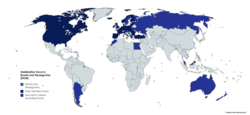
Key Facts
- Active Period: December 20, 1996 – December 2, 2004.
- Mandate: Authorized by UN Security Council Resolution 1088.
- Scope: Multinational force comprising troops from 39 countries.
- Successor: EUFOR Althea (European Union Forces).
- Legal Framework: Operated under peace enforcement rules of engagement.
Mission and Objectives
The primary mission of SFOR was to deter hostilities and stabilize the peace. This was achieved by providing a continuous military presence within its Area of Responsibility (AOR). SFOR aimed to create a secure environment that supported primary civil implementation organizations, ultimately working toward a state where NATO-led forces would no longer be required in Bosnia and Herzegovina.
Structure and Operational History
SFOR succeeded the Implementation Force (IFOR), which had been deployed in December 1995. The mission was managed by a series of commanders serving one-year terms, including General William W. Crouch, General Eric Shinseki, and General Montgomery Meigs, among others.
The overall operations in Bosnia-Herzegovina were designated by NATO as Operation Joint Guard and, subsequently, Operation Joint Forge.
Zones of Operation
SFOR was organized into three primary zones, which were known as Multi-National Divisions until 2002, when they were scaled down to Multi-National Brigades:
- Mostar Multi-National Division (South): Comprised of Italian, French, German, and Spanish forces.
- Banja Luka Multi-National Division (South West/West): Comprised of American, British, Canadian, Czech, and Dutch forces. (The Canadian mission was titled Operation Palladium, while British activities were titled Operation Lodestar and later Operation Palatine).
- Tuzla MND (North): Comprised of American, Turkish, Polish, Russian, Norwegian, Swedish, Danish, and Finnish forces.
Peace Enforcement and Legal Actions
Unlike traditional peacekeeping, SFOR operated under peace enforcement rules of engagement. This gave the force the authority to take proactive measures to maintain stability, such as the 1997 neutralization of Serb radio-television facilities. Furthermore, SFOR played a critical role in international justice by arresting 29 individuals charged with war crimes, who were then transferred to the International Criminal Tribunal for the former Yugoslavia in the Netherlands.
Air Operations and Troop Levels
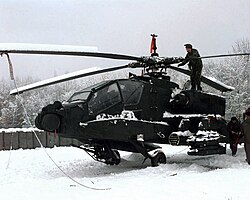
SFOR's ground efforts were supported by a series of sequential air operations to ensure security and compliance:
- Operation Deny Flight (April 1993 – December 1996)
- Operation Decisive Edge (December 1995 – December 1996)
- Operation Decisive Guard (December 1996 – June 1998)
- Operation Deliberate Forge (June 1998 – September 2004)
As the region stabilized, troop levels were gradually reduced. By the end of 2002, the force consisted of approximately 12,000 personnel, dropping to roughly 7,000 by the end of 2004. The mission officially concluded following NATO's 2004 Istanbul Summit.
Member Nations
| NATO Member Nations | Non-NATO Member Nations |
|---|---|
| Belgium, Bulgaria, Canada, Czech Republic, Denmark, Estonia, France, Germany, Greece, Hungary, Iceland, Italy, Latvia, Lithuania, Luxembourg, Netherlands, Norway, Poland, Portugal, Romania, Spain, Slovakia, Slovenia, Turkey, United Kingdom, United States | Albania, Argentina, Australia, Austria, Egypt, Finland, Malaysia, Morocco, New Zealand, Republic of Ireland, Russia, Sweden, Ukraine |
Frequently Asked Questions
What is the difference between peacekeeping and peace enforcement in the context of SFOR?
While peacekeeping typically involves monitoring a ceasefire with the consent of all parties, peace enforcement allows a force to use proactive military measures to compel compliance with peace agreements and maintain security, as SFOR did when neutralizing specific facilities in 1997.
Which force replaced SFOR in 2004?
SFOR was succeeded by EUFOR Althea, a military operation organized by the European Union (EU) and headquartered at Camp Butmir in Sarajevo.
How many people did SFOR arrest for war crimes?
SFOR arrested 29 individuals who were charged with war crimes and transferred them to the International Criminal Tribunal for the former Yugoslavia.
What were the main NATO operations associated with SFOR?
The overall Bosnia-Herzegovina operations were designated as Operation Joint Guard and Operation Joint Forge.
How did the size of SFOR change over time?
The force size decreased as stability improved, moving from its initial deployment levels down to approximately 12,000 troops by late 2002 and approximately 7,000 by the end of 2004.