Bosnia and HerzegovinaSarajevoBalkan historyDayton AgreementBosnian demographics

Bosnia and Herzegovina: A Journey Through History, Culture, and Resilience

Bosnia and Herzegovina: A Journey Through History, Culture, and Resilience Nestled in the heart of the Balkans, Bosnia and Herzegovina is a land of profound historical depth and striking ...

Bosnia and Herzegovina: A Journey Through History, Culture, and Resilience

Nestled in the heart of the Balkans, Bosnia and Herzegovina is a land of profound historical depth and striking cultural diversity. From the rugged mountains of the interior to the narrow strip of Adriatic coastline, the country serves as a crossroads where East meets West. Its identity is a complex tapestry woven from centuries of imperial influence, spiritual coexistence, and a relentless spirit of endurance.

Key Facts

  • Capital: Sarajevo, the largest city and political center.
  • Government: A federal parliamentary directorial republic.
  • Demographics: A multi-ethnic society primarily composed of Bosniaks (50.1%), Serbs (30.8%), and Croats (15.4%).
  • Economy: Uses the Convertible Mark (BAM) with a very high Human Development Index (HDI) of 0.804.
  • Geography: A total area of 51,209 km², featuring seven major rivers.

A Timeline of Transformation

Early History and the Middle Ages

The region's early history is marked by diverse settlements, including Iron Age cults and Roman influence. By the 9th century, early medieval Bosnia began to take shape, evolving into the Banate of Bosnia in 1154 and eventually the Kingdom of Bosnia in 1377.
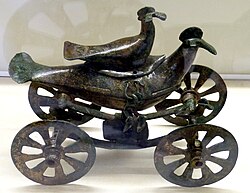
Iron Age cult carriage from Banjani, near Sokolac

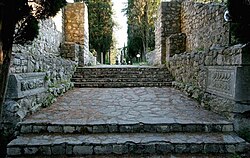
Mogorjelo, an ancient Roman suburban Villa Rustica from the 4th century, near Čapljina

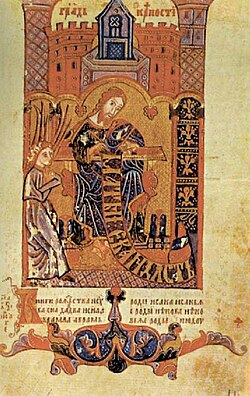
Hval's Codex, illustrated Slavic manuscript from medieval Bosnia

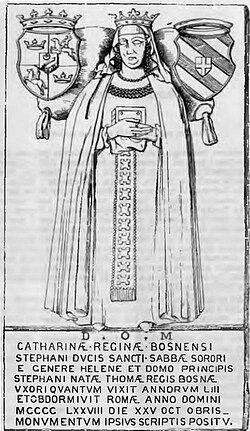
Ledger stone to Queen Catherine of Bosnia, the last queen of the House of Kosača.

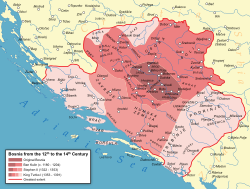
Bosnia in the Middle Ages spanning the Banate of Bosnia and the succeeding Kingdom of Bosnia

Imperial Shifts: Ottomans and Austro-Hungarians

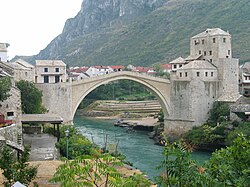
The trajectory of the region shifted dramatically with the Ottoman conquest in 1463, which introduced Islam and a new administrative structure. This era left an indelible mark on the architecture and social fabric of the land, exemplified by the commissioning of the iconic Mostar Bridge in 1557.
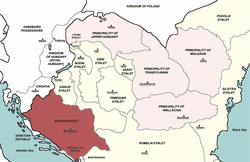
The Bosnia Eyalet in 1683

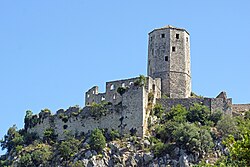
Počitelj Citadel in Čapljina, built by King Tvrtko I of Bosnia in 1383.

The Mostar Bridge was commissioned by Suleiman the Magnificent in 1557

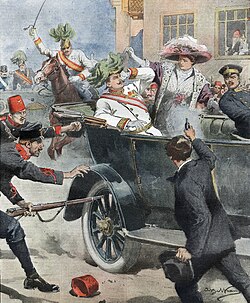
By 1878, Austro-Hungarian troops entered Sarajevo, beginning a period of occupation and subsequent annexation in 1908. This era of tension culminated in one of the most pivotal moments of the 20th century: the assassination of Archduke Franz Ferdinand in Sarajevo on June 28, 1914, which triggered World War I.
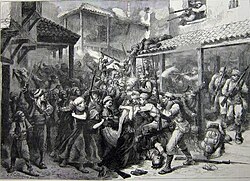
Austro-Hungarian troops enter Sarajevo, 1878

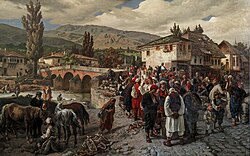
People of Sarajevo in 1883

The assassination of Archduke Franz Ferdinand of Austria and Sophie, Duchess of Hohenberg by Gavrilo Princip in Sarajevo, 28 June 1914

The Yugoslav Era and Independence

Following World War I, the region was absorbed into the Kingdom of Yugoslavia. After the upheavals of World War II, it became the Socialist Republic of Bosnia and Herzegovina within the Socialist Federal Republic of Yugoslavia.
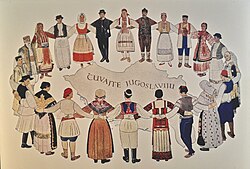
"Keep/Protect Yugoslavia" (Čuvajte Jugoslaviju), a variant of the alleged last words of King Alexander I, in an illustration of Yugoslav peoples dancing the kolo

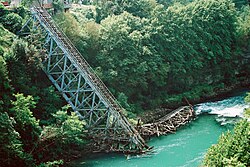
The railway bridge over the Neretva River in Jablanica, twice destroyed during the 1943 Operation Weiss offensive

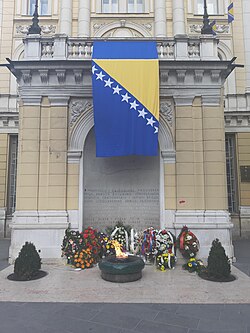
Eternal flame memorial to military and civilian World War II victims in Sarajevo

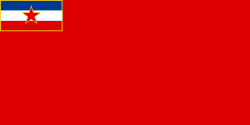
Bosnia and Herzegovina's flag while part of the Socialist Federal Republic of Yugoslavia

The dissolution of Yugoslavia in the early 1990s led to a declaration of independence on March 3, 1992, followed by a devastating war. Peace was eventually brokered through the Washington Agreement (1994) and the Dayton Agreement (1995), which established the current political structure of the state.
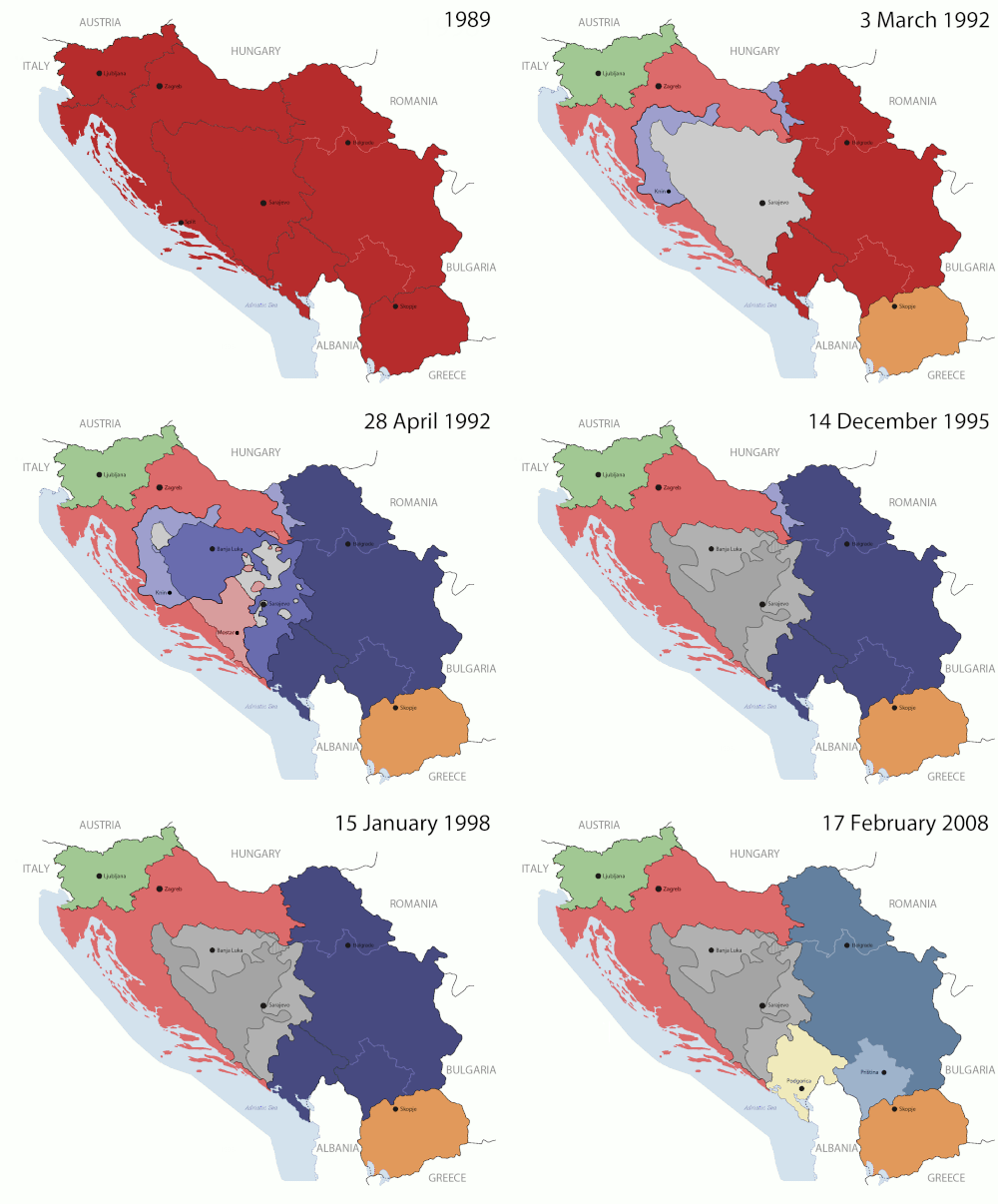
Dissolution of Yugoslavia

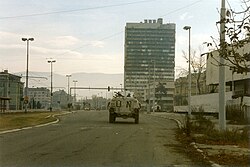
UN troops in front of the Executive Council Building, burned after being struck by tank fire during the siege of Sarajevo, 1995

Governance and Modern Society

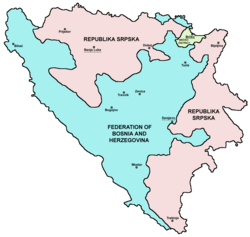
Today, Bosnia and Herzegovina is organized into three primary entities: the Federation of Bosnia and Herzegovina (FBiH), Republika Srpska (RS), and the Brčko District (BD). The government is led by a tripartite Presidency to ensure representation across ethnic lines.
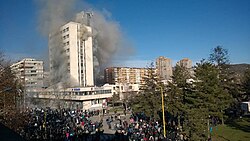
Tuzla government building burning after anti-government clashes on 7 February 2014

Bosnia and Herzegovina consists of the Federation of Bosnia and Herzegovina (FBiH), Republika Srpska (RS) and Brčko District (BD)

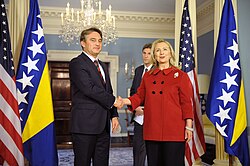
Željko Komšić, Croat member of the Bosnian Presidency, and Hillary Clinton, U.S. Secretary of State, 13 December 2011

Economic Landscape

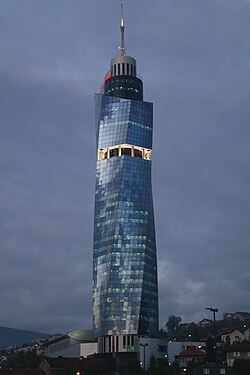
The economy has shown steady development since the post-war era. With a nominal GDP estimated at $36.77 billion by 2026, the country focuses on infrastructure and urban development, seen in the rise of the Avaz Twist Tower, the nation's tallest building.
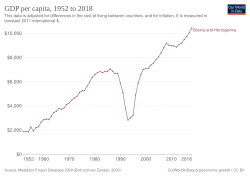
Estimated development of real GDP per capita of Bosnia and Herzegovina, since 1952

The Avaz Twist Tower in Sarajevo, the tallest building in Bosnia and Herzegovina

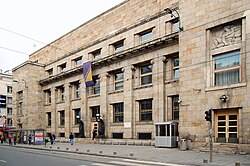
The Central Bank of Bosnia and Herzegovina in Sarajevo

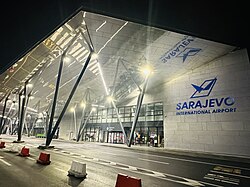
Sarajevo International Airport

Culture, Demographics, and Heritage

The country is a mosaic of faiths and ethnicities. According to the 2013 census, Islam is the most practiced religion (51.3%), followed by Eastern Orthodox Christianity (30.7%) and Catholicism (15.4%).
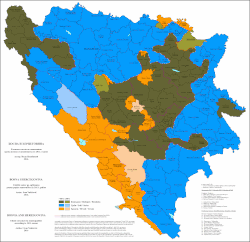
Ethnic structure of Bosnia and Herzegovina by municipalities in 2013, Green for Bosniaks, Orange for Croats and Blue for Serbs

Education and Intellectual Life

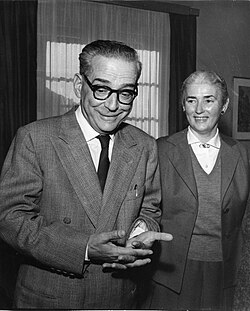
Sarajevo remains the intellectual hub, hosting the University of Sarajevo and various international institutions. The region's literary contribution is globally recognized, most notably through the works of Nobel laureate Ivo Andrić.
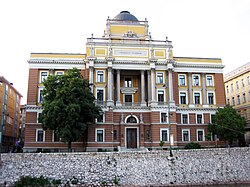
The University of Sarajevo's Faculty of Law

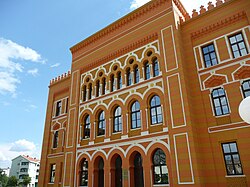
Gimnazija Mostar in Mostar

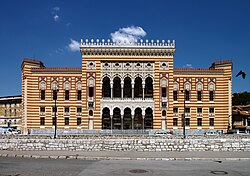
Sarajevo City Hall
Sarajevo City Hall

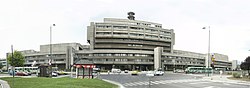
BHRT headquarters in Sarajevo

Ivo Andrić with his wife Milica, upon learning he had won the Nobel Prize in Literature

Traditions and Leisure

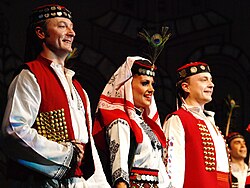
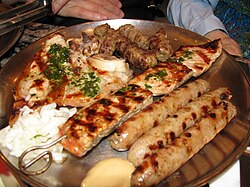
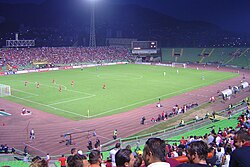
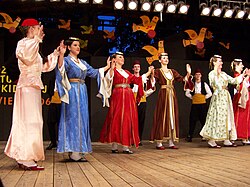
From the ancient Stećci (medieval tombstones) to the traditional kolo dance, the cultural heritage is vibrant. The national cuisine is highlighted by ćevapi, a beloved grilled meat dish. The country also has a strong sporting tradition, having hosted the 1984 Winter Olympics.
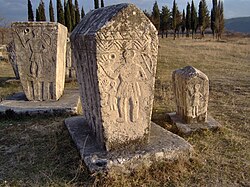
Stećci from Radimlja, near Stolac (13th century)

Bosniaks dancing a traditional kolo

Serbs from Bosanska Krajina in traditional clothing

Bosnian meat platter that contains, among other things, ćevapi, which is considered the national dish of Bosnia and Herzegovina

The Asim Ferhatović Hase Stadium in Sarajevo hosted the opening ceremony of the 1984 Winter Olympics

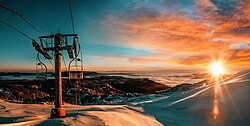
The Jahorina Ski Resort, a 1984 Winter Olympics venue, is the biggest and most popular ski resort in Bosnia and Herzegovina

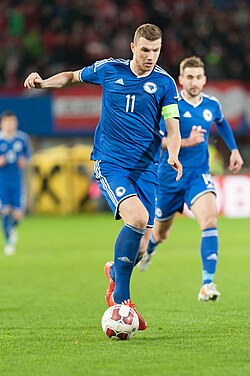
Edin Džeko playing for Bosnia and Herzegovina in 2015

Country Overview: Bosnia and Herzegovina
Category Detail
Official Languages Bosnian, Croatian, Serbian (Recognized regional)
Population (2023 Est.) 3,412,000
Currency Convertible mark (BAM)
GDP per capita (PPP 2026 Est.) $24,123
HDI (2023) 0.804 (Very High)

Frequently Asked Questions

What is the current political structure of Bosnia and Herzegovina?

It is a federal parliamentary directorial republic consisting of two main entities—the Federation of Bosnia and Herzegovina and Republika Srpska—along with the self-governing Brčko District.

Which languages are spoken in the country?

While there are no single official languages, Bosnian, Croatian, and Serbian are the recognized regional languages.

What is the significance of the Dayton Agreement?

The Dayton Agreement, signed on December 14, 1995, ended the Bosnian War and established the current constitutional and political framework of the country.

What are the primary ethnic groups in Bosnia and Herzegovina?

The population is primarily composed of Bosniaks (50.1%), Serbs (30.8%), and Croats (15.4%), according to the 2013 census.

What is the national dish of Bosnia and Herzegovina?

Ćevapi, a grilled minced meat dish typically served in flatbread, is considered the national dish.