St. Charles Avenue: The Historic Heart of New Orleans
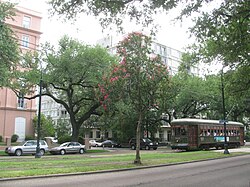
St. Charles Avenue (French: avenue Saint-Charles) is one of the most iconic thoroughfares in New Orleans, Louisiana. Renowned for its sweeping canopy of live oaks and a stunning collection of historic mansions, the avenue serves as a living museum of the city's architectural and social evolution. It is most famous as the route of the historic St. Charles Streetcar Line and as a primary artery for the city's legendary Mardi Gras parades.
The avenue is named after St. Charles Borromeo, the patron saint of Charles III of Spain. This naming reflects a pivotal moment in North American history: the 1763 conclusion of the Seven Years' War, when France transferred the vast Louisiana territory to Spain.

Key Facts
- Route: Extends from Canal Street to the Mississippi River levee at Leake Street.
- Transit: Home to the St. Charles Streetcar Line, one of the oldest continuously operating streetcar lines in the world.
- Nature: Lined with southern live oak trees planted in the early 20th century.
- Culture: Serves as a chief route for Mardi Gras parades.
- Geography: Built atop a natural levee, following the crescent curve of the Mississippi River.
Geography and Layout
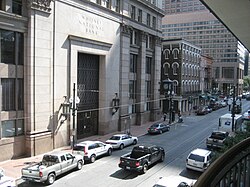
St. Charles Avenue begins at its "downriver" end at Canal Street, where it aligns with Royal Street in the French Quarter. From there, it traverses the New Orleans Central Business District and extends through Uptown New Orleans, mirroring the curve of the Mississippi River while remaining slightly inland. The route concludes one block past Carrollton Avenue, intersecting with Leake Street/River Road at the foot of the river levee.
The road's configuration changes as it moves upriver:
- Canal Street to Lee Circle: Officially designated as St. Charles Street, this section is one-way (upriver) with two lanes, where the streetcar shares the right-of-way with one vehicle lane.
- Lee Circle to Louisiana Avenue: This section features two lanes of traffic in each direction, separated by a grassy median known locally as the neutral ground, which houses two streetcar rail lines.
- Louisiana Avenue to Carrollton Avenue: This stretch consists of one lane of traffic in each direction and the central neutral ground.
A Legacy of Architecture and History
The development of St. Charles Avenue was fueled by the construction of the New Orleans and Carrollton Railroad, which eventually became the modern streetcar line. Because the street was laid out on a slight rise—the remains of an old natural levee—it became a highly desirable location for the city's elite.
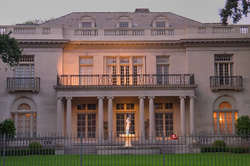
From the mid-19th century through the early 20th century, the avenue became the premier site for opulent mansions. While some were lost in the mid-to-late 20th century, many were saved when the area was declared a historic district. Today, these structures serve various purposes, including private residences, condominiums, rental apartments, boutique hotels, and public libraries.
Prominent Landmarks
The avenue is home to several architectural gems and institutions:
- The Pontchartrain Hotel: A landmark of the city in business since 1927.
- The Columns Hotel: A 19th-century mansion used as a hotel and a filming location for the movie Pretty Baby.
- Gallier Hall: A historically significant building that served as City Hall until the 1950s.
- Educational Institutions: The facades of both Tulane University and Loyola University New Orleans are located here, opposite Audubon Park.
- Milton Latter Memorial Library: Formerly the mansion of silent-film star Marguerite Clark.
Summary of St. Charles Avenue
| Feature | Details |
|---|---|
| Naming Origin | St. Charles Borromeo (Patron of Charles III of Spain) |
| Key Transit | St. Charles Streetcar Line |
| Notable Flora | Southern Live Oaks |
| Primary Neighborhoods | CBD, Garden District, Uptown, Carrollton |
| Major Events | Mardi Gras Parades |
Frequently Asked Questions
What is the "neutral ground" on St. Charles Avenue?
The neutral ground is the local New Orleans term for the grassy median that separates opposing lanes of traffic and houses the streetcar tracks.
How did the streetcar influence the area?
The New Orleans and Carrollton Railroad, which became the streetcar line, provided the transit infrastructure that fueled the residential development of Uptown New Orleans during the 19th century.
Was St. Charles Avenue affected by Hurricane Katrina?
During the 2005 flooding caused by levee failures, St. Charles Avenue and the portions of Uptown closest to the Mississippi River escaped significant flooding.
What is the historical significance of the mansions?
The mansions represent the wealth of New Orleans from the mid-19th to early 20th centuries. Many have been preserved through the establishment of a historic district and now serve as hotels, libraries, or apartments.
Where does St. Charles Avenue end?
The avenue ends one block past Carrollton Avenue, where it intersects with Leake Street/River Road at the foot of the Mississippi River levee.