Sport: Definitions, Evolution, and Global Impact
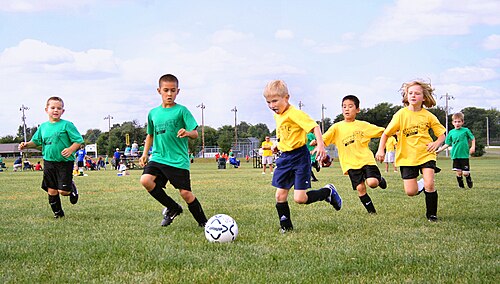
At its core, sport is a physical activity or game—often competitive and organized—designed to maintain or improve physical ability and skills. While many engage in sport for personal enjoyment and health, it also serves as a massive source of entertainment for spectators worldwide. The scale of participation varies wildly, ranging from solitary individual pursuits to massive team events involving thousands of people.
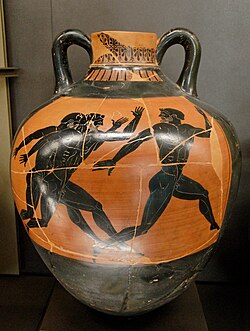
From the ancient foot races dedicated to Zeus to the high-tech arenas of the modern era, sport has evolved into a complex global phenomenon governed by rules, customs, and international bodies.
Key Facts
- Core Definition: Activities based on physical athleticism or physical dexterity.
- Mind Sports: Non-physical activities like chess and bridge are recognized as sports by the International Olympic Committee (IOC).
- GAISF Criteria: To be classified as a sport, an activity must have a competitive element, be harmless to living creatures, and not rely on a single equipment supplier.
- Governance: Sports are managed by rules to ensure fair competition, with winners determined by objective markers (like crossing a finish line) or subjective judging (like artistic impression).
- Diversity: Participation spans all demographics, including youth, disabled athletes, and older adults through events like the Senior Games.
Defining Sport and Competition
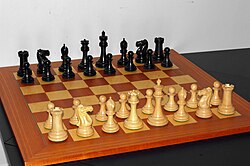
While most agree that sport requires physical exertion, the definition can be fluid. The Council of Europe generally excludes activities without a physical element. However, the concept of mind sports challenges this. The International Olympic Committee recognizes chess and bridge, while SportAccord recognizes five non-physical sports: chess, bridge, draughts, Go, and xiangqi.
Competitions are structured in various formats. They may be open, welcoming all participants, or closed, restricting entry to invited guests or specific groups. Results can end in a "tie" or "draw," though many competitions employ tie-breaking methods to ensure a single winner. Many professional leagues utilize a regular season followed by playoffs to crown an annual champion.

The Role of Fair Play
To maintain integrity, sports rely on sportsmanship and strict rules to prevent cheating, violence, and doping. These standards ensure that victory is a result of skill and effort rather than unfair advantages.
The Diversity of Participation
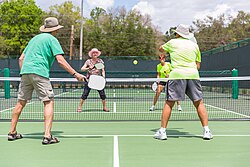
Sport is a universal human activity that adapts to different stages of life and physical abilities. Youth participation often focuses on development and social interaction, while older adults engage in specialized activities. For example, pickleball has become particularly attractive to older players, and the USATF Masters Championships provide competitive outlets for senior athletes.
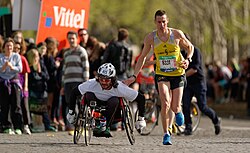
Inclusivity has also expanded through disabled participation, ensuring that physical limitations do not preclude the experience of competitive athletics.
Gender and Professionalism
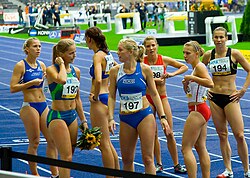
The divide between amateur and professional sports defines how athletes train and earn a living. Simultaneously, there is a global push toward gender parity in sports participation and viewership, aiming to close the gap between male and female athletes.
Technology and Modern Evolution
The advent of the modern age introduced motorized sports and a reliance on high-tech equipment. Technology now plays a critical role in officiating and performance. Systems like Hawk-Eye and Goal-line technology in football (soccer) and cricket reduce human error in officiating.

However, technology also brings controversy. The use of high-tech swimsuits, for instance, led to bans in professional swimming to preserve the integrity of human athletic performance over equipment advantages.
Sport, Politics, and Society
Sport is rarely isolated from politics. In Ireland, Gaelic sports were deeply tied to cultural nationalism. The Gaelic Athletic Association (GAA) historically banned members from playing "British" sports like Association football or rugby union under Rule 42, though this was later modified. Similarly, Rule 21 once banned members of British security forces from Gaelic games until the 1998 Good Friday Agreement.
In other contexts, sport has been used as a tool for state control. In communist East Germany from the 1970s to 1990, the Stasi used a network of collaborators within top-level sports to surveil athletes and prevent them from escaping to the West.
Summary of Sport Classifications
| Category | Primary Characteristic | Examples | Recognized By |
|---|---|---|---|
| Physical Sport | Athleticism/Dexterity | Football, Running, Swimming | General Consensus / IOC |
| Mind Sport | Mental Strategy | Chess, Bridge, Go | IOC / SportAccord |
| Motor Sport | Mechanical Speed | Formula 1, Motorcycle Racing | General Consensus |
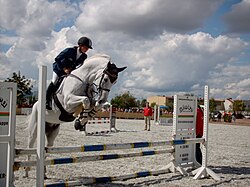
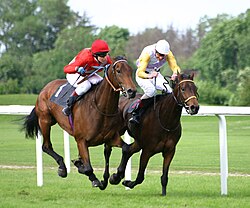
| Equestrian Sport | Animal Partnership | Show Jumping, Horse Racing | General Consensus |


Frequently Asked Questions
What is the difference between a sport and a game?
While the terms are often used interchangeably, a sport is generally defined by physical athleticism or dexterity and is often organized and competitive. Games may be purely recreational or non-physical, though some games (like chess) are recognized as sports by international bodies.
Can a non-physical activity be considered a sport?
Yes. The International Olympic Committee and SportAccord recognize several "mind sports," including chess, bridge, Go, draughts, and xiangqi, despite their lack of physical exertion.
What are the GAISF criteria for a sport?
According to GAISF, a sport must have an element of competition, must not be harmful to any living creature, and must not rely on equipment provided by a single proprietary supplier (with some exceptions like arena football).
How is winning determined in different sports?
Winning can be objective, such as scoring the most goals or crossing a finish line first. In other sports, winners are determined by judges who score performances based on technical execution or artistic impression.
How has technology impacted sports officiating?
Technology has introduced precision tools like Goal-line technology and the Television Match Official (TMO) in rugby, as well as the Hawk-Eye system in cricket and tennis, to provide more accurate decisions than the human eye alone.