Spice Trade History: From Ancient Rituals to Global Commerce
For millennia, the quest for aromatic seeds, barks, and resins has shaped the course of human civilization. What began as local usage for medicine and ritual evolved into a global economic engine that drove explorers across uncharted oceans and built the fortunes of great empires. The history of the spice trade is not merely a story of flavor, but a chronicle of geopolitical power, scientific discovery, and cultural exchange.
The Ancient Origins of Spice Use
Tracing the earliest use of spices is a challenge for archaeologists because spices were typically used in small quantities, leaving behind very few preserved remains. However, evidence suggests that by 2000 BCE, a robust trade in black pepper and cinnamon had already developed across the Middle East and the Indian subcontinent, while East Asia utilized various peppers and herbs.
Ancient Egypt played a pivotal role in stimulating early world trade. The Egyptians utilized herbs for both culinary purposes and mummification. One of the most significant early records is the Ebers Papyrus, dating to 1550 BCE, which details approximately 800 different herbal medicinal remedies and various medical procedures.
By 1000 BCE, sophisticated medical systems based on herbs were established in India, Korea, and China. During this era, spices were deeply intertwined with religion, magic, tradition, and the preservation of food and bodies.
The biblical texts also reflect the prominence of spices. In the Old Testament, the Book of Genesis mentions Joseph being sold to spice merchants, Exodus describes manna as resembling coriander, and the Song of Solomon compares a beloved to saffron and cinnamon.
Other early milestones include the use of cloves in Mesopotamia by 1700 BCE and the introduction of nutmeg (native to the Banda Islands of Southeast Asia) to Europe around the 6th century BCE. By the 1st century CE, the Roman writer Pliny the Elder recorded the presence of cloves in Rome.
The Shift to Maritime Routes
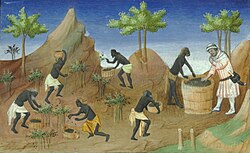
Initially, spices moved via land-locked routes facilitated by Arab caravans. However, the discovery of the monsoon winds around 40 CE revolutionized the industry. This allowed sailors to travel directly from Eastern spice cultivators to Western consumers. Indonesian merchants navigated routes through Africa, India, and China, while Arab merchants managed the Middle Eastern corridors, eventually making the Egyptian port of Alexandria the primary trading hub for spices.
Spices in the Middle Ages
During the Middle Ages, spices became some of the most expensive and sought-after commodities in Europe. The most common imports included ginger, nutmeg, cloves, cumin, cinnamon, and black pepper (along with its cheaper alternative, cassia).
The demand was driven by two primary factors: medicine and status. Medieval medicine relied on humorism—the theory that health depended on balancing bodily fluids (humors). Spices were considered essential for balancing these humors in daily food to maintain health during frequent pandemics. Simultaneously, the European elite viewed spices as a connection to "paradise." For instance, the King of Aragon invested heavily in the 12th century to import spices specifically for use in wine.
From the 8th to the 15th century, the Republic of Venice held a strict monopoly on the spice trade with the Middle East, bringing immense wealth to the region. It is estimated that during the Late Middle Ages, Western Europe imported 1,000 tons of pepper and 1,000 tons of other spices annually. The economic value of these imports was equivalent to the amount of grain needed to feed 1.5 million people for a year.
Rare and Forgotten Spices
While saffron was the most exclusive spice—prized for both its flavor and vivid yellow-red color—other spices used in the Middle Ages have since faded from European cuisine. These include:
- Grains of paradise: A relative of cardamom that largely replaced pepper in late medieval north French cooking.
- Long pepper
- Mace
- Spikenard
- Galangal
- Cubeb
The Early Modern Period and Global Expansion
The desire to break the Venetian monopoly and find direct routes to Asia sparked the Age of Discovery. In 1499, Portuguese navigator Vasco da Gama reached India, where he discovered he could secure pepper at a much lower cost than the prices demanded by Venice.
Competition intensified as the Ragusans from the maritime republic of Dubrovnik (modern-day Croatia) entered the fray. However, the Portuguese gained a strategic advantage through the military campaigns of Afonso de Albuquerque. Between 1506 and 1511, Albuquerque seized key locations including Socotra, Ormuz, Goa, and Malacca. This allowed Portugal to trade directly with China, Siam, and the Maluku Islands.
The landscape of flavor changed forever with Christopher Columbus's return from the New World. The discovery of the Americas introduced entirely new seasonings to the global market, including vanilla, chocolate, chili peppers, and allspice. These additions ensured that the spice trade remained highly profitable well into the 19th century.
Key Facts
- Ancient Records: The Ebers Papyrus (1550 BCE) lists 800 herbal remedies.
- Economic Value: Late Middle Age spice imports were worth as much as grain for 1.5 million people.
- Trade Shift: The discovery of monsoon winds (40 CE) shifted trade from land caravans to sea routes.
- Monopoly: The Republic of Venice dominated the Middle Eastern spice trade from the 8th to the 15th century.
- New World Additions: Vanilla, chocolate, and chili peppers were introduced following the discovery of the Americas.
| Spice | Origin/Key Region | Historical Significance |
|---|---|---|
| Black Pepper | India | One of the most common and traded spices since 2000 BCE. |
| Nutmeg | Banda Islands | Introduced to Europe around the 6th century BCE. |
| Saffron | Various | The most exclusive spice, valued for its yellow-red color. |
| Cloves | Asia | Used in Mesopotamia by 1700 BCE; recorded by Pliny the Elder. |
| Cinnamon | Asia | Traded since 2000 BCE; mentioned in the Old Testament. |
Frequently Asked Questions
Why were spices so expensive in the Middle Ages?
Spices were expensive because they were imported from distant plantations in Asia and Africa. Furthermore, the Republic of Venice held a monopoly on the trade routes between the Middle East and Europe for several centuries, driving up costs.
What was the role of spices in medieval medicine?
Based on the theory of humorism, spices and herbs were used to balance the body's "humors" to maintain health and combat recurrent pandemics.
How did the discovery of monsoon winds change the spice trade?
The discovery of monsoon winds around 40 CE allowed sailors to navigate directly from Eastern spice-producing regions to Western consumers, gradually replacing the slower, land-based Arab caravan routes.
Which spices were introduced to Europe from the New World?
The discovery of the Americas introduced allspice, vanilla, chocolate, and chili peppers to the global spice trade.
Who were the key figures in the Portuguese expansion of the spice trade?
Vasco da Gama established a direct sea route to India in 1499, and Afonso de Albuquerque secured strategic ports like Goa and Malacca to control the sea routes to Asia.