Parga: A Journey Through the History of a Coastal Gem
Nestled along the coast of Epirus, Parga is more than just a scenic destination; it is a town shaped by centuries of geopolitical struggle, cultural shifts, and resilience. From its roots in antiquity to its modern identity as a Greek town, Parga has served as a strategic prize for empires and a sanctuary for those seeking freedom.
The region's history begins in antiquity, when it was inhabited by the Thesprotians, a Greek tribe. Evidence of early civilization remains today through the discovery of Mycenean tholos tombs in the vicinity. During the late Hellenistic Age, the area was home to the ancient town of Toryne, named after the Greek word for "ladle" (Τορύνη) due to the distinct shape of its beach.
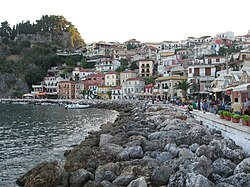
The Venetian Era and Ottoman Friction
Parga first appears in historical records in 1318, with a name likely of Slavic origin. Its strategic value was recognized early; in 1320, Nicholas Orsini, the Despot of Epirus, attempted to trade the town and its sugarcane profits to the Republic of Venice in exchange for military aid against the Byzantine Empire.
After a period of shifting loyalties—including rule by the Albanian leader Gjin Bua Shpata in the 1390s—the townspeople overthrew the tyrannical governor Vonko and sought Venetian protection. In 1401, Parga officially passed under Venetian control, serving as a mainland exclave of Corfu. This era was marked by constant tension with the neighboring Ottoman-controlled town of Margariti. Conflicts often centered on agricultural territory, leading to frequent raids and diplomatic protests filed by the Venetian bailo (representative) in the Ottoman court.
Life Under the Lion of St. Mark
Despite the instability, Parga became a diverse hub. By 1496, records indicate the presence of a Romaniote Jewish community. The town also served as a base for anti-Ottoman rebels, such as those led by Emmanuel Mormoris in 1570, who sought to liberate the coastal regions of Epirus.
The Struggle for Independence and the Era of Ali Pasha
Parga remained a Venetian stronghold until 1797, when the Republic of Venice fell, passing the town to France. However, the rise of Ali Pasha of Ioannina created a new threat. The French struggled to maintain control as Ali Pasha's ambitions grew, leading to violent clashes, including the 1812 massacre and enslavement of the population in the adjacent settlement of Agia by Daut Bey, Ali Pasha's nephew.
In 1815, Parga's citizens revolted against French rule and sought British protection. This respite was short-lived. In 1819, the British ceded the city to Ali Pasha in exchange for money. This decision sparked a mass exodus; the predominantly Greek, pro-Venetian population abandoned the town rather than live under Ottoman rule, relocating primarily to Corfu.
Ali Pasha subsequently repopulated the town with Albanian speakers from Chameria. While the town remained under Ottoman control, it was a site of conflict during the Greek War of Independence in 1821, when Souliotes and members of the diaspora launched an unsuccessful attack on the Ottoman garrison.
Modern Transition and the 20th Century
Parga finally became part of Greece in 1913 following the Balkan Wars. The transition was complex, particularly regarding the Muslim population. In 1924, under the population exchange between Greece and Turkey, 1,500 Albanian-speaking Muslims were transported to Turkey. Following protests and the intervention of a League of Nations Mixed Commission, a small group of 20 families was eventually allowed to remain as "non-exchangeable" residents.
The mid-20th century brought the hardships of the Axis Occupation. In August 1943, the German "Augustus" operation, supported by Italian units and Cham Albanian groups, led to the burning of Greek settlements and civilian murders. By 1944, violent clashes between the National Republican Greek League (EDES), the National Liberation Front (EAM), and Cham units resulted in further casualties. By the end of the war, the remaining Muslim Chams fled to Albania.
Key Facts
- Ancient Roots: Originally inhabited by the Thesprotians; home to the Hellenistic town of Toryne.
- Venetian Influence: Controlled by Venice from 1401 to 1797 as an exclave of Corfu.
- The 1819 Exodus: The Greek population abandoned the town entirely when the British ceded it to Ali Pasha.
- Integration: Officially became part of the Greek state in 1913 after the Balkan Wars.
- Architecture: The modern town is noted for preserving its traditional architectural features.
| Period | Ruling Power / Influence | Key Event |
|---|---|---|
| Antiquity | Thesprotians / Hellenistic | Establishment of Toryne |
| 1401 – 1797 | Republic of Venice | Administration as a Corfu exclave |
| 1797 – 1815 | France | Tensions with Ali Pasha |
| 1815 – 1819 | Great Britain | Brief protection before cession |
| 1819 – 1913 | Ottoman Empire | Repopulation by Albanian speakers |
| 1913 – Present | Greece | Integration after Balkan Wars |
Frequently Asked Questions
Why is the ancient town called Toryne?
The name Toryne (Τορύνη) is derived from the Greek word for "ladle," which describes the physical shape of the town's beach.
Why did the residents of Parga leave in 1819?
The population, which was predominantly Greek and strongly pro-Venetian, refused to live under Ottoman rule after the British ceded the town to Ali Pasha of Ioannina.
What was the role of the League of Nations in Parga?
The League of Nations formed a Mixed Commission to address protests regarding the forced relocation of Albanian-speaking Muslims to Turkey in the 1920s, eventually allowing a small group of families to remain in Parga.
Who were the Souliotes in the context of Parga?
The Souliotes were fighters who used Parga as a refuge during the Ottoman era and later attempted to attack the Ottoman garrison in Parga during the first year of the Greek War of Independence.
Is the Albanian language still spoken in the region?
Yes, Albanian is still spoken by a few inhabitants in parts of the wider municipality, including the Fanari plain and settlements like Anthousa and Kanallaki, where variants of Souliotic Albanian persist.