Preveza: A Journey Through the History of a Strategic Gateway
Located on the edge of the Ambracian Gulf, Preveza has served for millennia as a vital strategic point between the Ionian Sea and the Greek mainland. From the echoes of ancient naval battles to its role as a contested prize between empires, the city's history is a reflection of the broader geopolitical struggles of the Mediterranean.
Antiquity and the Legacy of Victory
In ancient times, the region of south-southwestern Epirus was home to the Cassopeans, a Greek tribe belonging to the larger Thesprotian group. Their center of power was the city of Cassope. By 290 BC, King Pyrrhus expanded the region's importance by founding the town of Berenike, named after his mother-in-law, Berenice I of Egypt. Modern excavations suggest Berenike was located on the hills near the village of Michalitsi.
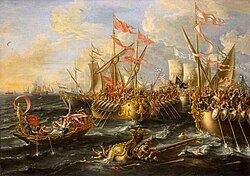
The waters near Berenike witnessed one of history's most decisive naval engagements: the Battle of Actium on September 2, 31 BC. Here, the forces of Octavian defeated Mark Antony and Queen Cleopatra of Egypt, paving the way for the Roman Empire. To commemorate this triumph, Augustus built the city of Nicopolis (meaning "Victory City"), which grew to a peak population of 150,000.
Nicopolis also became a center for intellectual pursuit. In AD 90, the philosopher Epictetus established a school there after being banished by Emperor Domitian. His teachings were preserved by his student Arrian, a renowned historian.
The Medieval Transition and Ottoman Rise
The name "Preveza" first appears in historical records in 1292 within the Chronicle of the Morea, documenting a raid by Genoese allies of Byzantine Emperor Andronikos II Palaiologos. The city likely emerged as Nicopolis was abandoned following Uzes raids in the 1060s. However, the modern city's foundations are primarily linked to the Ottoman conquest in the late 15th century, with fortifications established around 1486–1487 and strengthened in 1495.
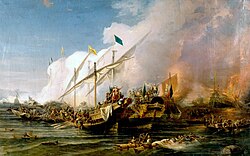
The city's strategic value was cemented on September 29, 1538, during the Battle of Preveza. The Ottoman fleet, led by Hayreddin Barbarossa, defeated a combined Christian fleet commanded by Andrea Doria. This victory remains a point of national pride for the Turkish Navy, which still names some of its submarines "Preveze" in honor of the event.
The Venetian Era and Trade Expansion
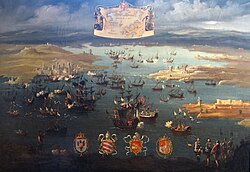
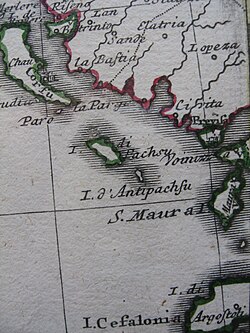
For centuries, Preveza was a focal point of the Ottoman-Venetian Wars. The Republic of Venice captured the city in September 1684 during the Morean War, though it was returned to the Ottomans in 1699. Venice regained control in 1717, maintaining its hold until the fall of the Venetian Republic in 1797.
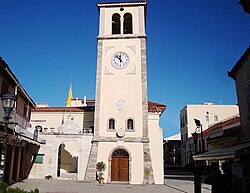
Under Venetian rule, the city experienced cultural and economic growth. In 1779, the Orthodox missionary Kosmas founded the city's only 18th-century school. By the end of the century, Preveza had evolved into a trade hub for Western Europe, particularly France, with its population growing to between 10,000 and 12,000 residents.
French Rule and the Tragedy of Nicopolis
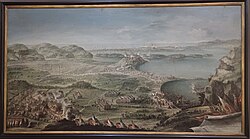
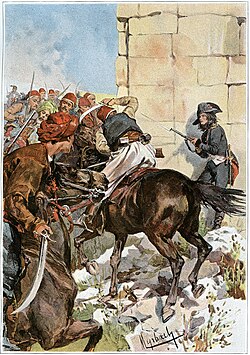
Following the Treaty of Campo Formio, Napoleon Bonaparte ceded Venetian possessions in Greece to Revolutionary France. While the local population initially welcomed the French troops and formed a pro-French militia, this period was short-lived. Napoleon's focus shifted toward Egypt and Syria, leaving the Preveza garrison vulnerable.
In October 1798, the ambitious local governor Ali Pasha Tepelena attacked the city. On October 12, 1798, the Battle of Nicopolis resulted in a crushing defeat for the French and their Greek allies. This was followed by a brutal massacre of soldiers and civilians in Preveza and Port Salaora. Even those promised safety upon their return were executed; 170 citizens were killed by the sword at the Salaora Port Customs.
The Second Ottoman Period and National Awakening
Preveza remained under the semi-independent rule of Ali Pasha until 1820, after which it returned to direct control from Constantinople. In 1863, it became the seat of the Sanjak of Preveze. Education saw a revival in 1835 with the foundation of the Theophaneios school, sponsored by Anastassios Theophanis, which became a regional educational center.
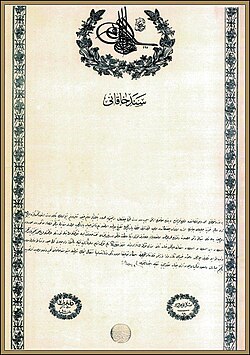
The late 19th century was marked by diplomatic tension. Despite the 1878 Congress of Berlin suggesting the region be ceded to Greece, negotiations failed. Albanian national figures, including Abedin bey Dino and Abdyl Frashëri, organized protests and petitions in 1879 to prevent Greek annexation. While Greece eventually acquired Thessaly and Arta in 1881, most of Epirus remained Ottoman until the early 20th century.
Liberation and the World Wars
Preveza finally joined Greece on October 21, 1912, during the First Balkan War, following the Battle of Nicopolis led by Colonel Panagiotis Spiliadis. A notable event occurred on February 8, 1913, when Russian pilot Nikolay Sakov, flying for the Greeks, became one of the first pilots in history to be shot down in combat, though he survived with the help of locals.
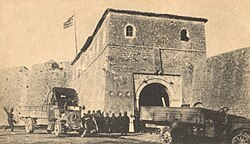
During World War II, the city suffered under Italian (1941–1943) and German (1943–1944) occupation. The local Jewish community was devastated; of 250 members, only 15 survived the Nazi death camps. Following the German retreat in 1944, the city was briefly a site of conflict during the Greek Civil War between the EDES and EAM-ELAS factions, ending with the Caserta Agreement.
Modern Preveza
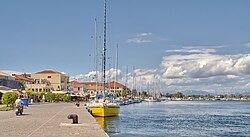
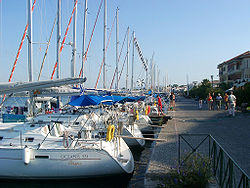
Today, Preveza is a thriving tourist and commercial center. It serves as a gateway to the island of Lefkada and is supported by the nearby Aktion National Airport. The city hosts the Commercial Navy Academy and a department of the University of Ioannina. A major infrastructure milestone was the 2002 opening of the Aktio-Preveza Immersed Tunnel, which significantly reduced travel time to Lefkada by linking Preveza to Actium.
| Period/Era | Ruling Power/Influence | Key Event/Development |
|---|---|---|
| Antiquity | Cassopeans / Romans | Battle of Actium (31 BC); Founding of Nicopolis |
| Medieval/Early Ottoman | Byzantine / Ottoman | Battle of Preveza (1538); Ottoman fortification |
| Venetian Rule | Republic of Venice | Trade expansion with Western Europe |
| French Rule | Revolutionary France | Battle of Nicopolis (1798) and subsequent massacre |
| Late Ottoman | Ottoman Empire / Ali Pasha | Establishment of Theophaneios school |
| Modern Era | Kingdom of Greece / Republic | Liberation (1912); Aktio-Preveza Tunnel (2002) |
Key Facts
- Strategic Location: Preveza serves as a critical link between the Ionian Sea and the Ambracian Gulf.
- Ancient Roots: The nearby city of Nicopolis once housed 150,000 people after the Battle of Actium.
- Naval Significance: The 1538 Battle of Preveza is still celebrated as a National Holiday by the Turkish Navy.
- Tragic History: The 1798 massacre by Ali Pasha's forces significantly impacted the local Greek population.
- Aviation Milestone: The city was the site of one of the world's first combat pilot shoot-downs in 1913.
- Modern Infrastructure: The 2002 immersed tunnel has transformed regional accessibility.
Frequently Asked Questions
What is the relationship between Preveza and ancient Nicopolis?
While some early scholars suggested Preveza was a continuation of Nicopolis, evidence suggests the modern city was founded or fortified by the Ottomans in the late 15th century, long after Nicopolis had been abandoned following raids in the 1060s.
Who was Ali Pasha Tepelena?
Ali Pasha was a semi-independent Ottoman governor who ruled Preveza from 1798 to 1820. He is known for his ambitions of independence and the brutal massacre of French and Greek forces following the Battle of Nicopolis.
Why is the Battle of Preveza (1538) important?
It was a major naval victory for the Ottoman fleet under Hayreddin Barbarossa against a united Christian fleet, establishing Ottoman naval dominance in the region.
When did Preveza officially become part of Greece?
The city was liberated by the Greek Army on October 21, 1912, during the First Balkan War, and formally became part of Greece via the Treaty of London in 1913.
What is the Aktio-Preveza Immersed Tunnel?
Opened in 2002, it is a critical piece of infrastructure that connects Preveza to Actium on the southern shore of the Ambracian Gulf, greatly shortening the route to the island of Lefkada.