Venice: The Eternal Floating City of Italy
Known by evocative nicknames such as La Serenissima (The Most Serene) and the City of Masks, Venice is one of the world's most unique urban achievements. Built across a lagoon in the Veneto region of Italy, this city is a masterpiece of engineering and art, where streets are replaced by canals and squares serve as the heart of social life. From its origins as a refuge for those fleeing invasions to its peak as a global maritime superpower, Venice remains a symbol of resilience and luxury.
The city is officially a Comune (municipality) and is recognized as a UNESCO World Heritage Site due to its unparalleled cultural and architectural significance.
Key Facts

- Location: Veneto region, Italy.
- Population: 249,466 (2025 estimate).
- UNESCO Status: Inscribed in 1987.
- Geography: Built on 127 islands in a lagoon, with an average elevation of just 1 meter.
- Patron Saint: St. Mark the Evangelist.
- Administrative Divisions: Divided into six Sestieri (historic districts).
A Journey Through History
Origins and the Republic
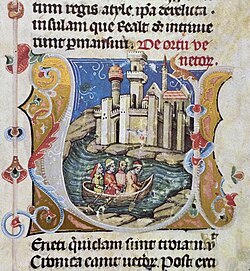
The foundations of Venice are rooted in instability. According to the 1358 Chronicon Pictum, the city was founded on the island of Rialto by inhabitants of Aquileia fleeing the siege of King Attila the Hun. Over centuries, Venice evolved from a Byzantine outpost into the independent Republic of Venice (697–1797), a maritime empire that dominated trade between Europe and the East.
Expansion and Decline
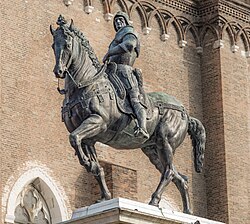
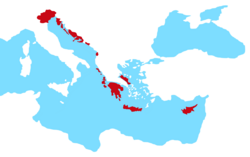
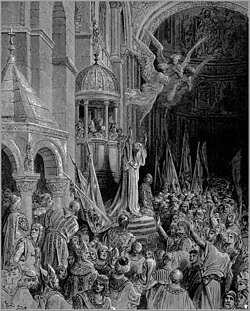
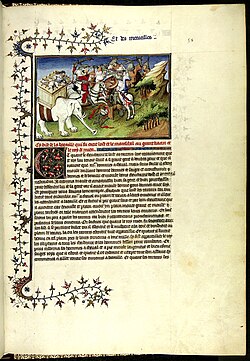
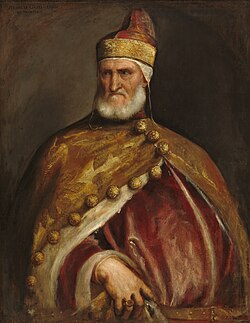
At its height, the Republic controlled a vast network known as the Stato da Màr (State of the Sea) and the Terraferma (mainland territories). This era saw the rise of legendary figures like Marco Polo, whose travels expanded Western knowledge of Asia, and the influence of Doges—the elected leaders of the city—such as Enrico Dandolo.
Modern Transition
The Republic fell in 1797, leading to a period of shifting control between the Habsburg monarchy, the Kingdom of Italy, and the Republic of San Marco. Today, Venice is a vital part of the Italian Republic, balancing its role as a living city with its status as a global tourist destination.
Geography and the Battle Against Water
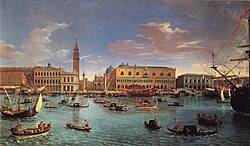
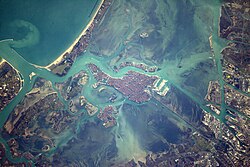
The Lagoon and Subsidence
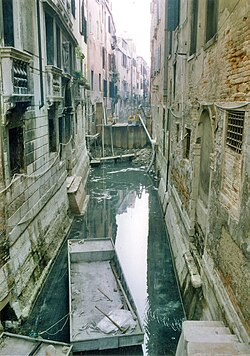
Venice is an archipelago of 127 islands. Because it is built on soft mud and clay, the city faces subsidence—the gradual sinking of the land. To support its massive stone structures, builders drove millions of wooden piles deep into the ground to reach harder soil layers.
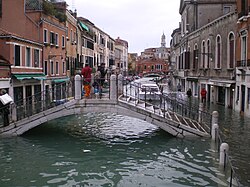
Acqua Alta and Climate Challenges
The city is famously susceptible to Acqua alta (high water), periodic flooding caused by high tides and sea-level rise. This environmental pressure requires constant maintenance and innovative engineering to protect the historic center from the encroaching Adriatic Sea.
City Structure and Administration
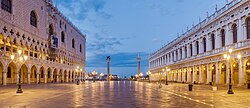
The Six Sestieri
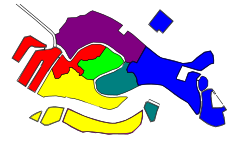
The historic center is divided into six districts called Sestieri. Each has its own distinct character, from the administrative heart of San Marco to the residential quiet of Cannaregio.
| Sestiere | Area (ha) | Islands | Character |
|---|---|---|---|
| Cannaregio | 121.36 | 33 | Residential and Ghetto area |
| Castello | 173.97 | 26 | Largest district, home to the Arsenal |
| San Marco | 54.48 | 16 | Political and religious center |
| Dorsoduro | 161.32 | 31 | Artistic and university hub |
| San Polo | 46.70 | 7 | Commercial heart near Rialto |
| Santa Croce | 88.57 | 14 | Gateway to the mainland |
Boroughs and the Mainland
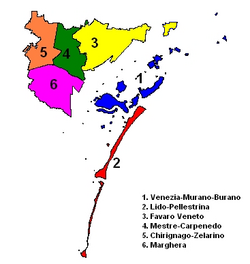
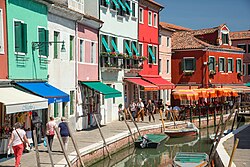
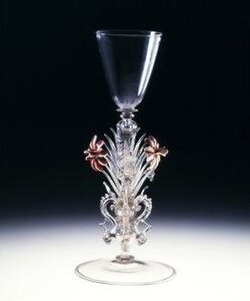
Beyond the historic center, the municipality includes the Terraferma (mainland) areas such as Mestre and Marghera, as well as the specialized islands of Murano (famous for glass) and Burano (known for lace).
Culture, Art, and Economy
Architectural Splendor
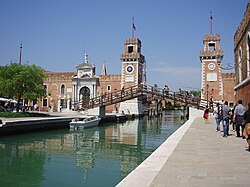
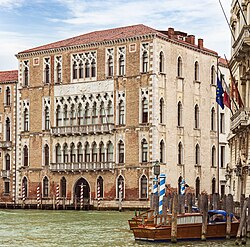
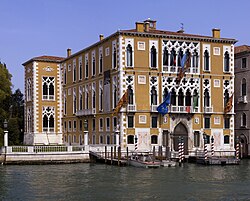
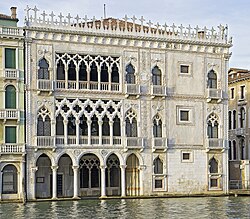
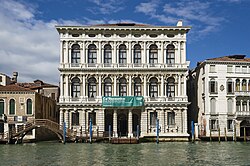
Venetian architecture is a blend of Gothic, Byzantine, and Baroque styles. St Mark's Basilica stands as a premier example of Italo-Byzantine design, while the Doge's Palace showcases the city's political grandeur.
![St Mark's Basilica in Venice, one of the best known examples of Italo-Byzantine architecture[32]](/images/54/fe/54fea2766ed77f3da5f6ad7921a56ae8af190f04e686709c85b336b942f3f6aa.jpg)
The Arts and Intellectual Legacy
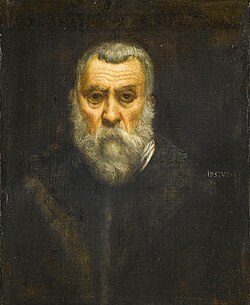
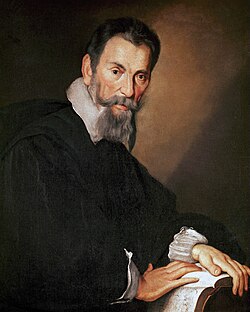
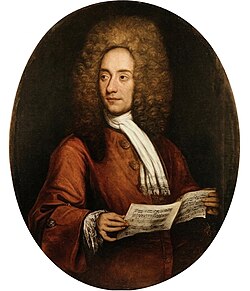
Venice has been a sanctuary for some of history's greatest artists and musicians. The Venetian school of painting, led by masters like Titian and Tintoretto, redefined the use of color and light. In music, the city produced the Baroque genius Antonio Vivaldi and the influential composer Claudio Monteverdi.
Modern Economy and Tourism
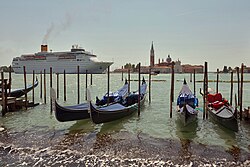
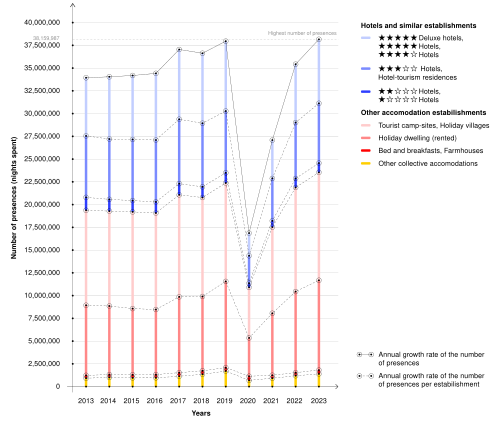
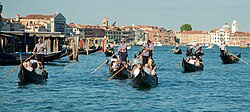
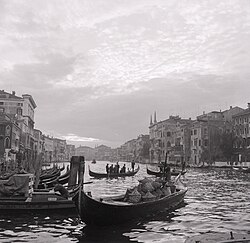
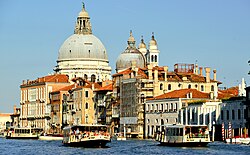
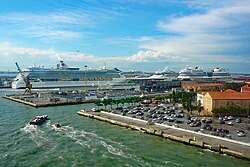
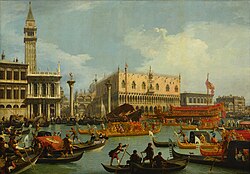
Today, the economy is heavily driven by tourism. While the Grand Canal remains the primary artery for transport via vaporetti (water buses) and gondolas, the city struggles with overtourism, leading to efforts to divert large cruise ships away from the San Marco basin.
Transport and Infrastructure
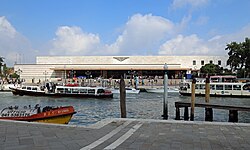
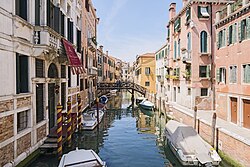
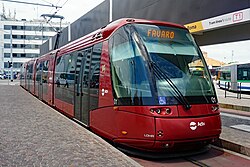
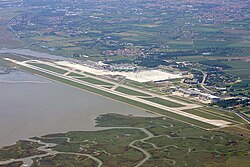
Venice is one of the few car-free cities in the world. Transport within the historic center is entirely water-based or pedestrian. For those arriving from the mainland, the Santa Lucia railway station and Piazzale Roma serve as the primary gateways.
Frequently Asked Questions
![The Venice Film Festival is the oldest film festival in the world and one of the most prestigious and publicized.[194][195]](/images/af/97/af97526b05bbc455bd336ea10a4a5319a16307a15d4eb907b6a2fa3ff06052df.jpg)


What are the Sestieri?
The Sestieri are the six historic districts that make up the center of Venice: Cannaregio, Castello, San Marco, Dorsoduro, San Polo, and Santa Croce.
What is Acqua Alta?
Acqua alta refers to the periodic high-tide flooding that occurs in Venice, often submerging the lower parts of the city and St Mark's Square.
How is Venice built on water?
The city is supported by millions of wooden piles driven deep into the lagoon's clay and mud, providing a stable foundation for the stone buildings above.
What is the difference between the historic city and the Terraferma?
The historic city consists of the islands within the lagoon, while the Terraferma refers to the mainland portions of the municipality, such as Mestre and Marghera.
Who was the Doge of Venice?
The Doge was the elected chief magistrate and leader of the Republic of Venice, serving as the head of state until the Republic's fall in 1797.