Speed of Light: Constants, Measurements, and Physical Implications
Light is the fastest known entity in the universe, serving as a fundamental constant that governs the laws of physics. Because light travels at a finite speed, there is a measurable delay between when an event occurs and when we observe it. For instance, sunlight takes between 8 minutes and 10 seconds to 8 minutes and 27 seconds to reach Earth, depending on the time of year.
Key Facts
- Exact Speed: In a vacuum, light travels at exactly 299,792,458 metres per second.
- Universal Limit: The speed of light in a vacuum (denoted as c) acts as an upper limit for all speeds.
- Defining the Metre: Since 1983, the metre has been defined by the distance light travels in a vacuum during 1/299,792,458 of a second.
- Medium Influence: Light slows down when passing through transparent materials like glass or air.
- Astronomical Scale: Light takes approximately 1.3 seconds to travel from the Moon to Earth and 4.2 years to reach us from the nearest star.
The Exact Value and Unit Definitions

For decades, scientists measured the speed of light experimentally. However, in 1983, the 17th General Conference on Weights and Measures (CGPM) redefined the metre to ensure higher reproducibility. By fixing the speed of light as a defined constant, any future improvements in measurement accuracy will refine the length of the metre rather than change the value of c.
This precision extends to astronomy. In 2012, the astronomical unit (AU)—the mean distance from the Earth to the Sun—was redefined as exactly 149,597,870,700 metres, further aligning astronomical measurements with the fixed speed of light.
| Unit/Distance | Value/Time |
|---|---|
| Metres per second | 299,792,458 |
| Kilometres per hour | ~1,080,000,000 |
| Miles per second | ~186,000 |
| From Moon to Earth | 1.3 seconds |
| From Sun to Earth (1 AU) | 8.3 minutes |
| Across the Milky Way | 87,400 years |
| From Andromeda Galaxy to Earth | 2.5 million years |
Propagation in Different Media
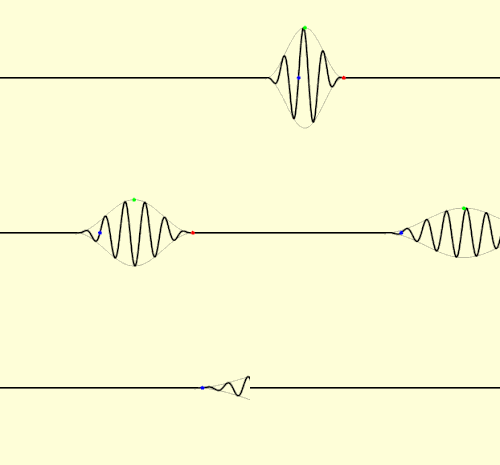
While c is the speed of light in a vacuum, light slows down when it travels through transparent materials. This phenomenon is described by the refractive index (n), which is the ratio between the speed of light in a vacuum and its speed in a specific material (n = c / v).
For example, visible light in glass has a refractive index of approximately 1.5, meaning it travels at roughly 200,000 km/s. In air, the refractive index is about 1.0003, making light travel approximately 90 km/s slower than it would in a vacuum.
Historical Determination of the Speed of Light
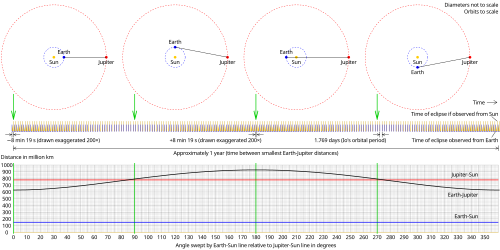
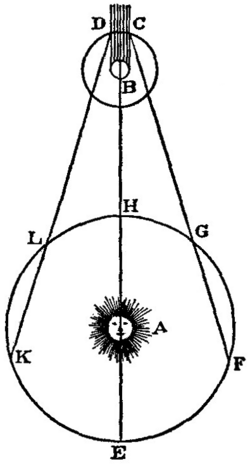
The realization that light does not travel instantaneously began in 1676 with Ole Rømer. By observing the eclipses of Jupiter's moon, Io, Rømer noticed that the orbital periods appeared shorter when Earth was moving toward Jupiter and longer when moving away. He concluded that light travels at a finite speed, estimating it took 22 minutes to cross the diameter of Earth's orbit.
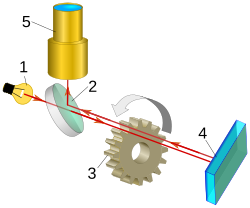
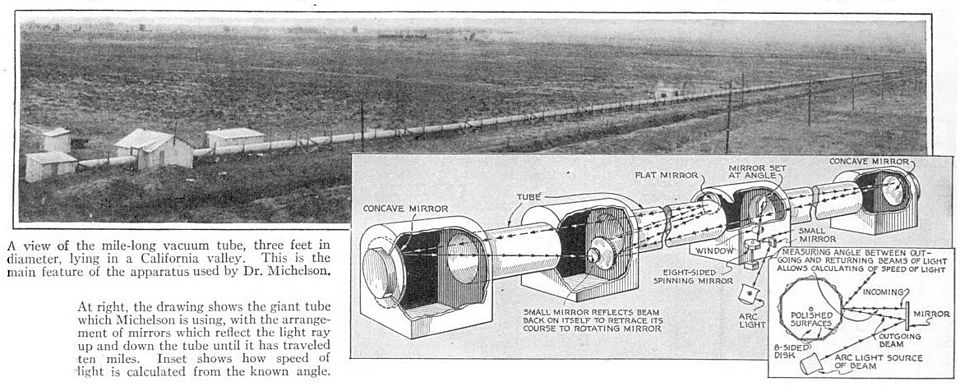
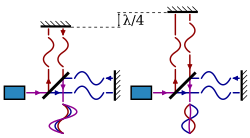
Following Rømer, other scientists refined these measurements. Christiaan Huygens estimated the speed at 220,000 km/s. Later, more sophisticated methods were developed, including the use of rotating mirrors and vacuum chambers. Between 1930 and 1935, Michelson, Pease, and Pearson used a one-mile vacuum chamber to achieve an accuracy of ±11 km/s.
Physical Implications and Relativity
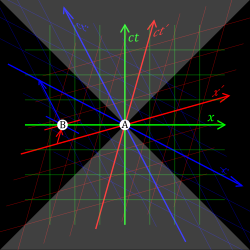
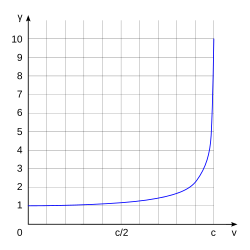
The finite and constant nature of the speed of light is a cornerstone of special relativity. As an object's velocity approaches c, the Lorentz factor (γ) increases, approaching infinity. This implies that light serves as a universal speed limit for the propagation of information and matter.
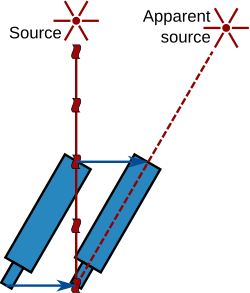
The finiteness of light speed also leads to aberration of light, where a moving telescope perceives light from a distant source as coming from a slightly different location due to the time it takes for the light to travel.
Frequently Asked Questions
Why is the speed of light considered a constant?
In a vacuum, the speed of light is a fundamental constant of nature. To ensure global scientific consistency, it was formally fixed by definition in 1983, allowing the metre to be defined based on this constant.
Does light always travel at the same speed?
No. While it is constant in a vacuum, light slows down when passing through media such as air, water, or glass. This reduction in speed is measured by the material's refractive index.
How did Ole Rømer prove light has a finite speed?
Rømer observed that the timing of Io's eclipses by Jupiter's shadow varied depending on the distance between Earth and Jupiter, proving that light takes time to travel across space.
Can anything travel faster than the speed of light?
According to the laws of physics and special relativity, the speed of light in a vacuum (c) is the absolute upper limit for the speed of any matter or signal.
What is the difference between the speed of light and the speed of electricity?
The speed of electricity refers to the speed of electromagnetic waves traveling through wire cables, which is slower than the speed of light in a vacuum.