Mass-Energy Equivalence: The Science Behind E = mc²
In the realm of physics, mass-energy equivalence is the fundamental principle stating that mass and energy are not distinct entities, but two forms of the same physical quantity. This relationship, occurring within a system's rest frame, suggests that mass can be converted into energy and vice versa, differing only by a multiplicative constant and the units used to measure them.
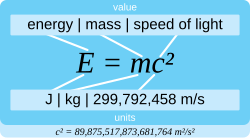
This concept is most famously encapsulated in Albert Einstein's formula, E = mc². In this equation, energy (E) is the product of mass (m) and the speed of light (c) squared. Because the speed of light is an immense number, even a tiny amount of mass corresponds to a staggering amount of energy.
Key Facts
- Core Formula: E = mc², where E is energy, m is mass, and c is the speed of light.
- Interchangeability: Mass and energy are two names for the same conserved physical quantity.
- Energy Release: When mass is lost during nuclear or chemical reactions, it is released as radiant or thermal energy.
- Gravitational Impact: All forms of energy, including light, interact gravitationally.
- Invariant Mass: Also known as rest mass, this is a fundamental property of matter independent of its velocity.
Foundational Concepts of Mass and Energy
Rest Mass vs. Relativistic Mass
Rest mass (or invariant mass) is the mass of an object when it is not moving relative to the observer. It is a fundamental property of matter. In contrast, relativistic mass refers to the mass of an object in a reference frame where the system is moving. While massless particles, such as photons, have zero invariant mass, they still possess momentum and energy.
The Conservation Principle
Historically, physics treated the conservation of mass and the conservation of energy as two separate laws. Einstein's work merged these into a single principle. He argued that the conservation of mass was inadequate under the special theory of relativity and was effectively "swallowed" by the conservation of energy.
Experimental Evidence and Gravity
The prediction that energy interacts gravitationally has been confirmed through several landmark experiments:
- The Eddington Experiment (1919): During a solar eclipse, Arthur Eddington observed that light from stars bent as it passed near the Sun, confirming that the energy of light is equivalent to gravitational mass.
- The Pound-Rebka Experiment (1960): This test showed that the frequency of light increases as it falls within Earth's gravitational field, confirming that the energy of photons is proportional to their frequency.
The Scale of Energy Conversion
To understand the sheer magnitude of E = mc², consider the energy equivalent of just one kilogram of mass. The conversion results in:
| Unit of Measurement | Equivalent Value |
|---|---|
| Joules | 89.9 petajoules |
| Kilowatt-hours | 25.0 billion kWh |
| Kilocalories | 21.5 trillion kcal |
| TNT Equivalent | 21,500 kilotons |
| Automotive Gasoline | ~2.63 billion litres |

Historical Development
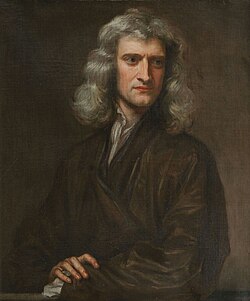
While Einstein is the primary figure associated with mass-energy equivalence, the idea evolved over time. In 1717, Isaac Newton speculated in Opticks that light and matter particles might be interconvertible. In the late 19th century, concepts of "electromagnetic mass" were explored by scientists like Nikolay Umov and Henri Poincaré.
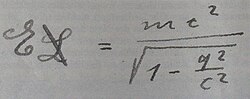
Einstein first proposed the equivalence as a general principle in his 1905 paper, "Does the inertia of a body depend upon its energy-content?" Interestingly, he did not write the exact formula E = mc² in that specific paper; instead, he stated that if a body emits energy (L), its mass diminishes by L/c². The precise formula and its relationship to momentum were developed further by Einstein and other physicists in the following years.
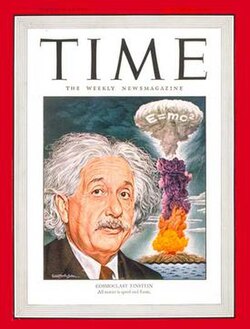
The public connection between this equation and the development of the atomic bomb became a prominent cultural narrative following World War II.
Frequently Asked Questions
What does E = mc² actually mean?
It means that energy (E) and mass (m) are interchangeable. Mass is essentially a highly concentrated form of energy, and the speed of light squared (c²) acts as the conversion factor.
Can any object be converted into energy?
Theoretically, yes. Any amount of mass can be converted into energy, though the process is most efficient in nuclear reactions (fission and fusion) where a small amount of "missing" mass is released as a huge amount of energy.
Is mass created when energy is added to a system?
Yes. Whenever energy is added to a system, the system's mass increases accordingly, as mass and energy are two sides of the same coin.
Did Einstein discover the formula alone?
While Einstein was the first to propose the equivalence as a general principle based on the symmetries of space and time, other physicists like Max Planck and Henri Poincaré contributed to the surrounding theoretical framework and the subsequent refinement of the formula.