Species Plantarum: The Foundation of Modern Botanical Naming
Imagine trying to identify a plant in a world where every species was described by a long, cumbersome sentence in Latin. Before the mid-18th century, this was the reality for botanists. The chaos of plant identification began to resolve in 1753 with the publication of Species Plantarum (Latin for "The Species of Plants"), a landmark work by the Swedish botanist Carl Linnaeus.
This monumental text did more than just list plants; it introduced a standardized system of naming that transformed botany from a fragmented collection of descriptions into a rigorous science. By organizing every known plant species into genera, Linnaeus provided a universal language for scientists across the globe.
The Revolution of Binomial Nomenclature
The most significant contribution of Species Plantarum was the consistent application of binomial nomenclature—a system of naming organisms using only two parts: a single-word genus name and a single-word specific epithet (also known as a "trivial name").
Prior to this, plants were identified by polynomials, which were long descriptive phrases. For example, a plantain was once referred to as Plantago foliis ovato-lanceolatis pubescentibus, spica cylindrica, scapo tereti, which translates to "plantain with pubescent ovate-lanceolate leaves, a cylindrical spike and a terete scape." Linnaeus replaced this complexity with the simple name Plantago media.
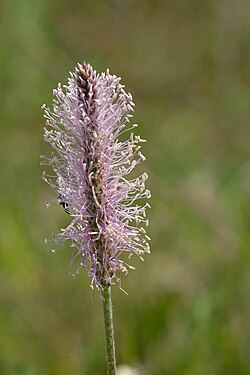
Another example of this simplification is the Nepeta cataria, which was previously known by the polynomial Nepeta floribus interrupte spicatis pedunculatis ("Nepeta with flowers in a stalked, interrupted spike"). Interestingly, Linnaeus originally developed this two-part shorthand as part of a student project regarding plants eaten by cattle.
Following the binomial name, Linnaeus provided a synonymy (a list of previous names used for the species) and a terse, careful description. In the genus Glycyrrhiza, for instance, he distinguished species using very few words, such as leguminibus echinatis for Glycyrrhiza echinata.
The Sexual System of Classification
Linnaeus organized the thousands of species in Species Plantarum into approximately one thousand genera, which were further grouped into 24 classes. This organization was based on his sexual system, a method of classification based on the count of floral parts, such as the stamens and stigmas.
Linnaeus acknowledged that this was an "artificial system" rather than one reflecting shared ancestry. However, its simplicity was its greatest strength, allowing non-specialists to quickly locate a plant's class without needing deep taxonomic expertise.
While Species Plantarum listed the species, it did not include descriptions of the genera themselves. For those details, Linnaeus directed readers to his companion volume, Genera Plantarum (The Genera of Plants), the fifth edition of which was printed around the same time as the first edition of Species Plantarum.
Scope and Legacy
The first edition of Species Plantarum contained 5,940 names, ranging from Acalypha australis to Zygophyllum spinosum. At the time, Linnaeus estimated that fewer than 10,000 plant species existed in total. Modern science has since revealed a much vaster botanical world, with approximately 400,000 species of flowering plants alone.
Because of its consistency and influence, Species Plantarum was designated as the official "starting point" for the nomenclature of most plants, though some fungi and non-vascular plants use later starting points.
Publication History
The work was published in Stockholm by Laurentius Salvius. Although the two volumes were actually released on May 24 and August 16, 1753, the date of May 1, 1753, is used as the official publication date for practical and nomenclatural purposes.
The success of the work led to several subsequent editions:
- Second Edition: Published 1762–1763.
- Third Edition: Published 1764 (similar to the second).
- Later Editions: After Linnaeus' death in 1778, Karl Ludwig Willdenow, director of the Berlin Botanical Garden, oversaw further editions. The fifth edition, published by Willdenow in four volumes between 1798 and 1806, was paradoxically titled the "fourth edition."
Key Facts
- Author: Carl Linnaeus.
- Official Publication Date: May 1, 1753.
- Primary Innovation: Consistent use of binomial nomenclature (genus + specific epithet).
- First Edition Scope: 5,940 plant species.
- Classification Method: The "sexual system" based on floral parts.
- Starting Point: The official baseline for most botanical naming conventions.
Summary of Species Plantarum
| Attribute | Details |
|---|---|
| Language | Latin |
| Publisher | Laurentius Salvius (Stockholm, Sweden) |
| Page Count | xi, 1200 + xxxi |
| Number of Species | 5,940 |
| Number of Classes | 24 |
| OCLC Number | 186272535 |
Frequently Asked Questions
What is binomial nomenclature?
Binomial nomenclature is a formal system of naming species using two parts: the genus name (representing a group of closely related species) and a specific epithet (a unique identifier for that particular species).
Why is May 1, 1753, significant in botany?
This date is the arbitrarily set official publication date for the first edition of Species Plantarum. It serves as the formal starting point for the naming of most plants.
What was the "sexual system" of classification?
The sexual system was an artificial classification method created by Linnaeus that grouped plants into classes based on the number and arrangement of their reproductive organs, specifically the stamens and stigmas.
How does the number of known plants today compare to Linnaeus' time?
Linnaeus estimated there were fewer than 10,000 plant species in existence. Today, scientists estimate there are approximately 400,000 species of flowering plants alone.
What is the difference between Species Plantarum and Genera Plantarum?
Species Plantarum listed and named individual species, while Genera Plantarum provided the detailed descriptions of the genera to which those species belonged.