Special Relativity: The Fundamental Relationship Between Space and Time
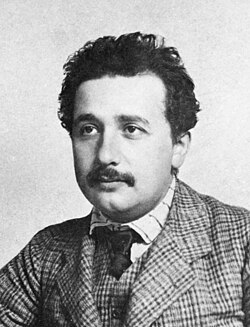
In 1905, Albert Einstein published a groundbreaking paper titled "On the Electrodynamics of Moving Bodies," which introduced the special theory of relativity. This theory fundamentally altered our understanding of the universe by redefining the relationship between space and time, proving that they are not absolute, but are instead interwoven into a single four-dimensional continuum.
At its core, special relativity challenges our intuitive perception of motion and time, suggesting that the laws of physics remain consistent regardless of how fast an observer is moving, provided they are not accelerating.
Key Facts
- Two Postulates: The theory is based on the principle of relativity and the constancy of the speed of light.
- Universal Speed Limit: The speed of light in a vacuum is the maximum speed for information transfer.
- Time Dilation: Time passes more slowly for an observer in motion relative to a stationary observer.
- Length Contraction: Objects moving at high speeds are measured to be shorter in the direction of motion.
- Mass-Energy Equivalence: Energy and mass are interchangeable, expressed by the famous equation E = mc².
The Foundational Postulates
Einstein built his theory upon two deceptively simple assumptions, known as postulates:
- The Principle of Relativity: The laws of physics are invariant (identical) in all inertial frames of reference—frames that are moving at a constant velocity without acceleration.
- The Principle of Light Constancy: The speed of light in a vacuum is the same for all observers, regardless of the motion of the light source or the observer.
These postulates imply that if the speed of light must remain constant for everyone, then space and time themselves must adjust depending on the observer's relative motion.
The Lorentz Transformation and Spacetime
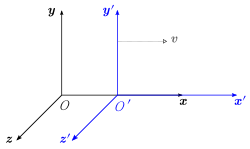
To mathematically map events from one reference frame to another, physicists use the Lorentz transformation. Unlike classical Newtonian mechanics, where velocities simply add together, the Lorentz transformation accounts for the finite speed of light, leading to several counterintuitive consequences.
Relativity of Simultaneity
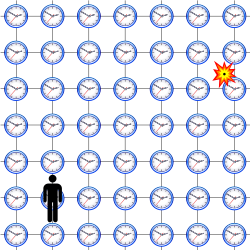
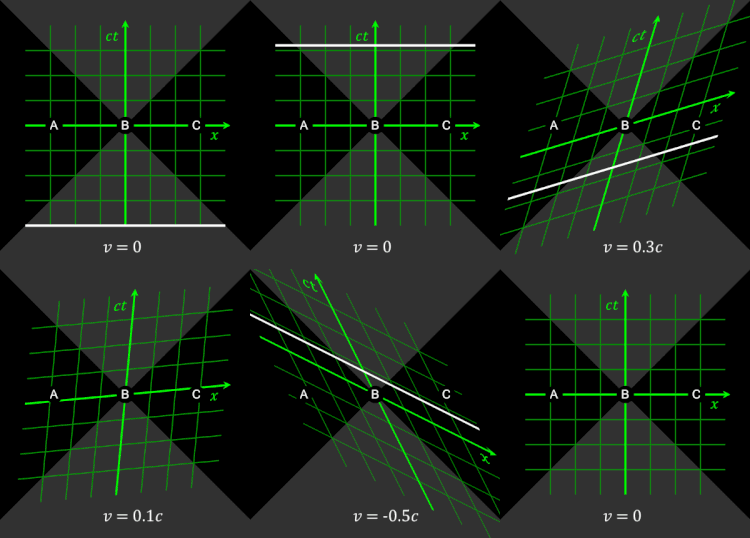
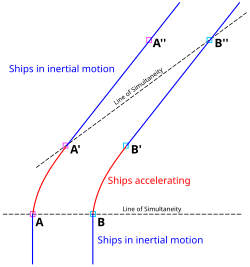
One of the most striking results is that two events that appear to happen at the same time for one observer may happen at different times for another observer moving at a different velocity.
Minkowski Spacetime
Hermann Minkowski later recast these ideas into a 4-dimensional geometry called Minkowski spacetime. In this model, the three dimensions of space and one dimension of time are combined. Special relativity is viewed as a rotational symmetry within this spacetime, where the "distance" between two events (the spacetime interval) remains invariant for all observers.
![Figure 10–1. Orthogonality and rotation of coordinate systems compared between left: Euclidean space through circular angle φ, right: in Minkowski spacetime through hyperbolic angle φ (red lines labelled c denote the worldlines of a light signal, a vector is orthogonal to itself if it lies on this line).[83]](/images/fe/3c/fe3cb70657c0dd8e94f6208bda033e61f507eacc7e3812c0f24949f1f74eb945.webp)
Physical Consequences of Relativity
Time Dilation and the Twin Paradox
Time dilation occurs when time is measured between two events by observers in relative motion; the moving observer experiences time more slowly. This is often illustrated by the "light-clock" thought experiment.
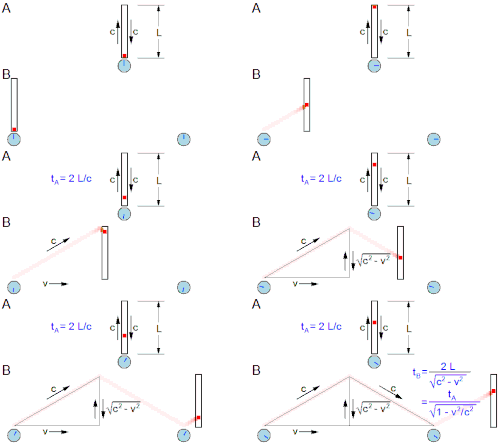
This leads to the Twin Paradox, where a traveler who journeys into space at relativistic speeds returns home to find that their stay-at-home twin has aged significantly more than they have.
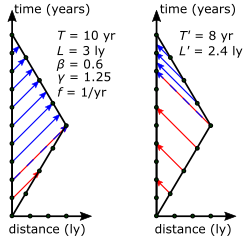
Length Contraction and Optical Effects
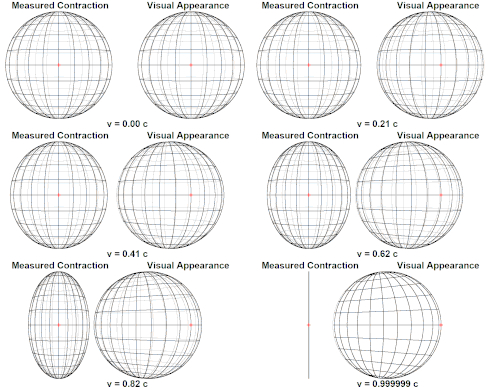
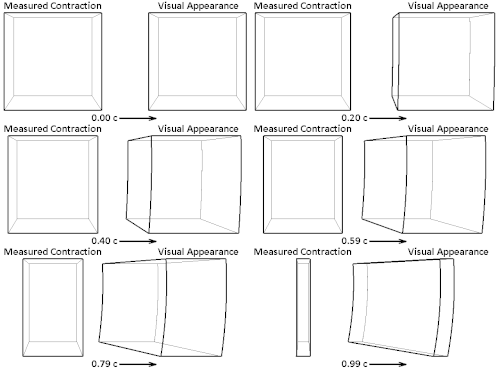
Length contraction is the phenomenon where the distance between two points is measured to be shorter by an observer in motion relative to those points. However, the visual appearance of an object (how it looks to the eye) differs from its measured length due to the time it takes for light to reach the observer, an effect known as the Terrell-Penrose effect.
Relativistic Doppler Effect
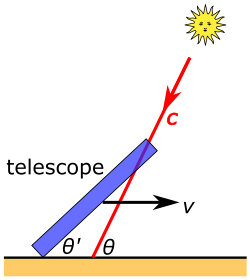
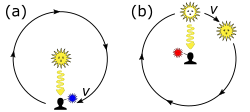
Just as sound changes pitch when a source moves, light undergoes a Relativistic Doppler effect. This includes the longitudinal effect (shifting frequency based on approach or recession) and the Transverse Doppler effect, which occurs even when the motion is perpendicular to the observer.
Dynamics and Mass-Energy Equivalence

Special relativity fundamentally changes the laws of motion. The most famous result is the equivalence of mass and energy, demonstrated by Einstein in 1905 as E = mc². This indicates that mass is essentially a highly concentrated form of energy.
In high-speed collisions, Newtonian analysis fails. Relativistic analysis must be used to calculate momentum and total energy, as particles cannot be accelerated to or beyond the speed of light.

Summary of Relativistic Effects

| Concept | Newtonian (Classical) View | Relativistic View |
|---|---|---|
| Time | Absolute and universal | Relative (Time Dilation) |
| Space/Length | Absolute and fixed | Relative (Length Contraction) |
| Speed of Light | Additive (v + c) | Invariant (Constant c) |
| Mass and Energy | Distinct entities | Equivalent (E = mc²) |
| Simultaneity | Universal for all observers | Relative to the observer |
Frequently Asked Questions

Why can't an object travel faster than the speed of light?
As an object's velocity approaches the speed of light, its relativistic momentum and energy increase toward infinity. This would require an infinite amount of energy to reach the speed of light, making it an impassable limit for any particle with mass.
What is the difference between special and general relativity?
Special relativity focuses on inertial frames (constant velocity) and the relationship between space and time. General relativity expands this to include acceleration and gravity, describing gravity not as a force, but as the curvature of spacetime.
How is time dilation proven in the real world?
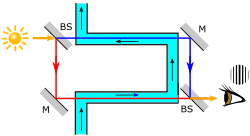
Time dilation has been experimentally verified through the Ives-Stilwell experiment and by observing the half-life of fast-moving particles, which last longer than identical particles at rest.
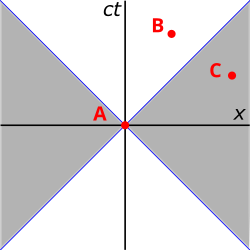
What is the "Light Cone" in spacetime?
A light cone is a graphical representation of the path that a flash of light, emanating from a single event, would take through spacetime. It defines the boundaries of causality, separating events that can be influenced by the origin from those that cannot.