Special Administrative Regions of China: Governance and Autonomy
The Special Administrative Regions (SARs) of the People's Republic of China represent a unique constitutional arrangement designed to integrate territories with distinct legal and economic histories into the Chinese state. Currently, there are two such regions: Hong Kong and Macau. These territories operate under a specific governance model known as "one country, two systems," a principle proposed by Deng Xiaoping to allow for a high degree of autonomy while remaining part of China.
The Legal Foundation of SARs
Unlike other administrative divisions in China, the legal basis for SARs is found in Article 31 of the Constitution of China (1982). This article stipulates that the state may establish special administrative regions when necessary, with their specific systems prescribed by laws enacted by the National People's Congress.
Hong Kong and Macau were former colonies of the United Kingdom and Portugal, respectively. Their transition to Chinese sovereignty was governed by binding inter-state treaties registered with the United Nations: the Sino-British Joint Declaration (1984) and the Sino-Portuguese Joint Declaration (1987). Consequently, Hong Kong was transferred in 1997 and Macau in 1999.
Key Facts
- Number of SARs: Two (Hong Kong and Macau).
- Governing Principle: "One country, two systems."
- Constitutional Basis: Article 31 of the Constitution of the People's Republic of China.
- Autonomy: Each SAR has its own executive, legislative, and independent judicial powers, including its own Court of Final Appeal.
- Economic System: Both regions maintain separate capitalist economies.
- Responsibilities: The central PRC government handles national defense and diplomatic relations, while SARs manage all other internal affairs.
Comparative Overview of Hong Kong and Macau
While both regions share the SAR status, they differ in scale, population, and specific administrative details. Each is governed by its own Basic Law, which serves as a codified constitution subordinate to the national constitution.
| Feature | Hong Kong | Macau |
|---|---|---|
| Population | 7,184,000 | 614,500 |
| Area | 1,104.4 km² | 31.3 km² |
| Currency | Hong Kong dollar (HK$) | Macanese pataca (MOP$) |
| Official Languages | Chinese, English | Chinese, Portuguese |
| Passport Visa-Free Access | 174 countries/territories | 141 countries/territories |
External Affairs and Representation
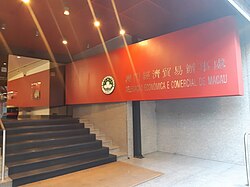
Because the central government manages formal diplomacy, the SARs use quasi-diplomatic offices to handle trade and economic interests. Hong Kong utilizes Hong Kong Economic and Trade Offices (HKETOs), while Macau uses Delegações Económicas e Comerciais de Macau (DECMs).
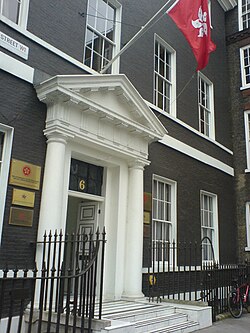
These offices act as interests sections. In regions where these offices do not exist, Chinese diplomatic missions protect the interests of Hong Kong and Macau residents.
Defense and Military Presence
The People's Liberation Army (PLA) maintains garrisons in both Hong Kong and Macau. While the PLA is responsible for defense, it is prohibited from interfering in local affairs and must abide by the laws of the respective SAR. The SAR governments may request PLA assistance during emergencies, such as natural disasters.
Other "Special Administrative" Designations
The Case of Wolong
The Wolong Special Administrative Region in Sichuan Province is not a constitutional SAR. Although it shares the name, it was established by the State Council rather than by law enacted by the National People's Congress, meaning it does not possess the autonomy granted under Article 31.
Historical ROC-era Regions
Between 1912 and 1949, the Republic of China (ROC) used the term "special administrative regions" for various areas, such as Suiyuan, Chahar, and Jehol. Most of these were converted into provinces by 1928 or abolished following the Chinese Civil War.
Frequently Asked Questions
What is the "one country, two systems" principle?
It is a constitutional framework that allows Hong Kong and Macau to maintain their own political and economic systems (capitalism) and a high degree of autonomy while remaining part of the People's Republic of China.
Who is responsible for the defense of the SARs?
National defense is the sole responsibility of the central PRC government, which maintains the People's Liberation Army (PLA) garrisons in both regions.
How do SAR passports differ from standard Chinese passports?
SAR passports are issued to permanent residents with Chinese citizenship. They generally offer significantly broader visa-free access to other countries compared to the standard Chinese passport.
What is the Basic Law?
The Basic Law is the codified constitution for each SAR, providing the legal framework for its governance and defining the relationship between the region and the central government.
Does the central government manage the SARs' currencies?
No, the SARs maintain their own currencies. The Hong Kong dollar is pegged to the US dollar, and the Macanese pataca is pegged to the Hong Kong dollar.