Hong Kong Handover: The 1997 Transfer of Sovereignty
At the stroke of midnight on 1 July 1997, a pivotal moment in global history unfolded as the United Kingdom transferred sovereignty over Hong Kong to the People's Republic of China. This event marked the end of 156 years of British administration, signaling a major chapter in the decolonisation of Asia and reshaping the political landscape of the region.
Key Facts
- Date of Transfer: 1 July 1997.
- Duration of British Rule: 156 years (1841–1997).
- Key Participants: Jiang Zemin, Li Peng, and Tung Chee-hwa (China); Tony Blair, Prince Charles, and Chris Patten (United Kingdom).
- Legal Framework: The transfer was governed by the Sino-British Joint Declaration and the Basic Law.
- Territorial Scope: Included Hong Kong Island, the Kowloon Peninsula, and the New Territories.
The Historical Path to 1997
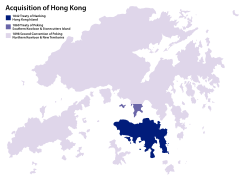
The British presence in Hong Kong was not established through a single event, but through a series of treaties and conventions spanning over a century. The foundation was laid during the First Opium War, leading to the gradual acquisition of territory.
The Treaty of Nanking (1842) resulted in the cession of Hong Kong Island to Britain in perpetuity. This was followed by the Convention of Peking (1860), which added the Kowloon Peninsula and Stonecutter's Island to British holdings. Finally, the Convention for the Extension of Hong Kong Territory (1898) granted Britain a 99-year lease of the New Territories and outlying islands, a lease set to expire in 1997.
Negotiations and the Joint Declaration
As the 1997 deadline approached, the United Kingdom and China entered complex negotiations to determine the future of the territory. These discussions focused on how to maintain stability and economic prosperity while transitioning to Chinese sovereignty.
The result was the Sino-British Joint Declaration, a formal agreement that outlined the terms of the transfer. A central component of this transition was the drafting of the Basic Law, the mini-constitution that would define the legal and political framework of the Hong Kong Special Administrative Region (HKSAR) after the handover.
Societal Impact and Migration
The uncertainty surrounding the transition triggered a significant tide of migration. Many residents sought foreign passports or relocated to countries like Canada and the United Kingdom to ensure their future security before the change in administration.
The Handover Ceremony and Its Aftermath
The official ceremony took place on 30 June 1997, culminating in the formal transfer at midnight. The event was attended by high-ranking officials from both nations, including UK Prime Minister Tony Blair and Chinese President Jiang Zemin.
Following the handover, several elements of Hong Kong's infrastructure remained unchanged to ensure continuity, while others were transitioned. The city continued to operate as a separate customs territory and maintained its own monetary authority.
| Year | Agreement | Territory Acquired | Terms |
|---|---|---|---|
| 1842 | Treaty of Nanking | Hong Kong Island | Ceded in perpetuity |
| 1860 | Convention of Peking | Kowloon Peninsula & Stonecutter's Island | Ceded |
| 1898 | Convention for the Extension of HK Territory | New Territories & Outlying Islands | 99-year lease |
Frequently Asked Questions
When exactly did the handover of Hong Kong occur?
The transfer of sovereignty officially took place at 00:00 (HKT) on 1 July 1997.
How long did the United Kingdom rule Hong Kong?
British rule lasted for 156 years, beginning with the cession of Hong Kong Island in 1841.
What was the purpose of the Basic Law?
The Basic Law served as the constitutional document that defined the rights, responsibilities, and administrative structure of the Hong Kong Special Administrative Region after the return to Chinese sovereignty.
Which territories were involved in the 1898 lease?
The 1898 Convention for the Extension of Hong Kong Territory involved the lease of the New Territories and various outlying islands for a period of 99 years.
Who were the key British and Chinese figures at the handover?
Key figures included UK Prime Minister Tony Blair and Prince Charles, and Chinese leaders Jiang Zemin and Li Peng, along with the first Chief Executive of the HKSAR, Tung Chee-hwa.