Spanish Rock: The Evolution of a Musical Identity
Spanish rock refers to the diverse array of rock music produced within Spain. While the majority of Spanish bands perform in Spanish, the genre is characterized by its linguistic diversity, with artists recording in English, French, and Italian, as well as regional languages including Catalan, Galician, Basque, Aragonese, and Asturian.
Key Facts
- Early Influence: Initial sounds were shaped by neighboring France and Italy during the 1950s.
- International Hits: Los Bravos and Mike Ríos achieved global chart success in the 1960s.
- Cultural Movements: La Movida Madrileña was a pivotal 1980s countercultural movement blending punk and new wave.
- Genre Fusion: Andalusian rock uniquely combined progressive rock with traditional flamenco.
- Global Reach: Héroes del Silencio became one of the most internationally successful Spanish rock acts in Europe and Latin America.
The Beginnings: 1950s to Early 1960s
In its infancy, rock music in Spain was heavily influenced by the musical trends of France and Italy. Despite the strict censorship of the Francoist regime, international sounds began to permeate the country through mass media and the release of various albums. The most vibrant early rock scenes developed in major urban centers, specifically Madrid, Zaragoza, Sevilla, Cádiz, Barcelona, and Valencia.
The Rise of Beat, Pop, and Psychedelia
The 1960s marked the national expansion of rock in Spain, spurred largely by the British Invasion. This era saw the emergence of influential artists such as Lone Star, Miguel Ríos, Los Brincos, and Los Bravos. Some of these acts found success beyond Spanish borders; Los Brincos gained traction in Italy, Portugal, and France, while Los Bravos and Mike Ríos reached international charts with the hits "Black Is Black" and "A Song of Joy," respectively.
Progressive, Hard Rock, and the Urban Sound
The 1970s were a period of transition. While mainstream rock saw a decline, underground scenes flourished. Progressive rock emerged but struggled commercially. However, the mid-1970s saw the rise of Andalusian rock—a fusion of progressive rock and flamenco—led by bands such as Triana.
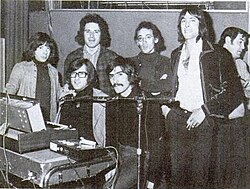
As Spain transitioned toward democracy in the late 1970s, hard rock began to surface. Bands like Leño, influenced by the early punk movement, pioneered rock urbano (urban rock), a style that reflected the gritty realities of city life.
The Golden Era: 1980s Counterculture
The 1980s represented a creative explosion across multiple subgenres. Punk rock reached its peak with aggressive acts like Eskorbuto, La Polla Records, and Kortatu. Simultaneously, the La Movida Madrileña movement emerged in Madrid, producing a wave of punk and new wave influenced bands including Alaska y Dinarama, Radio Futura, Nacha Pop, Gabinete Caligari, Kaka de luxe, Derribos Arias, Loquillo y los Trogloditas, Glutamato Ye-Yé, and Los Secretos.
While many Movida bands remained cult favorites, others like Mecano achieved significant international fame. Parallel scenes mirrored this energy in other cities: Barcelona (Los Rebeldes), León (Los Flechazos, Los Cardiacos), Granada (091), and Vigo (Semen Up, Aerolíneas Federales, Os Resentidos, Golpes Bajos, and Siniestro Total). Meanwhile, heavy metal and hard rock found their footing with bands like Obús, Barón Rojo, and Barricada, though the latter often lacked mainstream promotion.
Indie, Alternative, and Modern Diversification
From the 1990s onward, Spanish rock diversified further. Héroes del Silencio achieved massive international success, charting across Latin America and Europe. Similarly, Los Rodríguez gained popularity in both Spain and the Americas.
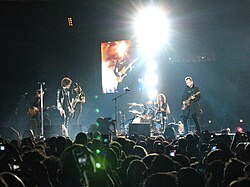
The mid-1990s saw cult acts like Platero y Tú, Extremoduro, and Los Enemigos transition into the mainstream. The era also welcomed the rise of indie rock via Los Planetas, as well as the diversification of the scene through folk metal (Mägo de Oz) and ska-punk (Ska-P).
Spanish Rock Summary
| Era | Dominant Styles | Notable Artists |
|---|---|---|
| 1960s | Beat, Pop, Psychedelia | Los Bravos, Los Brincos, Miguel Ríos |
| 1970s | Progressive, Andalusian, Rock Urbano | Triana, Leño |
| 1980s | Punk, New Wave, Heavy Metal | Barón Rojo, Alaska y Dinarama, Mecano |
| 1990s-Present | Indie, Alternative, Ska-Punk, Folk Metal | Héroes del Silencio, Los Planetas, Ska-P |
Frequently Asked Questions
What is the difference between Spanish rock and Rock en español?
Spanish rock specifically refers to rock music produced in Spain, whereas Rock en español is a broader term encompassing all Spanish-language rock music from across the globe, including Latin America.
What was La Movida Madrileña?
La Movida Madrileña was a countercultural movement in Madrid during the 1980s that produced numerous bands influenced by punk and new wave, reflecting the social liberation of the post-Franco era.
What defines Andalusian rock?
Andalusian rock is a stylistic fusion that combines the complex structures of progressive rock with the traditional sounds and rhythms of flamenco.
Which Spanish rock bands achieved international success?
Several bands reached global audiences, including Los Bravos and Mike Ríos in the 1960s, Mecano in the 1980s, and Héroes del Silencio in the 1990s.
What is rock urbano?
Rock urbano is a style of hard rock that emerged in the late 1970s, pioneered by bands like Leño and influenced by early punk rock.