New Wave Music: The Quirky Evolution of Post-Punk Pop
Emerging from the raw energy of the late 1970s, new wave represented a stylistic shift in popular music. While it shared roots with the aggressive rebellion of punk rock, new wave pivoted toward a more pop-oriented, quirky, and often humorous approach. It was a movement that embraced experimentation, blending traditional rock instruments with emerging electronic sounds to create a soundscape that defined an era.
The term was popularized by Seymour Stein of Sire Records as a convenient umbrella for the diverse styles appearing after the initial punk explosion. Interestingly, the name also drew inspiration from the French New Wave cinema of the 1960s, mirroring that movement's departure from traditional forms and its embrace of experimental techniques.
Key Facts
- Origins: Developed in the mid-to-late 1970s across the United States and the United Kingdom.
- Core Tone: Characterized by a lighthearted, quirky, and pop-centric sensibility.
- Peak Era: Reached a commercial zenith in the UK in 1978–1979 and later peaked in the US mainstream during the 1980s.
- Key Influence: Acted as a bridge between punk rock and the synth-pop and New Romantic movements.
- Legacy: Influenced modern internet microgenres like synthwave, vaporwave, and chillwave.
The Evolution of the Sound
1970s: Origins and Breakthrough
Between 1976 and 1977, the terms "punk" and "new wave" were often used interchangeably. However, by late 1976, many UK bands began to distance themselves from the increasingly politicized and violent associations of punk. Music publications like Melody Maker and New Musical Express, along with fanzines such as Sniffin' Glue, helped codify the term.
In the UK, the British pub rock scene provided a fertile ground for commercially successful acts like Nick Lowe, Ian Dury, and the Boomtown Rats. Meanwhile, in the US, The New York Rocker was among the first to champion the term, applying it to both British imports and the experimental acts emerging from the legendary CBGB scene in New York.
The UK Peak (1977–1980)
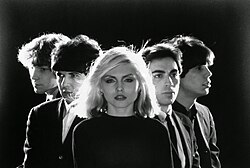
New wave, alongside power pop (a guitar-driven style emphasizing melodies and hooks), fueled a massive surge in the sales of 7" singles. 1978 and 1979 stand as the biggest years for the 7" format in UK chart history. A prime example of this success was Blondie, whose album Parallel Lines and the hit single "Heart of Glass" dominated the charts.
Mainstream US Success and Decline
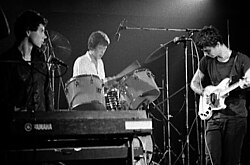
As the movement transitioned into the 1980s, it became a staple of the American mainstream, heavily promoted by the launch of MTV. However, by the late 1980s, the genre's popularity waned as glam metal, dance-pop, and alternative rock took center stage. In the UK, the original movement was succeeded by the New Romantic and "new pop" scenes, though the US continued to use "new wave" as a general term for these acts.
Global Reach and Regional Scenes
New wave was not limited to the US and UK; it sparked countercultural movements worldwide.
- Soviet Union: An underground scene influenced by Western punk led to the rise of post-punk and new wave acts in Moscow and Leningrad, including Kino, Alyans, and Akvarium. This later inspired the 2000s "Sovietwave" movement.
- Spain: Following the death of dictator Francisco Franco, the La Movida Madrileña (The Madrid Scene) emerged. This countercultural movement in Madrid blended synth-pop, post-punk, and new wave.
Legacy and Modern Revivals
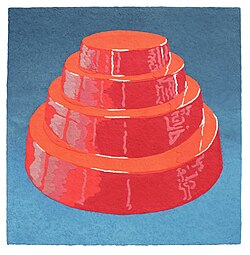
The influence of new wave persisted long after its commercial peak. The 1990s and 2000s saw brief press-labeled revivals known as the "new wave of new wave" and "new new wave." More recently, the genre's aesthetic and sonic hallmarks have been adopted by internet-based microgenres.

From the pulsing beats of electroclash to the nostalgic, slowed-down textures of vaporwave and synthwave, the spirit of new wave's experimentation continues to shape modern electronic and indie music.

Genre Summary
| Category | Details |
|---|---|
| Stylistic Origins | Punk rock, pop rock, power pop, glam rock, electronic, krautrock, funk, disco |
| Key Characteristics | Quirky tone, lighthearted humor, pop-oriented melodies, experimental structures |
| Derivative Forms | Synth-pop, alternative rock, Britpop, indie pop, sophisti-pop |
| Modern Descendants | Chillwave, synthwave, vaporwave, bloghouse, electroclash |
Frequently Asked Questions
What is the difference between punk and new wave?
While both emerged from the same era, punk was generally more aggressive, stripped-back, and politically charged. New wave was more melodic, pop-oriented, and characterized by a quirky or humorous tone.
Who were some of the most influential new wave artists?
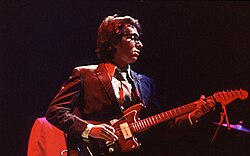
Key artists included Blondie, Talking Heads, Elvis Costello, and the Boomtown Rats, along with later acts associated with the New Romantic movement.
How did the French New Wave influence the music genre?
The music genre adopted the name "new wave" as an allusion to the 1960s French film movement, mirroring its experimental approach and desire to break away from traditional artistic forms.
What is the "Second British Invasion"?
This refers to the period in the early 1980s when UK new wave and New Romantic acts achieved massive commercial success in the United States, often aided by the visual platform of MTV.
What are some modern genres influenced by new wave?
Many internet-based microgenres draw from new wave, including synthwave, vaporwave, and chillwave, which utilize the synthesizers and aesthetic sensibilities of the 1980s.