Glam Rock: The Glittering Era of Androgyny and Artifice
Emerging from the United Kingdom in the early 1970s, glam rock (also known as glitter rock) was more than just a musical subgenre; it was a full-scale cultural explosion. Defined by its flamboyant fashion, heavy makeup, and a defiant embrace of the superficial, glam rock challenged the earnest, revolutionary rhetoric of the late 1960s. By blending high-concept art with simple pop hooks, it transformed the stage into a theater of decadence and gender fluidity.
Key Facts
- Origin: Developed in the United Kingdom in the early 1970s.
- Visual Hallmarks: Platform shoes, glitter, flamboyant clothing, and bold makeup.
- Core Philosophy: A rejection of 1960s revolutionary seriousness in favor of decadence and superficiality.
- Pioneers: Marc Bolan (T. Rex) and David Bowie are credited as the movement's primary architects.
- Legacy: Directly influenced punk rock, post-punk, gothic rock, the New Romantic movement, and glam metal.
The Sound and Style of Glam
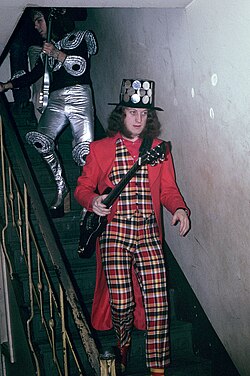
Glam rock was a sonic melting pot. Artists drew from 1950s rock and roll, bubblegum pop, and the aggressive riffs of hard rock, often filtering these sounds through the recording innovations of the late 1960s. The resulting music ranged from the straightforward rock revivalism of Alvin Stardust to the sophisticated art pop of Roxy Music.
Visually, the genre was an eclectic mesh of influences. Performers blended 1930s Hollywood glamour, 1950s pin-up appeal, and pre-war cabaret theatrics with science fiction, Victorian symbolism, and occult mysticism. This manifested in outrageous costumes and platform-soled boots, emphasizing androgyny—the blending of masculine and feminine characteristics—and sexual ambiguity.
The Rise of the Glitter Scene
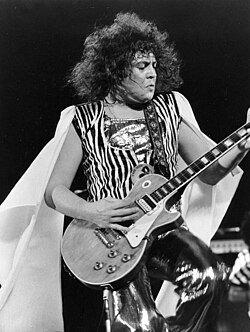
The movement is widely cited as beginning in March 1971, when Marc Bolan, frontman of T. Rex, appeared on the BBC show Top of the Pops. Performing "Hot Love" while wearing satins and glitter, Bolan provided a visual catalyst that encouraged a generation of youth to experiment with gender roles.
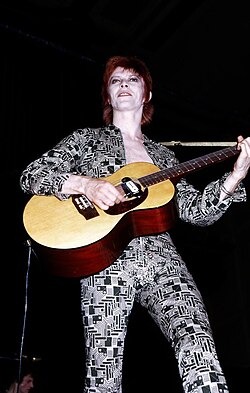
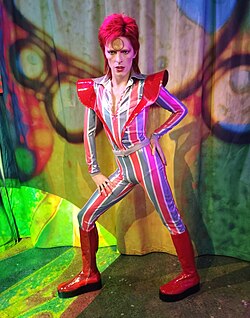
Shortly after, David Bowie elevated the genre's theatricality by creating the Ziggy Stardust persona. By incorporating mime and professional makeup, Bowie became a leading figure of the era, treating rock music as a performance art piece.
The UK charts were dominated by glam acts from 1971 to 1975. Bands like Slade, Sweet, Mud, and Wizzard became household names, with several achieving massive success through Christmas hit singles. While the scene was less prevalent in the United States, artists such as the New York Dolls, Alice Cooper, Lou Reed, and Iggy Pop found significant success and influence within the UK glam circuit.
Influence and Cultural Legacy
By the mid-1970s, glam rock began to decline, partly as a reaction from the emerging punk rock scene, which rejected glam's artifice while still adopting some of its visual aggression and makeup. However, the influence of glam persisted. The New Romantic movement of the late 1970s and early 1980s was heavily inspired by the visuals of Bowie and Bolan.
![A figure in the new romantic movement, Boy George of Culture Club (performing in 2001) was influenced by glam rock icons Bolan and Bowie.[31]](/images/4b/db/4bdb72ad60a5f90e2ae45965e1ca3f03e6c128dd16ccec6d23ace4e3852b4849.jpg)
Beyond fashion, glam rock became a cornerstone of LGBTQ+ media. The 1973 musical The Rocky Horror Show used glam rock to "queer" the rock genre, paving the way for greater acceptance of fluid gender expression. This legacy continued into later works like the 1998 musical Hedwig and the Angry Inch.
In the United States, the spirit of glam evolved into glam metal, influencing bands such as Mötley Crüe, Bon Jovi, and Poison, who adopted the theatricality and decadence of their British predecessors.
| Category | Details |
|---|---|
| Musical Roots | 1950s Rock and Roll, Bubblegum Pop, Art Rock, Hard Rock, Cabaret |
| Key UK Artists | T. Rex, David Bowie, Slade, Sweet, Roxy Music, Mud, Wizzard |
| Key US Artists | New York Dolls, Alice Cooper, Lou Reed, Iggy Pop, Suzi Quatro |
| Visual Elements | Glitter, Platform Shoes, Androgynous Makeup, Satins |
| Derivative Genres | Punk, Post-Punk, Gothic Rock, Synth-pop, Glam Metal, Britpop |
Frequently Asked Questions
What is the difference between glam rock and glitter rock?
While often used interchangeably, "glitter rock" was the original term for the genre. Over time, "glam rock" became the dominant term, while "glitter rock" came to describe the more extreme, high-spectacle version of the style, such as that pursued by Gary Glitter.
Who is considered the father of glam rock?
Marc Bolan of T. Rex is frequently cited as the man who started the movement, specifically following his glitter-clad appearance on Top of the Pops in 1971.
How did glam rock influence the LGBTQ+ community?
By showcasing a fluid approach to gender expression and embracing androgyny, icons like David Bowie and Freddie Mercury became symbols of liberation and helped pave the way for greater understanding and acceptance of LGBTQ+ identities.
Did glam rock exist in the United States?
Yes, although it was primarily a British cultural phenomenon. US artists like the New York Dolls, Alice Cooper, and Lou Reed were part of the scene, and the genre later evolved into the American glam metal movement of the 1980s.
What caused the decline of glam rock?
Glam rock declined in the mid-to-late 1970s as musical tastes shifted. Punk rock emerged partly as a reaction against the perceived artifice and commercialism of glam, though it still borrowed some of its visual elements.