Rock en Español: The Evolution of Spanish-Language Rock
Rock en español is the umbrella term for rock music featuring Spanish vocals. While the genre has deep roots stretching back to the late 1950s, its journey toward global recognition was long and complex. For decades, many artists achieved only nationwide fame due to limited promotion across borders. It wasn't until the digital age and specific marketing movements that the genre consolidated into a cohesive international scene.
The genre is not a monolith; it has branched into several distinct styles. Latin rock fuses rock with Caribbean and Latin American folkloric sounds. Latin alternative blends alternative rock with genres like reggae, soca, and Caribbean ska. In Spain, Andalusian rock emerged as a unique fusion of progressive rock and flamenco.
Key Facts
- Origins: Began in the late 1950s, initially through Spanish translations of American hits.
- Breakthroughs: Danny Flores' "Tequila" (1958) and Ritchie Valens' "La Bamba" (1958) were early international successes.
- Key Movement: The "Rock en tu idioma" campaign (mid-1980s to mid-1990s) helped internationalize the genre.
- Media Influence: The launch of MTV Latin America in 1993 provided a critical platform for regional visibility.
- Crossover Success: Carlos Santana is one of the most successful crossover artists, blending rock, jazz, and Latin percussion.
The Early Years: 1956–1964
Rock and roll originated within the Afro-descendant community in the United States after World War II. By the mid-1950s, the genre became a global culture. Spanish-language rock production began around 1956, primarily consisting of American hits translated into Spanish. Early pioneers like Los Llopis and Los Teen Tops found success by adapting these Anglo-American songs for Spanish-speaking audiences.
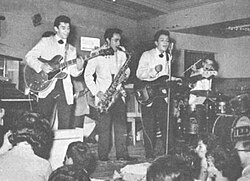
As the 1960s progressed, the music shifted from covers to original compositions. Groups like Dúo Dinámico began writing their own material. This era also saw the rise of the yé-yé phenomenon from Europe and the Nueva ola (new wave) in South America, which blended pop, twist, and beat music.
The British Invasion and the Rise of Latin Rock: 1964–1970
The global success of The Beatles and the British Invasion introduced new styles to the Hispanophone world, including psychedelia, soul, and folk-rock. Bands like Los Brincos and Los Gatos embraced these sounds, while others, such as Los Bravos, sang primarily in English to achieve worldwide hits. Notably, Los Saicos emerged during this time as one of the world's earliest proto-punk bands.
During this period, Carlos Santana moved to California and integrated Latin percussion and harmonics with rock, blues, and jazz. His work, including the hit "Oye Como Va" (originally by Tito Puente), brought global attention to Latin rock. This coincided with a broader international interest in Latin American literature and folk music.
Prog Rock, Hard Rock, and Political Repression: 1970–1979
The 1970s saw a surge in complex genres. Progressive rock bands like Los Jaivas (Andean rock) and Triana (Andalusian rock) pushed musical boundaries. Triana, in particular, pioneered the fusion of prog rock with flamenco.
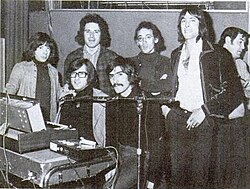
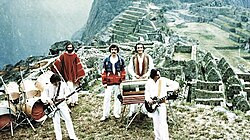
Hard rock also took root with acts like Pappo's Blues and the Rock urbano movement led by bands like Leño. However, the decade was marked by political instability. In Mexico, the government pushed rock underground following the 1971 Avándaro Rock Festival. In Argentina, the 1976 dictatorship forced many musicians to flee to Europe, particularly Spain, where they formed successful groups like Tequila.
Internationalization and the Digital Era: 1980s to Present
The 1980s introduced punk and New Wave, highlighted by the La Movida Madrileña movement in Spain. The "Rock en tu idioma" campaign became a catalyst for transnational success, with Soda Stereo becoming one of the first bands to achieve widespread popularity across Latin America. Other successful acts included Caifanes, Hombres G, and Los Prisioneros.
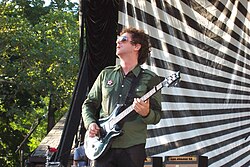
The 1990s brought the launch of MTV Latin America, which further unified the scene. The first video aired, "We are sudamerican rockers" by Los Prisioneros, signaled a new era of regional identity. The 90s also saw the rise of Latin Alternative artists like Café Tacuba and the massive commercial success of Maná.

| Period | Primary Characteristics | Key Artists/Movements |
|---|---|---|
| 1956–1964 | Translations of US hits; Nueva ola | Los Teen Tops, Dúo Dinámico |
| 1964–1970 | British Invasion influence; Latin fusion | Carlos Santana, Los Brincos |
| 1970–1979 | Prog rock, Hard rock, and political exile | Triana, Los Jaivas, Leño |
| 1980s | Punk, New Wave, "Rock en tu idioma" | Soda Stereo, La Movida Madrileña |
| 1990s–Present | Latin Alternative, MTV influence, Global reach | Maná, Café Tacuba, Aterciopelados |
Frequently Asked Questions
What is the difference between Latin rock and Latin alternative?
Latin rock is generally a fusion of rock music with Latin American and Caribbean folkloric sounds. Latin alternative is a broader alternative rock scene that blends Latin sounds with genres such as reggae, soca, and Caribbean ska.
What was the "Rock en tu idioma" campaign?
It was a promotional campaign running from the mid-1980s to the mid-1990s designed to help Spanish-language rock bands achieve international popularity across different Spanish-speaking countries.
How did political events affect rock en español?
Political repression led to significant shifts in the music. In Mexico, the government forced rock underground after the Avándaro festival. In Argentina, the 1976 dictatorship caused many artists to migrate to Spain, enriching the Spanish rock scene.
Who are some of the most influential bands in the genre?
Key influential acts include Soda Stereo, who pioneered transnational success; Carlos Santana, who brought Latin percussion to a global audience; and Maná, who achieved significant international commercial success and Grammy awards.