Latin Rock: The Evolution of a Global Fusion Genre
Latin rock is a vibrant subgenre that blends the traditional sounds of Latin American and Hispanic Caribbean folk with the energy of rock music. While it began as a specific stylistic fusion, the term is often used broadly in English-language media to describe any rock music featuring Spanish or Portuguese vocals. This broad application has sparked ongoing debate regarding the true scope of the terminology.
It is important to distinguish Latin rock from Rock en Español (rock music from Latin America) and the Latin alternative scene. The latter is a closely related movement that integrates Latin elements with alternative rock, pop, electronic music, indie, and hip-hop.
Key Facts
- Origins: Emerged in Southern California in the late 1950s.
- Core Fusion: Combines rock and roll with Latin American and Caribbean folk rhythms.
- Defining Moment: The term "Latin rock" gained global recognition following the 1969 debut of Santana.
- Global Reach: Developed independently in the US, Brazil (Tropicália), Peru, Colombia, and Argentina.
- Modern Scope: Now encompasses a wide array of styles, including Latin alternative and Latin metal.
The Early Roots (1950s–1960s)
The foundations of Latin rock were laid in the 1950s, drawing from rhythm and blues, gospel, country, and traditional Latin music. Early influences included Caribbean rhythms like calypso in surf music, as well as rock songs based on mambo or cha-cha-chá.
In 1958, Chicano rock artist Ritchie Valens recorded an adaptation of the Mexican folk song "La Bamba," while the instrumental band the Champs released "Tequila," composed by Chicano saxophonist Danny Flores. Throughout the 1960s, artists such as Thee Midniters, Question Mark & the Mysterians, Sam the Sham and the Pharaohs, and the Sir Douglas Quintet further integrated Latin rhythms into their work.
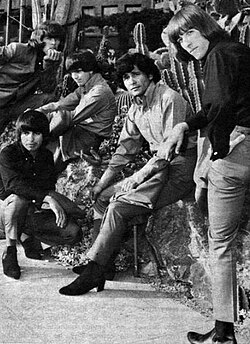
Simultaneously, the genre was taking root in Latin America. In the mid-1960s, Brazil saw the rise of Tropicália—a movement merging rock with bossa nova and psychedelia. Key figures included Os Mutantes, Gal Costa, and Caetano Veloso, providing a primary root for the genre's development.
The Rise of the "Latin Rock" Label (1970s)
The specific term "Latin rock" entered the global lexicon in 1969 following the debut of Santana. Their sound was a sophisticated fusion of Latin American and Caribbean rhythms with soul, jazz, funk, blues, and psychedelia.
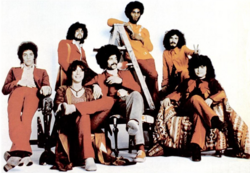
The success of Santana paved the way for other American bands in the early 1970s, including Malo, Ocho, Mandrill, El Chicano, War, Sapo, Azteca, and Eddie Palmieri's Harlem River Drive. Meanwhile, the movement flourished across the globe:
- Peru: Bands like Black Sugar, Traffic Sound, and Telegraph Avenue blended rock with jazz and Peruvian folk.
- Colombia: Siglo Cero, Génesis, and La Columna de Fuego became prominent.
- Chile & Argentina: Los Jaivas (Chile) and Arco Iris (Argentina) were key contributors.
- Brazil: Jorge Ben developed the distinct sound of samba rock.
- Philippines: Maria Cafra fused rock and blues with kundiman.
- Europe: The genre reached Europe via Barrabás (Spain), Massada (Netherlands), and Osibisa (African-British).
While reggae and ska emerged from Jamaica during this era and shared some Caribbean influences with rock, they are categorized separately from Latin rock. However, the disco craze of the 1970s did leave a mark on the genre's evolution.
Evolution and Modern Era (1980–Present)
The late 1970s punk explosion introduced new influences. British acts like The Clash incorporated Latin elements in their 1980 album Sandinista!, while bands like Bow Wow Wow and Kid Creole and the Coconuts also experimented with these sounds.
In Spain, new wave and post-punk acts such as Radio Futura, Los Coyotes, and Los Mestizos shifted toward Latin influences by the mid-1980s, leading to later artists like Macaco and Jarabe de Palo.

France also became a hub for the genre. Manu Chao and his band Mano Negra were pivotal, blending rock with Arabic music, punk, rap, flamenco, ska, and reggae—a style that would eventually be termed Latin alternative.
In the United States, musicians like Los Lobos, David Hidalgo, and David Byrne (who explored Brazilian music) continued to fuse Latin and rock traditions. By the 1990s, the genre consolidated across Latin America with the rise of influential bands such as Café Tacuba, Aterciopelados, Los Fabulosos Cadillacs, and Soda Stereo.

Recent developments have seen Ecuadorian rock incorporating indigenous musical influences, further expanding the genre's sonic palette.
Terminology and Controversy
By the late 1990s, the growing Latino population in the US led to the creation of the Latin Academy of Recording Arts & Sciences and the Latin Grammy Awards in 2000. Consequently, English-language media began using "Latin music" as a catch-all term for any music with Spanish vocals.
This shift caused confusion, as the original definition of Latin rock—a specific fusion of folk rhythms and rock—was replaced in common parlance by a linguistic definition. This has led to ongoing controversy regarding how the genre is classified and marketed.
| Region | Key Movements/Styles | Notable Artists |
|---|---|---|
| USA (California) | Chicano Rock / Fusion | Ritchie Valens, Santana, Los Lobos |
| Brazil | Tropicália / Samba Rock | Os Mutantes, Jorge Ben, Caetano Veloso |
| Mexico | Latin Alternative / Rock | Café Tacuba, Maná, Caifanes |
| Argentina | Rock Fusion | Los Fabulosos Cadillacs, Soda Stereo |
| France | Latin Alternative / World Fusion | Manu Chao, Mano Negra |
Frequently Asked Questions
What is the difference between Latin rock and Rock en Español?
Latin rock specifically refers to a fusion of rock with Latin American and Caribbean folk rhythms. Rock en Español is a broader term referring to rock music produced in Latin America or by Spanish-speaking artists, regardless of whether it incorporates traditional folk elements.
When did the term "Latin rock" first become popular?
The term emerged in the United States and globally around 1969, largely to describe the unique fusion style of the band Santana.
What is Tropicália?
Tropicália was a Brazilian musical movement in the mid-1960s that merged rock music with bossa nova, psychedelia, and other Latin elements, serving as a major root for the Latin rock genre.
Is reggae considered a part of Latin rock?
No. While reggae originated in Jamaica and shares some Caribbean influences with Latin rock, it is considered a distinct genre evolving from ska, rocksteady, and bluebeat.
What is Latin alternative music?
Latin alternative is a modern evolution that combines Latin elements with a wider variety of styles, including alternative rock, electronic music, indie, and hip-hop.