Guatemalan Rock: The Evolution of Rock Chapín
Rock Chapín, the vibrant term for Guatemalan rock, represents a musical journey that began in the mid-1960s and evolved into a diverse cultural movement. From its early days of English-language covers to the sophisticated fusion of native themes and alternative sounds, the genre has mirrored the social and political complexities of Guatemala.
The Foundations: 1960s and 1970s
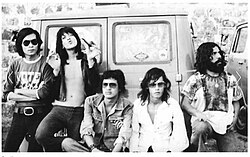
Spanish-language rock first took root in Guatemala during the mid-1960s. One of the era's most prominent figures was Luis Galich and his band, Santa Fé, who performed extensively throughout Guatemala City and the surrounding regions. As the scene grew, bands began experimenting with psychedelic rock—a style characterized by surreal lyrics and distorted sounds—and original compositions.
Plástico Pesado (later known as Quetzalumán), featuring members Manu Ramirez, Tacuche, Rollin, and Paco Lam, was instrumental in expanding the genre's boundaries. They were joined by a wave of other psychedelic acts, including S.O.S., Caballo Loco, Apple Pie, Cuerpo y Alma, Banda Clásica, Cerebro, La Compañía, Siglo XX, Eclipse, and Pastel de Fresa.
The First Rock Opera
A landmark moment occurred between 1973 and 1974 with the creation of Corazón del sol naciente (Heart of the Sunrise). Produced by the group Sol Naciente, this unprecedented rock opera featured a massive ensemble of dancers, vocalists, and a chorus. The musical arrangement was notably eclectic, blending piano and solo violin with unplugged acoustic guitars and traditional Guatemalan percussion instruments. Some members of this ensemble later transitioned into the group Alción.
The Rise of Modern Rock: 1990s to 2000s
The turn of the millennium saw the emergence of bands that could bridge the gap between underground sounds and mainstream popularity. Alux Nahual became one of the most significant Spanish-lyric bands of the late 90s and early 2000s. While their sound was initially influenced by progressive rock giants like Kansas and Jethro Tull, they integrated native themes into their lyrics, though these themes remained distinct from their overall musical style.
During this same period, the scene diversified into harder sounds. Extincion gained notoriety for their speed metal influence and aggressive lyrics, opening for international acts such as Enrique Bunbury and Control Machete.
The Influence of Bohemia Suburbana and Viernes Verde
Among the most influential bands to emerge in the 1990s was Bohemia Suburbana. By fusing the melodic sensibilities of U2 and Soda Stereo with underground influences from Europe, North America, and the Caribbean, they created a sound that resonated deeply with college and high school students. After reuniting in 2012 (BS20), they released the album Imaginaria Sonora and the single "Pero Nadie," which garnered 20,000 views in a single day.
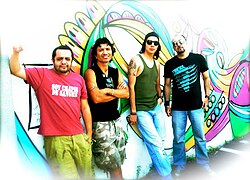
Simultaneously, Viernes Verde formed in 1993. Starting as a grunge band, they evolved into an alternative rock act known for their broad appeal. Their debut album, Cenizas Bajo Tus Pies, featured a mix of six Spanish and four English tracks to reach a wider audience. Beyond their music, they founded La Garra Chapina in 1999, an annual rock festival designed to support newcomers and use audiovisual aids to depict historical moments in Guatemala. This event was one of the first of its kind to be broadcast entirely on national radio.
The Contemporary Scene and Social Challenges
Today, the Guatemalan rock landscape remains active with bands such as Malacates Trebol Shop, Razones de Cambio, El Tambor de la Tribu, Redhka, La Gran Calabaza, El Clubo, Viento en Contra, Anarkia, Sinattra, Legión, Vitriolo, and Especies. Newer acts like 4 Tiempos emerged in the early 2000s, and virtuosos like guitarist Hedras Ramos have represented the country in international competitions such as Guitar Idol in England and Ziua Chitarelor 3 in Romania.
Despite its growth, Rock Chapín has faced significant hurdles. In the 60s and 70s, rock was often viewed as a symbol of rebellion during a time of intense social unrest and corruption. Musicians and fans faced police harassment, arrests, and in some tragic cases, disappearances or death. Additionally, the transition from English-language music to Spanish-language rock took time to be accepted by the general public.
While much of the current sound mirrors North American trends, some artists strive for originality through cultural fusion. A notable example is the band Sobrevivencia from Huehuetenango, who perform their lyrics in Mam, a Mayan language spoken in northwestern Guatemala.
El Ritmo de La Paz
In 2011, the company Impulsos Creativos launched El Ritmo de La Paz, a movement and annual festival promoting a utopian vision of peace. The competition allows amateur bands to compete for the chance to record their first album. In its inaugural year, 13 bands participated, with seven finalists performing alongside professionals like Silent Poetry, Conciencia Sublime, and Metal Requiem. The winner, Iridium Mas Alla de Mi Tierra, subsequently received national television and radio promotion.
Key Facts
- Origins: Spanish-language rock began in Guatemala in the mid-1960s.
- Pioneers: Early influential acts included Luis Galich and Santa Fé, and the psychedelic band Plástico Pesado.
- Innovation: The rock opera Corazón del sol naciente (1973–74) blended rock with traditional Guatemalan percussion.
- Cultural Fusion: The band Sobrevivencia is unique for singing in the Mayan language, Mam.
- Industry Support: Viernes Verde founded the La Garra Chapina festival in 1999 to help new artists.
- Modern Movement: El Ritmo de La Paz provides a platform for amateur bands to record professional albums.
| Band/Artist | Era | Key Style/Contribution |
|---|---|---|
| Santa Fé | Mid-1960s | Early Spanish-language rock pioneers |
| Plástico Pesado | 1970s | Psychedelic rock and original material |
| Alux Nahual | Late 90s/Early 00s | Progressive rock with native lyrical themes |
| Bohemia Suburbana | 1990s-Present | Alternative fusion; highly influential melodies |
| Viernes Verde | 1993-Present | Grunge to Alternative; founders of La Garra Chapina |
| Sobrevivencia | Contemporary | Rock lyrics performed in the Mam language |
Frequently Asked Questions
What is Rock Chapín?
Rock Chapín is the term used to describe the genre of rock music developed within Guatemala, spanning from the mid-1960s to the present day.
Why was rock music suppressed in Guatemala during the 60s and 70s?
Rock was often associated with rebellion during a period of high corruption and social unrest. This led to police raids at concerts and, in some instances, the disappearance or death of musicians.
What makes the band Sobrevivencia unique?
Sobrevivencia is distinct because they perform their songs in Mam, a Mayan language spoken in the northwestern region of Guatemala, rather than Spanish or English.
What is the purpose of the La Garra Chapina festival?
Founded by Viernes Verde, the festival aims to help new artists enter the Guatemalan rock industry and uses audiovisual elements to represent historical moments of the country.
Who is Hedras Ramos?
Hedras Ramos is a prolific young Guatemalan rock guitarist who has represented the country in international competitions, including Guitar Idol in England and Ziua Chitarelor 3 in Romania.