Spanish Civil War (1936–1939)
The Spanish Civil War was a brutal conflict fought from July 17, 1936, to April 1, 1939. Serving as a prelude to World War II, this war pitted the democratically elected government of the Second Spanish Republic against a Nationalist military uprising. The struggle was not merely a local conflict but a global ideological battleground where fascism, communism, and democracy clashed on Spanish soil.
The war concluded with a Nationalist victory, leading to the establishment of the Spanish State under the authoritarian rule of General Francisco Franco, which lasted for decades.
Key Facts
- Duration: July 17, 1936 – April 1, 1939 (986 days).
- Primary Belligerents: The Republicans (loyal to the Republic) and the Nationalists (insurgents).
- Outcome: Nationalist victory and the end of the Second Spanish Republic.
- Key Leader: General Francisco Franco led the Nationalist forces.
- Foreign Involvement: Significant support for Nationalists from Nazi Germany and Fascist Italy; support for Republicans from the Soviet Union and international volunteers.
- Human Cost: Death toll estimates vary widely, ranging from 500,000 to over 2 million people.
The Road to Conflict: Background and Origins
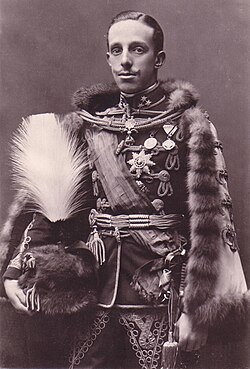
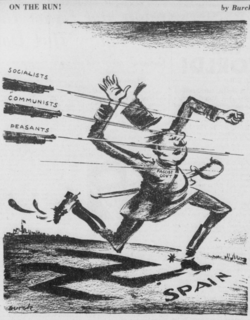
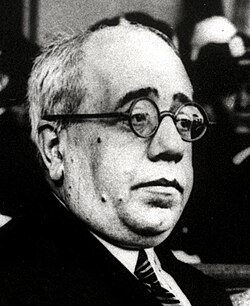
The roots of the war lay in deep social and political divisions within Spain. Following the dictatorship of Primo de Rivera and the subsequent restoration of the monarchy, the Second Spanish Republic was proclaimed in 1931 after Republicans won the elections. King Alfonso XIII was forced into exile.
The Republic's early years were marked by volatility. A left-wing government held power from 1931 to 1933, followed by a right-wing government from 1933 to 1935. Tensions escalated further when the Popular Front, a coalition of left-wing parties, won the 1936 elections.
The Military Coup
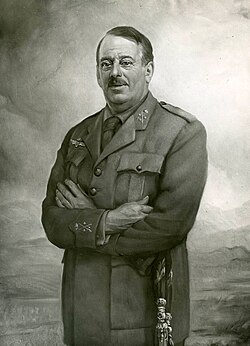
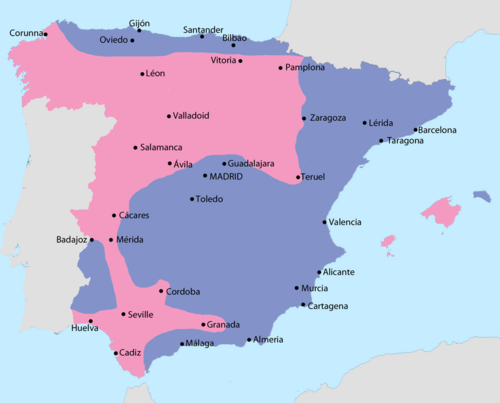
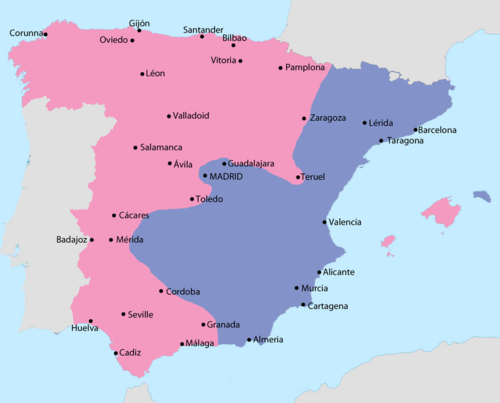
In July 1936, a group of military officers launched a coup d'état to overthrow the Republic. While the coup failed to seize the entire country immediately, it split Spain into two zones. General Emilio Mola served as the chief planner of the operation, while General Francisco Franco emerged as the primary leader of the Nationalist forces.
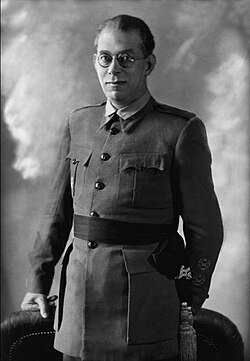
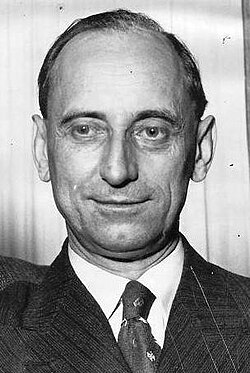
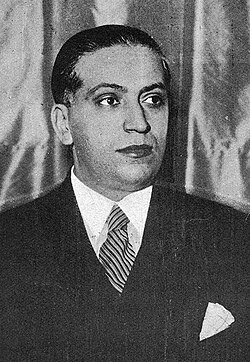
The assassination of José Calvo Sotelo, a prominent fascist-leaning conservative, acted as a major catalyst that accelerated the move toward open warfare.
The Combatants
The Republicans
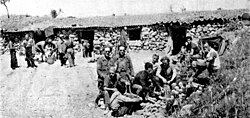
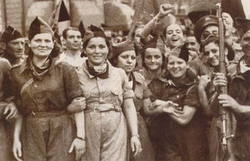
The Republican side consisted of a diverse and often fractured coalition. This included the Spanish Republic's official government, the People's Army, and various leftist organizations such as the UGT (General Union of Workers) and the CNT-FAI (anarchist syndicalists). The intellectual leadership was largely provided by Manuel Azaña.
In addition to official forces, the International Brigades—volunteers from around the world—joined the fight to stop the spread of fascism. These included the Lincoln Battalion from the US and the Etkar André battalion.
The Nationalists
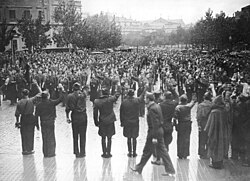
The Nationalist side was more unified, comprising the National Army, the Spanish Military Union, and the Falange (a fascist party). They were supported by the Requetés (traditionalist Catholics) and the Army of Africa.
Course of the War
The war progressed through several critical phases, characterized by shifting territorial control and extreme violence.
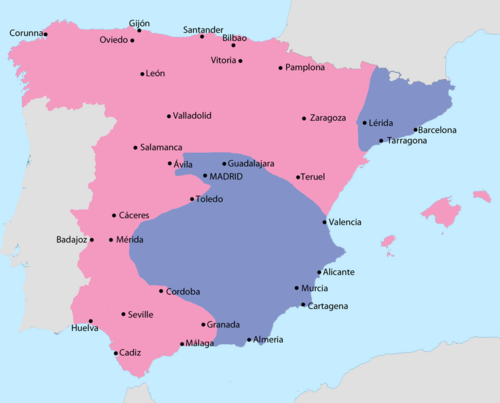
1936–1937: Initial Struggles and the Siege of Madrid
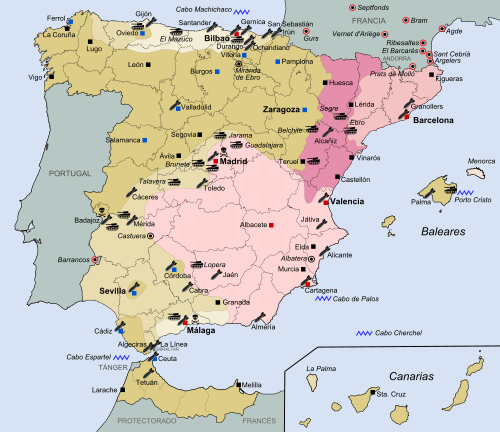
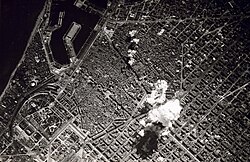
Early in the war, the Nationalists advanced rapidly, but the Republicans managed to repel the siege of Madrid despite heavy bombing. This period also saw the Spanish Social Revolution, particularly in Catalonia, where workers and peasants seized control of land and factories.
1938–1939: The Nationalist Advance
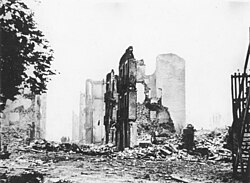
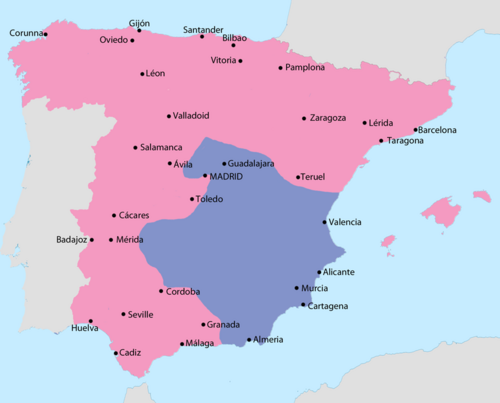
By 1938, the Nationalist forces had gained the upper hand, splitting the Republican zone in two. The bombing of Guernica became a global symbol of the war's brutality, illustrating the devastating impact of aerial warfare on civilian populations.
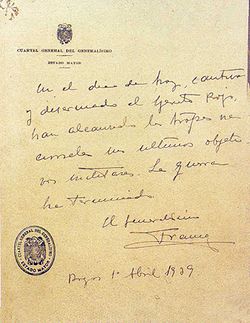
By February 1939, the Nationalists controlled nearly all of Spain. On April 1, 1939, Franco declared the end of the war, though small pockets of resistance continued for a short time.
Foreign Intervention and Logistics
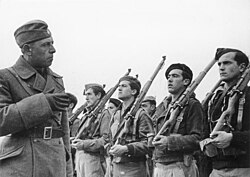
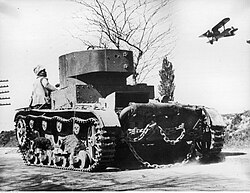
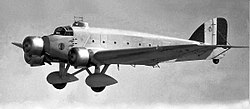
The conflict was an internationalized war. The Nationalists received critical military aid from Italy (including 70,000–75,000 troops) and Germany (including the Condor Legion). The Republicans relied on the Soviet Union for technicians and pilots, as well as support from various international volunteers.
| Category | Republicans | Nationalists |
|---|---|---|
| Infantry | 450,000 | 600,000 |
| Aircraft | 350 | 600 |
| Tanks | 200 | 290 |
| Foreign Troops | ~60,000 Volunteers | ~90,000 (Italy/Germany) |
Atrocities and Human Cost
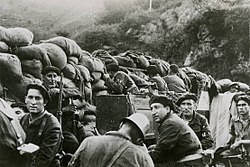
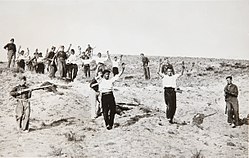
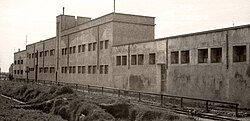
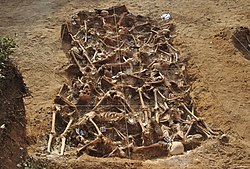
Both sides committed severe war crimes. The Red Terror involved executions and torture carried out by Republican factions, such as the Paracuellos massacre. Conversely, the Nationalist side engaged in systematic executions and mass killings in their wake.
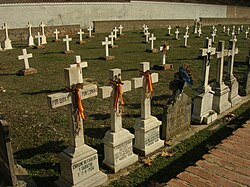
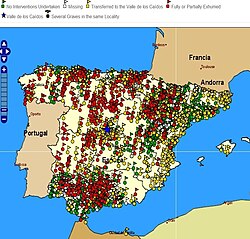
The death toll remains a subject of historical debate. Estimates range from a low of 500,000 to as high as 2 million deaths, including combatants and civilians.
Frequently Asked Questions
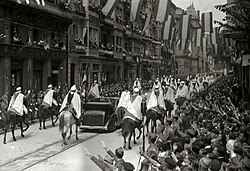
![Leonese anarchist Buenaventura Durruti was fatally shot after he arrived in Madrid to reinforce the morale of the Republicans during an unsuccessful Francoist siege in Madrid.[267] His funeral, headed (in the image) by Lluís Companys, president of the Generalitat of Catalonia, and Joan García i Oliver, Minister of Justice of the Spanish Republic, was in Barcelona.[268]](/images/39/21/39211d2dae9e6fe97ebe3e0ceceb2a043d80b630be29d88de3e3ce8034920d57.jpg)
![Children preparing for evacuation, some giving the Republican salute. The Republicans showed a raised fist whereas the Nationalists gave the Roman salute.[note 4]](/images/fe/b5/feb5d89054a2d182b60fb203f7275214ebf9c1fcef84e486b6da488a58d64b98.png)
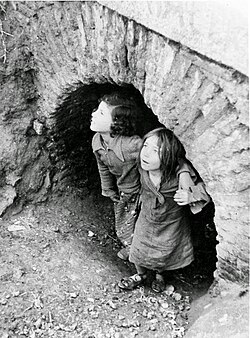
![The Puente Nuevo bridge, Ronda. Both Nationalists and Republicans are claimed to have thrown prisoners from the bridge to their deaths in the canyon.[428]](/images/b3/3a/b33a515610c0bcf82b1791853efcd3c1fce084523d7f5110eda820022412a0b2.jpg)
!["Execution" of the Sacred Heart of Jesus by Communist militiamen. The photograph in the London Daily Mail had the caption "Spanish Reds' war on religion".[433]](/images/df/87/df873724e599e75eb7148a9ce277ec1b69082d289894e75b44dce923060b2074.jpg)
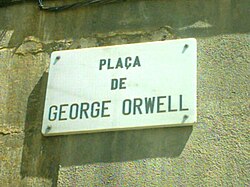
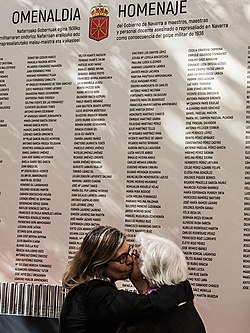
Who won the Spanish Civil War?
The Nationalist forces, led by General Francisco Franco, won the war, resulting in the end of the Second Spanish Republic and the start of Franco's dictatorship.
What were the International Brigades?
The International Brigades were units composed of volunteers from various countries who traveled to Spain to support the Republican government against the Nationalist uprising.
Why was the bombing of Guernica significant?
The bombing of Guernica was one of the first instances of saturation bombing of a civilian population, serving as a grim precursor to the aerial tactics used in World War II.
What was the "Red Terror"?
The Red Terror refers to the acts of torture, murder, and war crimes committed by Republican forces and leftist militias during the conflict.
How did foreign powers influence the war?
Nazi Germany and Fascist Italy provided the Nationalists with essential troops, aircraft, and equipment. The Soviet Union provided the Republicans with military advisors, aircraft, and tanks.