Space: From Classical Geometry to Relativistic Spacetime
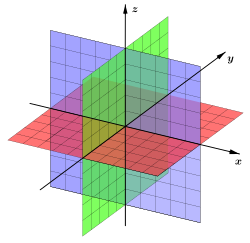
At its most basic level, space is a three-dimensional continuum that defines positions and directions. While we often perceive it as a simple void where objects exist, the nature of space has been one of the most debated topics in physics and philosophy for millennia. From the rigid, absolute dimensions of classical mechanics to the curved, dynamic fabric of modern relativity, our understanding of space has evolved from a static stage into a fundamental participant in the laws of the universe.
In classical physics, space is typically viewed in three linear dimensions. However, modern physics integrates space with time to form a boundless four-dimensional continuum known as spacetime. This conceptual shift is essential for understanding how the universe operates on both a cosmic and atomic scale.
Key Facts
- Dimensions: Classical space is three-dimensional; modern physics views it as part of a four-dimensional spacetime.
- Euclidean vs. Non-Euclidean: While Euclidean space is flat, non-Euclidean geometries (hyperbolic and elliptical) describe curved spaces.
- General Relativity: Albert Einstein proved that gravitational fields curve spacetime, deviating from flat Euclidean models.
- Cosmic Origin: Space was created during the Big Bang approximately 13.8 billion years ago and continues to expand.
- Measurement: The standard meter is defined by the distance light travels in a vacuum during 1/299,792,458 of a second.
The Philosophy of Space
The debate over whether space is a physical entity or a conceptual framework dates back to antiquity. Early reflections include Plato's Timaeus, Socrates' discussions on khôra (space), and Aristotle's definition of topos (place). By the 11th century, the Arab polymath Alhazen introduced a geometrical conception of place as "space qua extension."
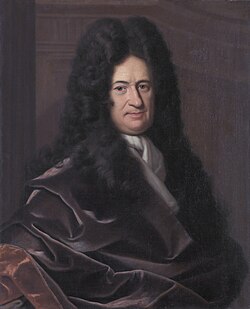
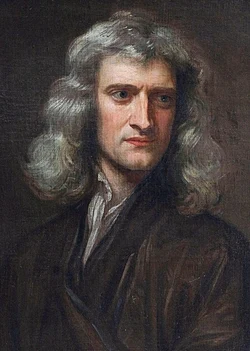
During the 17th century, two opposing views emerged. Isaac Newton argued that space is absolute, existing independently of the matter within it. Conversely, Gottfried Leibniz proposed that space is not an entity but a collection of relations between objects, defined by their relative distance and direction.
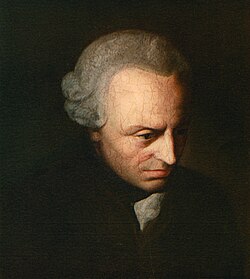
In the 18th century, Immanuel Kant shifted the conversation by suggesting that space and time are not empirical discoveries from the outside world. Instead, he argued they are a priori forms of intuition—inherent mental frameworks that humans use to structure all experiences.
The Evolution of Geometry
For centuries, the foundation of spatial mathematics was Euclidean geometry, based on five postulates. The most debated was the parallel postulate, which states that given a line and a point not on that line, only one parallel line can pass through that point. In the 19th century, mathematicians discovered that by altering this postulate, entirely new geometries could exist.
Non-Euclidean Geometries
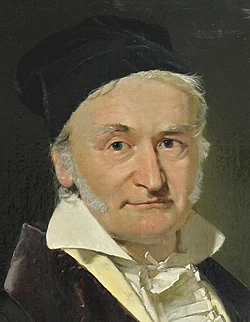
János Bolyai and Nikolai Lobachevsky developed hyperbolic geometry, where infinite parallel lines can pass through a single point, and the sum of a triangle's angles is less than 180°. Later, Bernhard Riemann introduced elliptical geometry, where no parallel lines exist and triangle angles exceed 180°.
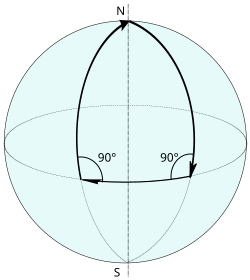
| Type of Geometry | Number of Parallels | Triangle Angle Sum | Circumference/Diameter Ratio | Curvature |
|---|---|---|---|---|
| Hyperbolic | Infinite | < 180° | > π | < 0 |
| Euclidean | 1 | 180° | π | 0 |
| Elliptical | 0 | > 180° | < π | > 0 |
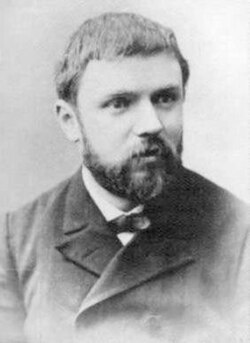
Henri Poincaré later suggested that the choice of geometry is a matter of convention. He used the thought experiment of a "sphere-world" to show that observers might be deceived about the true shape of their space due to environmental factors, making it difficult to prove which geometry is "true" through experiment alone.
Space in Modern Physics
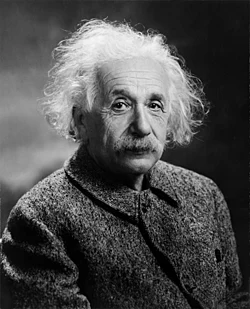
Albert Einstein revolutionized our understanding of space with his theories of relativity. In 1905, his special theory of relativity introduced spacetime, merging three spatial dimensions with one time dimension. This theory revealed that the speed of light is constant for all observers, meaning that time and space are relative; moving clocks tick slower, and moving objects shorten in the direction of motion.
General Relativity and Curvature
Einstein's general theory of relativity postulated that spacetime is not flat but is geometrically distorted—or curved—by massive objects. This curvature is what we perceive as gravity. A significant prediction of this theory is the existence of gravitational waves, which are ripples in the fabric of spacetime. These were directly observed for the first time by LIGO scientists on September 14, 2015.
Cosmology and the Universe
Modern cosmology suggests that space was created during the Big Bang 13.8 billion years ago. Since then, space has been expanding rapidly, a process driven by cosmic inflation. While the overall shape of the entire universe remains unknown, the expansion is a confirmed fact of our physical reality.
Interdisciplinary Perspectives on Space
Beyond physics, space is analyzed in various other fields:
- Psychology: Researchers study how humans perceive visual space and identify space-related phobias, such as agoraphobia (fear of open spaces), claustrophobia (fear of enclosed spaces), and astrophobia (fear of celestial space).
- Social Sciences: Scholars use theories from Marxism and postmodernism to examine space as a social product. Henri Lefebvre's work, for example, explores how social processes and capital accumulation produce the spaces we inhabit.
- Law: The concept of ownership extends beyond land to include airspace, international waters, the electromagnetic spectrum (radio bands), and cyberspace.
Frequently Asked Questions
What is the difference between Euclidean and non-Euclidean space?
Euclidean space is flat, meaning parallel lines never meet and triangle angles always sum to 180°. Non-Euclidean spaces are curved; in hyperbolic space, lines diverge and triangle angles sum to less than 180°, while in elliptical space, lines eventually meet and triangle angles sum to more than 180°.
How does gravity affect space?
According to general relativity, gravity is not a force acting at a distance but a result of the curvature of spacetime. Massive objects, like stars and planets, warp the spacetime around them, causing other objects to move along these curves.
What is Minkowski space?
Minkowski space is the four-dimensional mathematical model used in special relativity. It treats time as a dimension that is hyperbolic-orthogonal to the three spatial dimensions, allowing for the calculation of invariant spacetime intervals.
How is a meter officially defined today?
The meter is defined based on the constant speed of light. It is the distance light travels in a vacuum during a time interval of exactly 1/299,792,458 of a second.
What are gravitational waves?
Gravitational waves are "ripples" in the fabric of spacetime caused by the acceleration of massive objects. Their existence was predicted by Einstein and directly detected by the LIGO and Virgo collaborations in 2015.