The Enduring Alliance: A History of South Korea–United States Relations
The relationship between the Republic of Korea (South Korea) and the United States is one of the most significant bilateral partnerships in modern history. From the foundational establishment of the South Korean state to a sophisticated "nuclear-based" military alliance, the two nations have transitioned from wartime allies to deep economic and technological partners.
Since diplomatic relations officially commenced in 1949, the United States has recognized the Republic of Korea (ROK) as the sole legitimate government of Korea. This bond was forged in the crucible of the Korean War and has since evolved through decades of rapid economic growth, shared military objectives, and expanding cooperation in fields as diverse as space exploration and international trade.
Key Facts
- Diplomatic Start: Official relations began on March 25, 1949.
- Military Status: South Korea was designated a major non-NATO ally in 1987.
- Troop Presence: Approximately 28,500 U.S. troops are stationed in South Korea.
- Economic Scale: In 2022, South Korean exports to the U.S. totaled $110.17 billion.
- Alliance Evolution: In 2023, the alliance was upgraded to a "nuclear-based" partnership.
Historical Foundations and the Korean War
The Division of the Peninsula
Following the end of World War II, the Korean Peninsula was divided into two separate nations in 1948: the Republic of Korea (ROK) in the south and the Democratic People's Republic of Korea (DPRK) in the north. The United States established formal diplomatic ties with the ROK in early 1949, providing a cornerstone for the modern South Korean state.
The Korean War (1950–1953)
The fragile peace was shattered on June 25, 1950, when North Korean forces invaded the South. This conflict, a major early clash of the Cold War, saw a United Nations-led coalition, spearheaded by the United States, intervene to defend the ROK. The war involved significant deployment of U.S. and multinational troops and eventually ended in a stalemate along the 38th parallel, restoring the boundaries to nearly their original positions.
Military Cooperation and Security
A Long-Standing Defense Partnership
The military alliance has remained a constant, with South Korea supporting U.S. efforts in various conflicts, including the Vietnam and Iraq Wars. In 1987, South Korea became one of the first countries to be named a major non-NATO ally. To maintain readiness, the two nations conduct annual joint exercises, such as the "Max Thunder" air force drills.
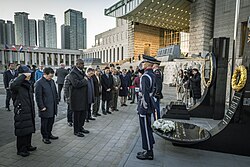
Nuclear Deterrence and Modern Security
In response to growing military threats from North Korea, the alliance has undergone significant modernization. In June 2023, President Yoon Suk Yeol described the alliance as "nuclear-based." This was reinforced by the Washington Declaration, which enhanced nuclear deterrence capabilities, including allowing U.S. nuclear submarines to dock in South Korea—a capability not seen since 1991.
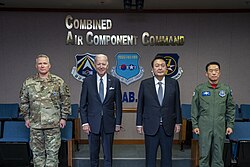
The Presence of U.S. Forces
As of late 2024, approximately 28,500 American troops remain stationed in South Korea to ensure regional stability. In 2019, a year-long agreement was confirmed regarding the continued presence of these forces, involving a $925 million payment from South Korea to the United States.
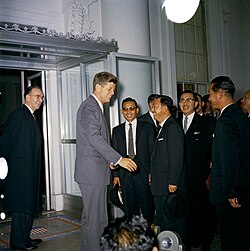
Economic and Technological Synergy
Trade Dynamics
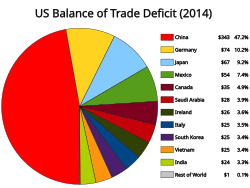
The economic relationship is characterized by high volumes of trade, particularly in the automotive sector. While South Korea maintains a significant export market to the U.S., the trade balance has seen fluctuations over the decades.
| Year | U.S. Exports to Korea (Billions) | U.S. Imports from Korea (Billions) | Trade Balance (Billions) |
|---|---|---|---|
| 1985 | 6.0 | 10.0 | -4.0 |
| 2000 | 27.8 | 40.3 | -12.5 |
| 2010 | 38.8 | 48.9 | -10.1 |
| 2025 | 57.5 | 104.7 | -47.2 |
The 2025 Trade Agreement
Following the announcement of "Liberation Day tariffs" in April 2025, the two nations negotiated a new framework. Rather than engaging in a trade war, South Korea pursued proactive negotiations. This resulted in the U.S. lowering tariffs on South Korean goods to 15%, while South Korea committed to a $350 billion investment fund for U.S.-owned companies within its borders.
Space and Science Cooperation
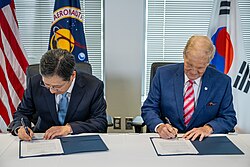
Beyond traditional industry, the two nations are expanding into the final frontier. Following a 2016 bilateral space agreement, cooperation has intensified through visits to facilities like the Goddard Space Flight Center. In 2024, NASA Deputy Administrator Pamela Melroy visited South Korea to further strengthen this space alliance.
Cultural Exchange and Public Perception
Soft Power and Cultural Presence
The influence of South Korean culture, including K-pop and language education, has grown significantly in the U.S. This is supported by institutions like the Korean Cultural Center in Los Angeles and New York, which facilitate deeper societal connections.

Public Opinion
Public sentiment varies between the two nations. According to a 2018 Gallup poll, 77% of Americans held a favorable view of South Koreans. Conversely, a 2026 Pew Research poll indicated that 45% of South Koreans viewed the United States favorably, while 55% held a negative view.
Frequently Asked Questions
When did the United States officially recognize South Korea?
The United States officially recognized the Republic of Korea as the sole legitimate government of Korea on January 1, 1949, and established formal diplomatic relations on March 25 of that year.
What is the current status of U.S. troops in South Korea?
There are approximately 28,500 American troops stationed in South Korea to support the bilateral security partnership.
How has the military alliance changed recently?
In 2023, the alliance was upgraded to a "nuclear-based" partnership to address growing military threats from North Korea, which includes enhanced nuclear deterrence and increased access for U.S. nuclear-capable assets.
What was the outcome of the 2025 trade negotiations?
The negotiations resulted in the U.S. reducing tariffs on South Korean goods to 15%, while South Korea pledged to establish a $350 billion investment fund for U.S.-owned companies operating within South Korea.
Are the U.S. and South Korea cooperating in space exploration?
Yes, the two countries have a bilateral space agreement signed in 2016 and continue to deepen cooperation through agencies like NASA and the Korea AeroSpace Administration (KASA).