Discovering Suwon: A Blend of Ancient Heritage and Modern Innovation
Located in the heart of Gyeonggi Province within the Seoul Metropolitan Area, Suwon is a vibrant special case city that serves as a bridge between South Korea's storied past and its high-tech future. With a population exceeding 1.2 million, Suwon is a bustling urban center characterized by its unique administrative structure, diverse cultural landmarks, and significant economic contributions.
Whether you are exploring the ancient stone walls of a UNESCO World Heritage site or walking through the neon-lit corridors of a modern shopping district, Suwon offers a multifaceted experience that captures the essence of contemporary Korean life.
Key Facts
- Status: Special case city in Gyeonggi Province, South Korea.
- Population: Approximately 1,234,582 (as of February 2026).
- Major Landmark: Hwaseong Fortress, a UNESCO World Heritage site.
- Economic Driver: Home to major industrial presence, including Samsung Electronics.
- Geography: Highest point is Gwanggyosan at 582 meters.
Geography and Climate
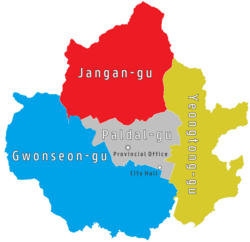
Suwon covers a total area of 121.04 km² and is defined by its varied topography. The city's highest elevation is found at Gwanggyosan, a mountain reaching 582 meters (1,909 ft). The urban landscape is organized into four main districts, known as gu, which comprise 43 dong (neighborhoods).
Climate Patterns
The city experiences a seasonal climate with distinct variations in temperature and precipitation. Summers are typically warm and humid, with July and August seeing the highest average rainfall. Winters can be quite cold, with record low temperatures reaching as low as -25.8°C (-14.4°F). The average annual precipitation is approximately 1,320.3 mm.
A Journey Through History
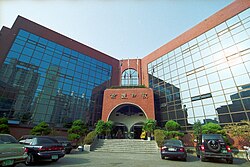
Suwon's history is a tapestry of ancient traditions and modern struggles. From its early foundations through the Japanese colonial period to its pivotal role in the 20th century, the city has remained a resilient cornerstone of the region.
The Korean War Era
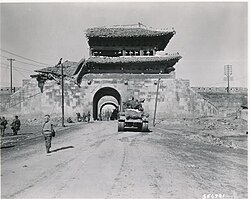
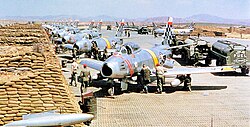
During the Korean War, Suwon was a site of significant military activity. The city saw intense conflict, including the movement of heavy machinery and the presence of international air forces. The area around Suwon Air Base was a strategic location for various military wings during the conflict.

Historical Landmarks
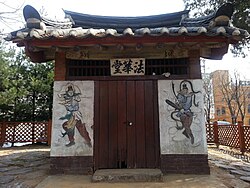
The most iconic symbol of the city is the Hwaseong Fortress. This architectural marvel stands as a testament to Korea's historical engineering and defensive capabilities. Other significant sites include the Hyanggyo (a Confucian school) and the Bugugwon.
Modern Life: Economy, Culture, and Sport
Today, Suwon is a powerhouse of industry and culture. It is a major hub for technology and commerce, hosting significant operations for companies like Samsung Electronics and Samsung Electro-Mechanics.
Urban Lifestyle and Retail
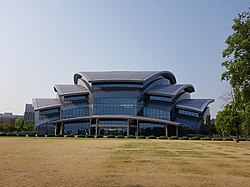
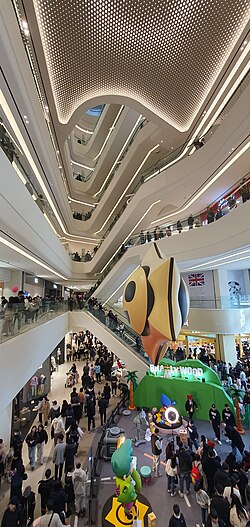
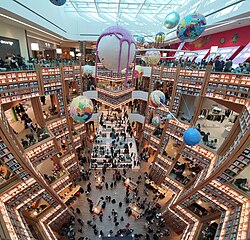
For those seeking modern amenities, Suwon offers world-class retail and leisure experiences. The Starfield complex is a major destination, featuring expansive shopping areas and unique architectural elements like its famous library.
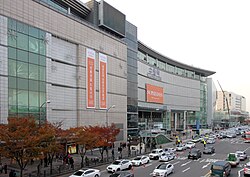
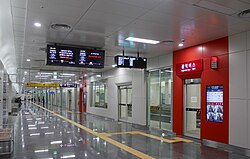
The city's urban infrastructure is highly developed, featuring major transit hubs like Suwon Station and the Gwanggyo Jungang Underground Transfer Centre, which facilitate seamless movement across the metropolitan area.
Sports and Entertainment
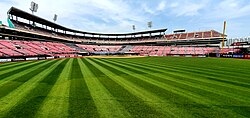
Sports enthusiasts can find excitement at the KT Wiz Stadium, home to professional baseball. The city also boasts a rich community of notable figures in entertainment, including actors, musicians, and K-pop idols, contributing to a dynamic cultural atmosphere.
City Overview Summary
| Category | Details |
|---|---|
| Total Area | 121.04 km² |
| Population (2026) | 1,234,582 |
| Administrative Divisions | 4 Gu, 43 Dong |
| Highest Elevation | 582 m (Gwanggyosan) |
| Major Districts | Gwonseon, Jangan, Paldal, Yeongtong |
Frequently Asked Questions
What are the main districts in Suwon?
Suwon is divided into four primary administrative districts: Gwonseon, Jangan, Paldal, and Yeongtong.
What is the most famous historical site in the city?
The Hwaseong Fortress is the city's most famous landmark and is recognized as a UNESCO World Heritage site.
How is Suwon connected to the rest of the Seoul Metropolitan Area?
Suwon is highly accessible via several major railway lines, including Line 1, the Shinbundang Line, and the Suin-Bundang Line, with Suwon Station serving as a major transport hub.
What is the climate like in Suwon?
Suwon has a seasonal climate with warm, rainy summers and cold winters. Average annual precipitation is about 1,320.3 mm, and the city experiences significant temperature swings between seasons.
Does Suwon have a significant industrial presence?
Yes, Suwon is a major economic center, notably hosting significant operations for global technology leaders such as Samsung Electronics.