South Georgia Island: A History of Whaling, Exploration, and Conflict
In the early 20th century, the remote landscapes of South Georgia became the epicenter of a global economic rush. Driven by the demand for whale oil, the island transformed from a desolate outpost into the world's largest whaling center, attracting thousands of workers and sparking complex geopolitical disputes that persist to this day.
The Rise of the Whaling Industry
The industrialization of South Georgia began in earnest in 1904 when the Compañía Argentina de Pesca established a station at Grytviken. This move followed a period of administrative shifts where the British authorities granted whaling leases to settle conflicts of interest between various commercial entities, including companies from the UK, Norway, and South Africa.
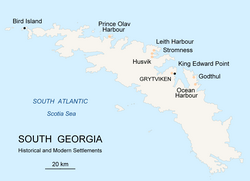
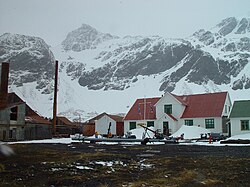
At its peak, the island hosted several major shore bases, including Grytviken, Leith Harbour, Ocean Harbour, Husvik, Stromness, and Prince Olav Harbour. These stations were operated by a diverse array of international firms, such as Christian Salvesen Ltd and various Norwegian companies like Sandefjord Hvalfangerselskap. In the final seasons of the industry (1963–65), Japanese companies Kokusai Gyogyo Kabushike Kaisha and Nippon Suisan Kaisha also operated sub-leases at Grytviken and Leith Harbour.
The Legacy of Carl A. Larsen
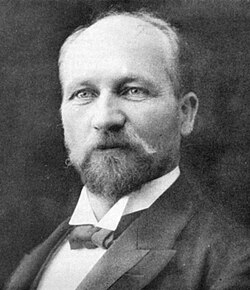
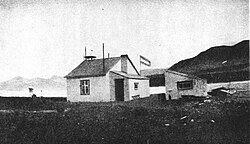
The founder of Grytviken, Carl Anton Larsen, was a naturalized Briton born in Norway. A visionary leader, Larsen organized a team of 60 Norwegians to build the Grytviken whale oil factory in just over a month in 1904. Beyond industry, Larsen contributed to the island's infrastructure by establishing a meteorological observatory in 1905 and introducing reindeer in 1911 to provide a hunting resource for the local workforce.
Life in the Whaling Settlements
The population of South Georgia fluctuated wildly with the seasons, often swelling to over 2,000 people in the summer and dropping to around 200 in the winter. While the workforce was predominantly Norwegian and Swedish, the community included a multicultural mix of Britons, Danes, Finns, and others. Some managers lived with their families; notably, Solveig Gunbjörg Jacobsen became the first child born in Antarctica on October 8, 1913.
Key Facts
- Primary Industry: South Georgia was the world's largest whaling center in the early 20th century.
- Key Figure: Carl A. Larsen founded Grytviken in 1904.
- Demographics: Peak populations reached over 2,000 during summer whaling seasons.
- Exploration: Sir Ernest Shackleton used the island as a critical rescue point for his crew in 1916.
- Governance: The island was part of the British Falkland Islands Dependencies established by the 1908 Letters Patent.
Exploration and Scientific Contribution
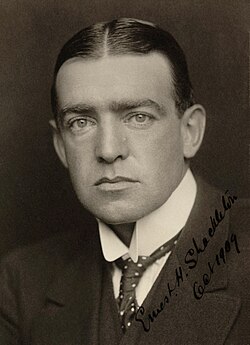
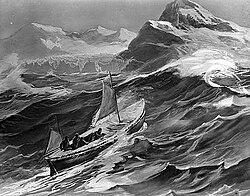
South Georgia is inextricably linked to the Golden Age of Antarctic exploration. Sir Ernest Shackleton, whose British Antarctic Expedition (1908–09) helped map the route to the South Pole, is buried on the island. In 1916, Shackleton performed one of history's most legendary maritime feats, sailing the 7-meter James Caird across the Scotia Sea to reach South Georgia and rescue his stranded team from Elephant Island.
Later, between 1951 and 1957, Duncan Carse conducted a comprehensive survey of the island. His work resulted in the definitive 1:200,000 topographic map published in 1958, which remains the standard reference today. Carse's dedication to the island is commemorated by Mount Carse, the third-highest peak on South Georgia.
Geopolitical Tensions and the Falklands War
The sovereignty of South Georgia has been a point of contention between the United Kingdom and Argentina. Britain established a permanent local administration in Grytviken in 1909 under the 1908 Letters Patent. While Argentina initially acknowledged this, they later challenged the validity of these claims in 1948.
Tensions escalated in 1976 when Argentina clandestinely built the Corbeta Uruguay station on Thule Island. This culminated in the 1982 Falklands Conflict, when Argentine special forces landed at Leith Harbour and attacked Royal Marines at Grytviken. The battle resulted in three Argentine deaths and the eventual surrender of Argentine garrisons on April 25 and 26, 1982.
The recapture of South Georgia provided a significant psychological and strategic boost to the British forces. Following the conflict, the island remained under a small military garrison until 2001, when it reverted to civilian rule, though Argentina continues to claim the territory.
Summary of Whaling Stations
| Station Name | Operating Period | Notable Operators |
|---|---|---|
| Grytviken | 1904–1964 | Compañía Argentina de Pesca, Albion Star, Christian Salvesen |
| Leith Harbour | 1909–1965 | Christian Salvesen, Nippon Suisan Kaisha |
| Ocean Harbour | 1909–1920 | Hvalfangerselskap Ocean |
| Husvik | 1910–1960 | Various Norwegian companies |
| Stromness | 1912–1961 | Various Norwegian companies |
| Prince Olav Harbour | 1917–1934 | Various Norwegian companies |
Frequently Asked Questions
Who was the first child born in Antarctica?
Solveig Gunbjörg Jacobsen, the daughter of Fridthjof and Klara Olette Jacobsen, was the first child born in Antarctica on October 8, 1913, in Grytviken.
Why were reindeer introduced to South Georgia?
Carl A. Larsen and his brother introduced reindeer in 1911 to provide a sustainable source of meat for the workers employed in the whaling industry.
What was the significance of the James Caird?
The James Caird was a small 7-meter boat used by Sir Ernest Shackleton and two companions in 1916 to cross the Scotia Sea to South Georgia to rescue their crew stranded on Elephant Island.
When is Liberation Day celebrated on the island?
Liberation Day is celebrated on April 26, marking the surrender of the Argentine detachment in Leith Harbour during the 1982 conflict.
What is the current status of the Corbeta Uruguay station?
The Corbeta Uruguay station on Thule Island was destroyed in January 1983 following evidence of an unauthorized visit.