Armed Forces of the Argentine Republic
The Armed Forces of the Argentine Republic (Spanish: Fuerzas Armadas de la República Argentina) serve as the primary military organization of Argentina. Operating under the authority of the President, who serves as the Commander-in-Chief, and a civilian Minister of Defense, these forces are tasked with protecting national sovereignty and participating in international security efforts.
Beyond the traditional military branches, Argentina utilizes two specialized security forces managed by the Ministry of Security: the National Gendarmerie, which secures borders and strategic sites, and the Naval Prefecture, a coast guard responsible for maritime territory and internal waterways. In times of war, the Naval Prefecture can be mobilized as part of the armed forces.
Key Facts
- Founded: May 29, 1810.
- Commander-in-Chief: President Javier Gerardo Milei.
- Primary Branches: Army, Navy, and Air Force.
- Budget: Approximately $2.9 billion (2022).
- International Status: Major Non-NATO ally of the United States.
- Core Modern Mission: UN peacekeeping, humanitarian aid, and Antarctic presence.
Organizational Structure
The Argentine military is divided between defense and security mandates. The Ministry of Defense oversees the three main combat branches, while the Ministry of Security manages the gendarmerie and coast guard.
Defense Ministry Branches
- Argentine Army (Ejército Argentino): The oldest land force, established during the War of Independence.
- Argentine Navy (Armada de la República Argentina): Responsible for maritime defense and naval operations.
- Argentine Air Force (Fuerza Aérea Argentina): Established in 1945 to provide aerial sovereignty.
Security Forces
- National Gendarmerie (Gendarmería Nacional Argentina): A border guard force focused on strategic security.
- Naval Prefecture (Prefectura Naval Argentina): A coast guard ensuring the safety of rivers and seas.
To ensure coordination, the Armed Forces Joint General Staff (EMCFA) centralizes operational and acquisition decisions, emphasizing "jointness"—the integration of different service branches to achieve a single objective.
| Entity | Responsible Ministry | Primary Role |
|---|---|---|
| Army, Navy, Air Force | Ministry of Defense | National Defense & Foreign Aggression |
| National Gendarmerie | Ministry of Security | Border & Strategic Security |
| Naval Prefecture | Ministry of Security | Coast Guard & River Protection |
| Joint General Staff (EMCFA) | Ministry of Defense | Joint Command & Coordination |
Historical Evolution
The Army and Navy were born in 1810 during the Argentine War of Independence. Throughout the 20th century, the military was deeply involved in the country's political landscape, including various coups d'état. A notable period of internal strife occurred between 1955 and 1963, characterized by the conflict between the "Blues" (Azules) and "Reds" (Colorados) following the deposition of Juan Domingo Perón.
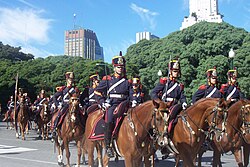
In 1976, the military established the National Reorganization Process, a dictatorship that lasted until 1983. This era was marked by the extermination of communist guerrillas through random detentions and torture. Following the transition to democracy in 1983, President Raúl Alfonsín initiated the Trial of the Juntas to prosecute crimes committed during the 1970s.
The Falklands War and its Aftermath
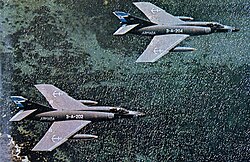
On April 2, 1982, Argentine forces invaded the Falkland Islands and South Georgia. The subsequent conflict with Great Britain ended in Argentine surrender on June 14, 1982. This defeat accelerated the collapse of the military dictatorship and led to a period of internal instability within the Army, including the Carapintadas (painted faces) uprisings.
International Engagement in the 1990s
Argentina sought to rebuild its professional image in the 1990s. It was the only Latin American nation to participate in the 1991 Gulf War via "Operación Alfil," contributing destroyers and corvettes to the UN blockade. This success helped the military overcome the "Malvinas syndrome" (the psychological impact of the Falklands defeat). During this time, conscription was abolished, and the military shifted toward a professional volunteer force.
Modern Capabilities and Challenges
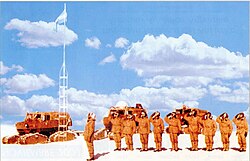
Today, the Argentine military focuses on international peacekeeping, humanitarian relief, and maintaining a continuous presence in Antarctica. In 1965, the military conducted "Operación 90," a 10-man patrol to the South Pole to promote territorial claims.
Despite its professionalization, the forces have faced significant budget cuts. Argentina's military spending is among the lowest in South America, representing roughly 0.9% of its GDP as of 2010. This lack of funding has led to an erosion of capabilities, exemplified by the accidental loss of the submarine San Juan in 2017.
Modernization efforts have also faced diplomatic hurdles. In 2019, a deal to purchase Korean KAI FA-50 fighters was cancelled in 2020 due to British intervention, as the aircraft contained UK-supplied components. Similarly, the sale of Brazilian Saab Gripen aircraft was blocked for the same reason.
International Participation
Argentina is a committed contributor to United Nations mandates. Notable deployments include:
- Cyprus (UNFICYP): Providing air contingents and ground troops.
- Haiti (MINUSTAH): Deploying mobile field hospitals and helicopters.
- Kosovo (KFOR/UNMIK): Maintaining combat engineers within Italian brigades.
- Regional Cooperation: Creating the Cruz del Sur (Southern Cross) combined force with Chile for UN mandates and the PARACACH search and rescue patrol in Antarctica.
Frequently Asked Questions
Who controls the Argentine Armed Forces?
The forces are controlled by the President of Argentina, who serves as the Commander-in-Chief, and a civilian Minister of Defense.
What is the difference between the Armed Forces and the Security Forces?
The Armed Forces (Army, Navy, Air Force) are under the Ministry of Defense and are used against foreign aggression. The Security Forces (National Gendarmerie and Naval Prefecture) are under the Ministry of Security and focus on border control and internal maritime safety.
Why has Argentina struggled to modernize its fighter jets?
Attempts to purchase aircraft, such as the Korean FA-50 or Brazilian Gripen, were blocked by the United Kingdom because those aircraft contained British-origin components.
What is the role of the Argentine military in Antarctica?
The military supports the country's continuous presence on the continent through scientific observations, territorial claims, and combined search and rescue operations (PARACACH) with Chile.
How did the Gulf War affect the Argentine military?
Participating in the 1991 Gulf War through "Operación Alfil" helped the military regain professional confidence and overcome the psychological trauma associated with the 1982 Falklands War.