South America: A Comprehensive Guide to Country Areas and Geography
South America is a continent of vast landscapes and diverse territories, covering a total area of approximately 17,830,199 square kilometers (6,884,275 square miles). From the dense rainforests of the Amazon to the rugged peaks of the Andes, the distribution of land across its nations varies significantly, with a few giants dominating the continental landmass.
While the borders of the continent are generally well-defined, some geographical classifications remain nuanced. For instance, Panama is not typically regarded as a transcontinental country, yet it is occasionally associated with South America because it was part of Colombia before seceding in 1903. Similarly, the inclusion of the island of Trinidad can categorize Trinidad and Tobago as a transcontinental nation.
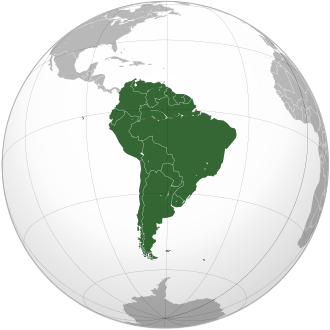
Key Facts
- Brazil is the largest country in South America, accounting for 48% of the continent's total area.
- Suriname is the smallest sovereign country on the continent.
- The total land area of South America is 17,830,199 km².
- The continent includes both sovereign nations and overseas dependencies, such as French Guiana and the Falkland Islands.
Land Area Distribution by Country
The spatial distribution of South America is heavily skewed toward its eastern and southern regions. Brazil alone occupies nearly half of the entire continent, followed by Argentina, which holds 16% of the total area. Together, these two nations represent the vast majority of the South American landmass.
Moving toward the northwest, Peru, Colombia, and Bolivia each hold significant portions of the continent, with Peru being the largest of the three at 7% of the total area. The remaining nations, including Chile, Paraguay, Ecuador, Guyana, Uruguay, and Suriname, occupy smaller percentages, with Suriname and the various dependencies representing the smallest fractions of the land.
| Location | % of Total Area | Area (km²) | Area (mi²) |
|---|---|---|---|
| Brazil | 48% | 8,510,346 | 3,285,862 |
| Argentina | 16% | 2,796,427 | 1,079,706 |
| Peru | 7% | 1,285,216 | 496,224 |
| Colombia | 6% | 1,141,748 | 440,831 |
| Bolivia | 6% | 1,098,581 | 424,164 |
| Venezuela | 5% | 929,690 | 358,955 |
| Chile | 4% | 756,102 | 291,932 |
| Paraguay | 2% | 406,752 | 157,048 |
| Ecuador | 1% | 257,215 | 99,311 |
| Guyana | 1% | 214,969 | 83,000 |
| Uruguay | 1% | 173,626 | 67,037 |
| Suriname | 0.9% | 163,820 | 63,251 |
| French Guiana (France) | 0.5% | 83,534 | 32,253 |
| Falkland Islands (UK) | 0.1% | 12,173 | 4,700 |
Frequently Asked Questions
Which is the largest country in South America?
Brazil is the largest country in South America, covering 8,510,346 square kilometers, which is 48% of the continent's total area.
Which is the smallest country in South America?
Suriname is the smallest sovereign country in South America, with an area of 163,820 square kilometers.
Why is Panama sometimes mentioned in South American geography?
Panama is occasionally included in South American contexts because it was part of Colombia prior to its secession in 1903, although it is not generally regarded as a transcontinental country.
What is the total land area of the South American continent?
The total area of South America is 17,830,199 square kilometers (6,884,275 square miles).
Are there any non-sovereign territories in South America?
Yes, the continent includes dependencies such as French Guiana (France) and the Falkland Islands (United Kingdom).