Sonata Form: Variations on the Standard Schema
The standard sonata form is often taught as a rigid blueprint: an exposition that moves from the tonic to the dominant, a development that explores those themes, and a recapitulation that resolves everything back to the home key. However, the history of Western classical music is defined by composers who treated this schema not as a rule, but as a framework to be challenged and expanded.
From the Classical precision of Haydn and Mozart to the harmonic adventurousness of Schubert and Tchaikovsky, variations on the sonata schema allow composers to create specific emotional effects, ranging from bleakness and tension to sudden relief.
Key Facts
- Monothematic expositions use a single theme to establish the contrast between the tonic and dominant keys.
- Common-tone modulation allows a piece to move between subject groups without a transitional bridge.
- Mediant and submediant modulations became common in the Romantic era, replacing the traditional dominant.
- Subdominant recapitulations shift the return of the first subject group to the subdominant key rather than the tonic.
- Sonatina form is a truncated version of the sonata where the development section is omitted entirely.
Variations in the Exposition
Monothematic Expositions
In a typical exposition, the move to the dominant key is signaled by a new theme. In a monothematic exposition, the composer uses the opening theme—often altered or truncated—to announce the key change. Joseph Haydn frequently employed this technique, as seen in his Sonata Hob. XVI/49 in E ♭ major. While the term suggests only one theme exists, most monothematic works still include additional themes in the second subject group. Only rarely, such as in Haydn's String Quartet Op. 50, No. 1, is a complete exposition written with only one theme.
Music theorist Charles Rosen suggests that the core of the Classical sonata is the dramatization of the arrival of the dominant. Whether achieved through a new theme, a change in texture, or a salient cadence, the goal remains the same: marking the tonal shift.
Absence of Transitions
Some works bypass the transitional material usually found between the first and second subject groups. Instead, they utilize common-tone modulation—where a single note is shared between two keys—to jump directly from the first group (ending on a tonic half-cadence) to the second group in the dominant key. Examples include Mozart's Symphony No. 31 and Beethoven's Symphony No. 1.
Alternative Tonal Destinations
While major-mode movements typically modulate to the dominant and minor-mode movements to the relative major, composers often deviated for emotional effect:
- Minor Dominant: Used by Beethoven and Mendelssohn (Symphony No. 3) to create a bleak or grim atmosphere.
- Mediant and Submediant: Common in the Romantic era. Beethoven's "Waldstein" sonata modulates to the mediant (E major from C major), while the "Hammerklavier" modulates to the submediant (G major from B ♭ major).
- Remote Keys: Late Romantic composers like Tchaikovsky used distant tonal areas to divide the octave, as seen in the first movement of his Symphony No. 4.
Multi-Key Expositions
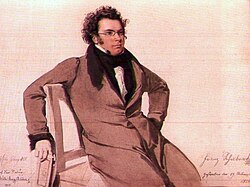
Some composers expanded the exposition to include three or more key areas. Franz Schubert was a pioneer of the three-key exposition; his Quartet in D minor, D. 810 ("Death and the Maiden"), utilizes D minor, F major, and A minor. In extreme cases, such as the finale of Schubert's Symphony No. 6, the exposition features six different keys, each with its own theme.
Complexities in the Recapitulation
The "Wrong Key" Reprise
The recapitulation typically returns to the tonic. However, a subdominant recapitulation begins the first subject group in the subdominant key, later modulating back to the tonic. This is found in Mozart's Piano Sonata No. 16 (K. 545) and several of Schubert's symphonies. Some composers use this for a "false reprise," tricking the listener before the actual tonic return occurs.
Progressive Tonality
In some Romantic works, the piece does not return to the original home key. This is known as progressive tonality. For example, Charles-Valentin Alkan's "Quasi-Faust" begins in D ♯ minor but ends in F ♯ major, reflecting a programmatic journey from maximum tension to ultimate stability.
Partial and Varied Recapitulations
Composers may also alter the structure of the return:
- Omission: The first subject group may be skipped entirely (e.g., Chopin's Piano Sonata No. 2).
- Reversal: The order of subject groups may be swapped, as seen in Bruckner's Symphony No. 7.
- Modification: Melodies may be adjusted to fit a new mode, a common practice in minor-key sonatas.
Truncated Sonata Forms
Not every sonata follows the full exposition-development-recapitulation cycle. Some Romantic works end the first movement immediately after the exposition, transitioning straight to the next movement (e.g., Wieniawski's Violin Concerto No. 2). In other cases, the development is replaced by a short retransition, a common feature in Mozart's overtures.
The most extreme truncation is sonatina form, where the development is omitted entirely, and the recapitulation follows the exposition immediately. This occurs in the second movement of Beethoven's Symphony No. 8.
| Variation Type | Key Characteristic | Notable Example |
|---|---|---|
| Monothematic | One theme for both tonic and dominant | Haydn, Sonata Hob. XVI/49 |
| Three-Key Exposition | Three distinct key/thematic areas | Schubert, "Death and the Maiden" |
| Subdominant Recapitulation | Recap begins in the subdominant key | Mozart, Piano Sonata K. 545 |
| Progressive Tonality | Ends in a different key than it began | Alkan, "Quasi-Faust" |
| Sonatina Form | Development section is omitted | Beethoven, Symphony No. 8 (Mvt 2) |
Frequently Asked Questions
What is a monothematic exposition?
A monothematic exposition is one where the composer uses the same primary theme to establish both the tonic and the dominant keys, rather than introducing a contrasting second theme.
How does sonatina form differ from standard sonata form?
Sonatina form is a truncated version of the sonata form that completely omits the development section, moving directly from the exposition to the recapitulation.
What is progressive tonality in a sonata?
Progressive tonality occurs when a movement begins in one key but concludes in a different key, rather than returning to the original tonic for final resolution.
Why would a composer use a minor dominant in a minor-key movement?
Modulating to the minor dominant instead of the relative major removes the sense of relief or comfort, which composers like Beethoven used to create a bleak or grim emotional effect.
What is a subdominant recapitulation?
It is a variation where the recapitulation section begins in the subdominant key instead of the tonic, often modulating back to the tonic for the second subject group.