Mordents in Music: Mastering the Art of the Musical Ornament
In the world of music theory, an ornament is a flourish added to a melody to make it more expressive or decorative. One of the most distinct ornaments is the mordent, a rapid alternation between a principal note and its neighbor. Derived from the Latin word mordere, meaning "to bite," the mordent adds a sharp, rhythmic bite to a musical phrase.
The term entered English musical terminology in the early 19th century, evolving from the German Mordent and the Italian mordente, both of which were used in the 18th century to describe this specific musical figure.
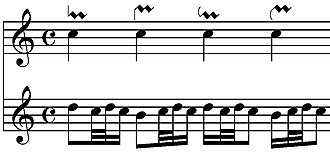
How a Mordent Works
A mordent consists of a single, rapid alternation between an indicated principal note and either the note immediately above or below it, returning quickly to the principal note. Depending on the direction of the alternation, there are two primary types:
- Upper Mordent: The alternation occurs between the principal note and the note above it.
- Lower Mordent: The alternation occurs between the principal note and the note below it.
In musical notation, an upper mordent is represented by a short squiggle. A lower mordent uses the same squiggle but includes a short vertical line passing through it. Like trills, mordents can be chromatically modified using accidentals such as flats, sharps, or naturals.

Historical Evolution and Terminology
The meaning and execution of the mordent have shifted significantly across different musical eras and languages. While modern standards generally follow 19th-century conventions, historical practice tells a different story.
The Baroque Period
During the Baroque era, the term "mordent" specifically referred to what we now call the lower mordent. The upper mordent was known as a pralltriller or schneeller. Interestingly, Baroque mordents were sometimes executed with more than one alternation, functioning similarly to an inverted trill.
The 19th Century and Beyond
By the 19th century, terminology shifted. The name "mordent" began to be applied generally to the upper mordent, while the lower version became known as the inverted mordent.
International Variations
Language continues to play a role in how these ornaments are named. In German, Pralltriller and Mordent are still used to refer to the upper and lower mordents, respectively. In French and occasionally in German, the ornament is spelled as mordant.
Execution and Performance
The speed of a mordent is not fixed; it varies according to the tempo of the piece. In some historical periods, mordents (and trills) might begin with an extra unessential note—the lesser, added note—rather than starting on the principal note.
It is also important to distinguish the mordent from the slide. While a slide may use a symbol similar to a mordent, it is placed to the left of the principal note rather than above it.
Key Facts
- Definition: A rapid single alternation between a principal note and the note above or below it.
- Etymology: From the Latin mordere, meaning "to bite."
- Notation: A squiggle for upper mordents; a squiggle with a vertical line for lower mordents.
- Baroque Usage: Mordents were primarily lower alternations and could involve multiple repetitions.
- Modern Usage: Generally follows 19th-century standards where the term often refers to the upper mordent.
| Type | Direction | Notation Symbol | Baroque Term |
|---|---|---|---|
| Upper Mordent | Principal → Above → Principal | Short squiggle | Pralltriller / Schneller |
| Lower Mordent | Principal → Below → Principal | Squiggle with vertical line | Mordent |
Frequently Asked Questions
What is the difference between a mordent and a trill?
A mordent is a single rapid alternation between two notes, whereas a trill typically involves a longer, repeated alternation between the principal note and the note above it.
How is a lower mordent written in sheet music?
A lower mordent is indicated by a short squiggle with a short vertical line drawn through the center of the symbol.
Does the speed of a mordent change?
Yes, the exact speed of execution depends on the overall tempo of the musical piece.
Why is it called a "mordent"?
The name comes from the Latin word mordere, which means "to bite," reflecting the sharp, quick nature of the ornament.
How did the meaning of "mordent" change over time?
In the Baroque period, it referred to the lower mordent. By the 19th century, the term was generally applied to the upper mordent, and the lower version became the "inverted mordent."