Solvay Conferences: The Epicenters of Modern Physics and Chemistry
For over a century, the Solvay Conferences have served as the world's most prestigious forums for addressing the most daunting unsolved problems in physics and chemistry. These invitation-only gatherings bring together the finest minds in science to debate theories that redefine our understanding of the universe. From the birth of quantum mechanics to the complexities of biological computation, the Solvay legacy is one of intellectual rigor and historic breakthroughs.
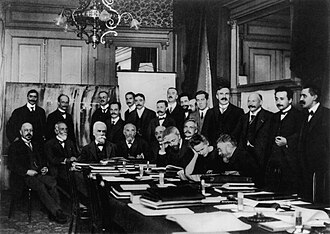
The tradition began in 1911 with a landmark meeting on physics, which is widely regarded as a turning point in scientific history. Following this success, the Belgian industrialist Ernest Solvay founded the International Solvay Institutes for Physics and Chemistry in 1912 and 1913. Based in Brussels, these institutes continue to coordinate a rigorous cycle of conferences, workshops, and seminars. In recent years, the institutes have followed a three-year cycle: a conference on physics, a gap year, and then a conference on chemistry.
Key Facts
- Founder: Established by Belgian industrialist Ernest Solvay.
- Location: Based in Brussels, Belgium.
- Scope: Originally focused on physics and chemistry; expanded to include biology in 2024.
- Prestige: Known for hosting a high concentration of Nobel Prize winners.
- Heritage: Archives (1910–1962) are recognized by UNESCO's Memory of the World International Register.
The Evolution of the Physics Conferences
The First Conference (1911)
Chaired by Hendrik Lorentz, the inaugural conference took place from October 30 to November 3, 1911. The central theme was Radiation and the Quanta, focusing on the tension between classical physics and the emerging quantum theory. The attendee list was a who's who of early 20th-century science, including Marie Skłodowska-Curie, Ernest Rutherford, and Henri Poincaré. Albert Einstein was notably the second youngest physicist in attendance.
Post-War Tensions and Political Friction
The interwar period saw the conferences mirrored by the geopolitical instability of Europe. The third conference in April 1921 was marked by the exclusion of most German scientists. In a public act of protest, Albert Einstein—who had become a Swiss citizen in 1901—declined his invitation and renounced any remaining German citizenship. Similarly, the fourth conference in 1924, which discussed the electrical conductivity of metals, excluded scientists from Germany and Austria, meaning figures like Planck, Einstein, and Born were absent.
The Legendary Fifth Conference (1927)
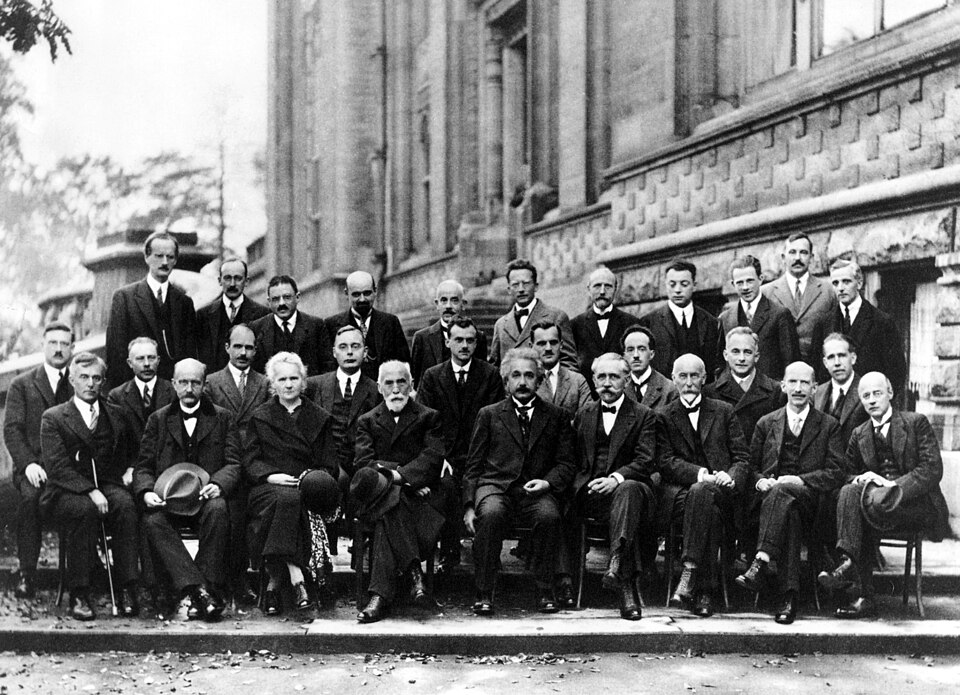
The fifth conference, held in October 1927, is perhaps the most famous scientific gathering in history. Focused on Electrons and Photons, it brought together the architects of quantum theory, including Niels Bohr, Werner Heisenberg, and Erwin Schrödinger. Of the 29 participants, 17 were or would become Nobel Prize winners. Marie Skłodowska-Curie was the only attendee to have won Nobel Prizes in two different scientific disciplines.
This meeting is often credited with the "outward completion" of quantum theory due to the intense exchange between researchers. The group photograph from this event is frequently referred to as "The Most Intelligent Photo Ever Taken."
Expanding Horizons: Chemistry and Biology
While physics often takes the spotlight, the Solvay Conferences on Chemistry have been equally vital. Starting in 1922, these meetings have tackled diverse topics ranging from the structure of organic molecules and vitamins to modern computational modeling and catalysis. The chemistry cycle has evolved to address 21st-century challenges, often chaired by leading experts such as Kurt Wüthrich.
In a significant expansion of the institute's scope, the first Solvay Conference on Biology took place in April 2024, titled "The organisation and dynamics of biological computation," signaling a new era of interdisciplinary exploration.
Summary of Major Physics Conferences
| No. | Year | Subject/Title | Notable Chair |
|---|---|---|---|
| 1 | 1911 | The theory of radiation and quanta | Hendrik Lorentz |
| 5 | 1927 | Electrons and photons | (Quantum Theory Focus) |
| 13 | 1964 | The Structure and Evolution of Galaxies | J. Robert Oppenheimer |
| 22 | 2001 | The Physics of Communication | - |
| 28 | 2022 | The Physics of Quantum Information | David Gross / Peter Zoller |
Frequently Asked Questions
Who founded the Solvay Conferences?
The conferences were established by Ernest Solvay, a Belgian industrialist, who also founded the International Solvay Institutes for Physics and Chemistry in 1912 and 1913.
Why is the 1927 conference so famous?
The 1927 conference is renowned for gathering the most influential physicists of the era to finalize the foundations of quantum theory, with 17 of its 29 attendees being Nobel Prize winners.
Did Albert Einstein always attend the conferences?
No. Einstein declined the 1921 invitation and was not invited to the 1924 meeting due to political tensions and anti-German sentiment following World War I.
Are the Solvay Conferences only about physics?
No. While they began with physics, they have a long history of chemistry conferences and recently expanded into biology with its first biological computation conference in 2024.
Where are the historical records of these meetings kept?
The archives from 1910 to 1962 are preserved at the Free University of Brussels and the École Supérieure de Physique et de Chimie Industrielles de la ville de Paris (ESPCI Paris), and are recognized by UNESCO.