Sociedad Rural Argentina: A History of Agrarian Influence and Power
The Sociedad Rural Argentina (SRA) is one of the most influential employers' associations in South America. Founded in the mid-19th century, it serves as a powerful representative for large-scale agricultural producers and landowners in Argentina's fertile Pampas region. Specializing in crop farming and livestock production, the SRA has evolved from a promotional society into a central actor in the nation's political and economic landscape.
Key Facts
- Founded: July 10, 1866, by Eduardo Olivera and a group of landowners.
- Core Mission: Promoting agricultural development under the motto "To cultivate the soil is to serve the nation."
- Primary Focus: Large-scale crop farming and livestock production in the Pampas.
- Main Venue: La Rural fairgrounds in the Palermo district of Buenos Aires.
- Key Event: The annual Exposición Rural, one of the longest-running industry exhibitions in Argentina.
- Current Leadership: Led by President Nicolás Pino.
Foundation and Early Influence
The roots of the SRA trace back to the 18th century, when Argentine elites under the Viceroyalty of the Río de la Plata first called for an economic society to foster agricultural growth. This vision materialized on July 10, 1866, just one day after Argentina's 50th independence anniversary. Led by Eduardo Olivera, the SRA was established to champion the interests of the agrarian elite.
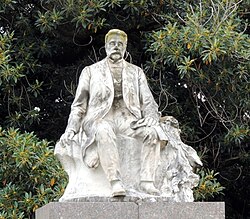
The organization quickly became a political force. During the presidency of Bartolomé Mitre, the SRA exerted significant influence over government policy. A defining moment occurred between 1878 and 1885 during the Conquest of the Desert, a military campaign to displace Indigenous communities from the Pampas and Patagonia. The SRA financed this expansion through land bonds at 4 pesos per hectare. This campaign drastically expanded the agricultural frontier, benefiting prominent SRA members like the Anchorena, Álzaga, and Martínez de Hoz families; José Martínez de Hoz alone acquired 2.5 million hectares.
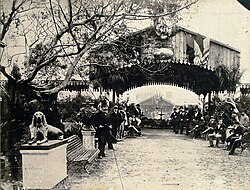
To showcase the progress of the sector, the SRA organized its first Exposición Rural on April 11, 1875. This event grew into the country's premier agricultural fair, blending business with social prestige.
Political Interventions in the 20th Century
Throughout the 1900s, the SRA frequently clashed with governments that sought to implement labor reforms or redistribute power. In 1930, tensions peaked during the Exposición Rural when crowds heckled Agriculture Minister Juan B. Fleitas, an event that preceded the military coup led by General José Félix Uriburu.
The mid-century was marked by intense conflict with the administration of Juan Perón. The SRA opposed the 1944 Estatuto del Peón Rural (Rural Peon Statute), which granted labor rights to farm workers, arguing that such rights would cause social disorder. In 1945, the SRA organized a lockout to block the aguinaldo (year-end bonus), leading to a general strike and an eventual compromise.
The organization's influence returned during the military dictatorship known as the National Reorganization Process. Following a strike and lockout in 1975-1976, SRA members took high-ranking roles: José Alfredo Martínez de Hoz became Minister of Economy and Jorge Zorreguieta became Secretary of Agriculture. Under this regime, the Estatuto del Peón Rural was repealed in 1980.
Even with the return of democracy in 1983, the SRA remained antagonistic toward certain leaders. In 1988, President Raúl Alfonsín was booed during the 101st Exposición Rural, leading him to describe the hostility as "fascist" and depart without inaugurating the event.
The SRA in the 21st Century
In the modern era, the SRA has continued to act as a leading opposition force against interventionist policies. During the Kirchner administrations (2003–2015), the association led the Mesa de Enlace, a coalition of agrarian groups. In 2008, this group launched a 129-day strike against proposed export taxes (Resolution 125). The resulting roadblocks and port disruptions eventually led to the repeal of the resolution after a tiebreaking vote in the Senate by Vice President Julio Cobos.
La Rural: The Heart of Argentine Agribusiness
The SRA's primary facility, located in the Palermo district of Buenos Aires near Plaza Italia, is known as La Rural (formally the Predio Ferial de Buenos Aires). This 12-hectare complex serves as the permanent home for the Exposición de Ganadería, Agricultura e Industria Internacional.
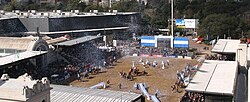
While primarily used for agricultural and livestock exhibitions, La Rural is a versatile venue that hosts various cultural and commercial events, including the prestigious Buenos Aires International Book Fair.
| Attribute | Details |
|---|---|
| Founded | July 10, 1866 |
| Headquarters | Calle Florida 460, Buenos Aires |
| Primary Region | Argentine Pampas |
| Key Facility | La Rural (Palermo, Buenos Aires) |
| Current President | Nicolás Pino |
| Official Website | www.sra.ar |
Frequently Asked Questions
What is the main purpose of the Sociedad Rural Argentina?
The SRA is an employers' association that represents large agricultural producers and landowners in Argentina, focusing on the promotion of crop farming, livestock production, and the protection of agrarian interests.
What is the "Exposición Rural"?
It is an annual international trade exhibition organized by the SRA since 1875. It focuses on livestock breeding, agricultural production, and related industrial sectors, serving as one of Argentina's most important industry events.
How did the SRA influence the Conquest of the Desert?
The SRA helped finance the military campaign through land bonds (4 pesos per hectare), which allowed the government to expand the agricultural frontier. Many SRA members subsequently acquired millions of hectares of productive land.
What is the significance of "La Rural"?
La Rural is the SRA's 12-hectare fairground complex in Buenos Aires. It is used for the annual agricultural exhibition and various other major events, such as the Buenos Aires International Book Fair.
Why did the SRA clash with the Kirchner administration in 2008?
The SRA led a 129-day strike and organized roadblocks to protest Resolution 125, which proposed an increase in export taxes on agricultural products.