Corrientes Province: The Heart of Argentina's Northeast
Located in the Mesopotamia region of northeast Argentina, Corrientes (known in Guarani as Taragui) is a land of striking natural beauty and deep historical roots. Bordered by the Paraná and Uruguay rivers, this province serves as a vital cultural bridge between Argentina, Paraguay, Brazil, and Uruguay. Often referred to as "The Bride of Paraná" or the "Heart of the Northeast," Corrientes is distinguished by its unique bilingual heritage and its role as one of the fourteen founding provinces of the Argentine Confederation.
From the vast expanse of the Iberá Wetlands to the towering infrastructure of the Yacyretá Dam, Corrientes blends colonial history with modern economic ambition. Its identity is a rich tapestry woven from European and indigenous influences, creating a province that is as ecologically diverse as it is culturally vibrant.
Key Facts
- Official Languages: Spanish and Guarani (co-official since 2004).
- Geography: Ranked 16th in size in Argentina, covering 88,199 km².
- Population: 1,197,553 inhabitants (2022 census).
- Economy: Strong focus on tobacco, citrus, rice, and hydroelectric power.
- Human Development Index (HDI): 0.839 (Very High).
- Key Landmark: The Iberá Wetlands, a premier destination for ecotourism.
History and Heritage
Long before Spanish colonization, the region was inhabited by the Kaingang, Charrua, and Guaraní peoples. The city of Corrientes was founded on April 3, 1588, by Juan Torres de Vera y Aragón, serving as a strategic midpoint between Asunción and Buenos Aires. The north of the province later became a center for Jesuit missions dedicated to spreading the faith.
During the struggle for independence from Spain, Corrientes was part of Artigas' Liga de los Pueblos Libres (1814–1820). Later, in 1865, the province became a focal point of the War of the Triple Alliance following attacks by Paraguayan forces.
A Philatelic Legacy
Corrientes holds a legendary status in philately (the study and collection of postage stamps). Between 1856 and 1880, the province issued its own stamps, which are now highly prized by collectors. These "primitives" were crudely engraved by hand and modeled after French stamps depicting Ceres, the Roman goddess of agriculture. Because they were handmade, each die is noticeably different.

Political Evolution
For much of the 19th and 20th centuries, the Romero Feris family, prominent landowners, dominated provincial politics and the tobacco industry. This era was marked by a bloated government payroll and the suppression of land reform. This dominance shifted in the 1990s and early 2000s, leading to a more dynamic political landscape and the rise of "K" Radicals—UCR lawmakers allied with President Néstor Kirchner.
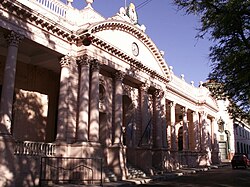
Geography and Climate
The province is defined by its water. The Uruguay River to the east and the Paraná River to the northwest contour its borders. While much of the province is a plain, the west descends toward the Paraná, where low shores often lead to flooding.
A defining geographical feature is the Iberá Wetlands, a vast depression formed by volcanic flow and later covered by fluvial and eolic sediments. This area of lagoons and swamps is now a cornerstone of the province's ecotourism.
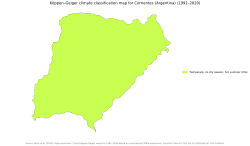
The climate is predominantly subtropical with no distinct dry season. Average annual temperatures hover around 20°C (68°F), though summers can soar to 40°C (104°F). Precipitation is abundant, ranging from 1,100 to 1,900 millimeters annually, with autumn being the rainiest season.
Culture and Society
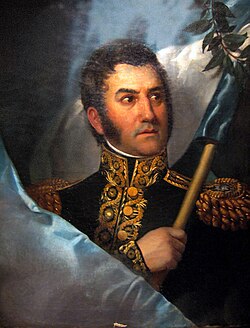
The culture of Corrientes is a fusion of Spanish, Volga German, and Guarani roots. This synthesis is most evident in chamamé, a traditional music genre that is central to the region's identity. The province is also the birthplace of General Don José de San Martín, the independence hero born in Yapeyú in 1778.
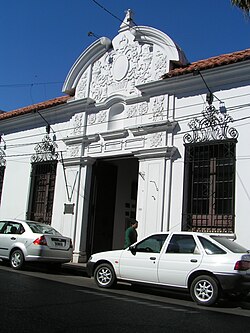
In a landmark move on October 22, 2004, Corrientes became the first Argentine province to declare Guarani as an official language alongside Spanish, recognizing the bilingual nature of its population.
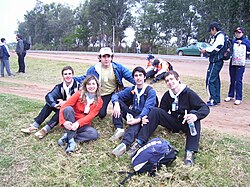
Tourism and Traditions
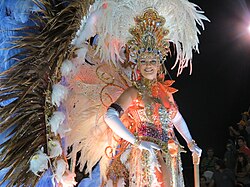
Visitors are drawn to the Mburucuyá National Park and the Iberá National Park (established in 2018) for birdwatching and nature treks. Additionally, the province is famous for golden dorado fishing and its vibrant carnival celebrations.
Economy and Infrastructure
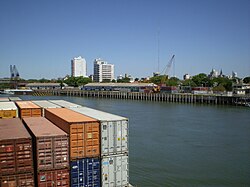
While historically underdeveloped compared to the national average, Corrientes has a diverse productive base. Agriculture contributes 15% of the output, with a focus on citrus, tobacco, rice, tea, cotton, and yerba mate. Tobacco processing is particularly significant, accounting for 45% of the province's gross income.
The livestock sector is dominated by the Brangus breed, chosen for its ability to withstand the northern heat. Over 4 million head of cattle graze across 70,000 km of land.
Energy Production
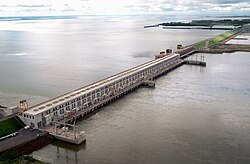
The Yacyretá Dam, located near Ituzaingó, is one of the largest hydroelectric dams in the world. A joint venture between Argentina and Paraguay, it has an installed capacity of 4,050 MW, providing critical energy to both nations.
Provincial Overview
| Category | Detail |
|---|---|
| Total Area | 88,199 km² |
| Population (2022) | 1,197,553 |
| GDP (Total) | US$ 13.0 billion |
| GDP Per Capita | US$ 11,500 |
| Administrative Divisions | 25 Departments / 67 Municipalities |
| Official Languages | Spanish, Guarani |
Frequently Asked Questions
What makes the Corrientes postage stamps special?
Issued between 1856 and 1880, these stamps are considered "classics" because they were crudely engraved by hand, making each stamp unique. They were early "primitive" issues that are now highly valued by philatelists.
What is the significance of the Guarani language in Corrientes?
Guarani is a co-official language of the province. Corrientes was the first province in Argentina to officialize a language other than Spanish, reflecting the deep indigenous roots of the local population.
What is the Yacyretá Dam?
The Yacyretá Dam is one of the world's largest hydroelectric facilities, located on the Paraná River. It is a binational project between Argentina and Paraguay that provides massive amounts of electric power.
What are the Iberá Wetlands?
The Iberá Wetlands are a vast system of lagoons and swamps formed by volcanic flow and sediment. They are a major hub for ecotourism, birdwatching, and biodiversity conservation.
Who is the most famous person from Corrientes?
General Don José de San Martín, the primary liberator of Argentina, Chile, and Peru, was born in Yapeyú, Corrientes, in 1778.