Socialist Federal Republic of Yugoslavia (1945–1992)
The Socialist Federal Republic of Yugoslavia (SFRY) was a federal communist state in Southeast Europe that existed from 1945 until its disintegration in 1992. Emerging from the turmoil of World War II, it became one of the most unique political entities of the Cold War era, balancing a socialist internal structure with a daringly independent foreign policy.
At its peak, Yugoslavia was a multinational community comprising six socialist republics and two autonomous provinces, held together by the charismatic leadership of Marshal Josip Broz Tito and a shared vision of "Brotherhood and Unity."
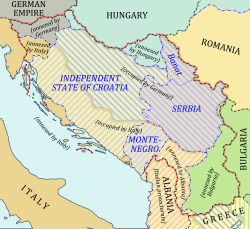
Key Facts
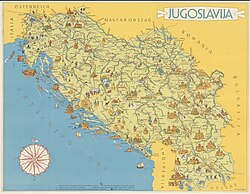
- Duration: 1945 to 1992.
- Primary Leader: Josip Broz Tito (1945–1980).
- Political System: Federal communist state.
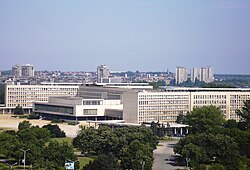
- Capital: Belgrade.
- Key Diplomatic Achievement: Co-founding the Non-Aligned Movement in 1961.
- Total Area: 255,804 km².
- Peak Population: Approximately 23.2 million (1991 estimate).
The Era of Josip Broz Tito
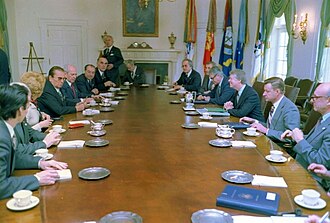
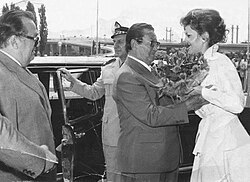
The foundation of the SFRY was inextricably linked to Josip Broz Tito, who led the country from 1945 until his death in 1980. Under his guidance, Yugoslavia navigated the treacherous waters of the early Cold War.
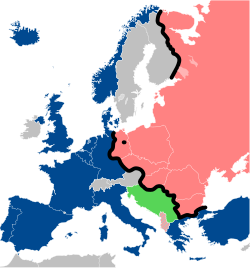
A defining moment occurred around 1948 with the Tito–Stalin split, a geopolitical rupture where Yugoslavia broke away from the influence of the Soviet Union. This independence allowed Tito to forge a "third way" between the Western bloc (NATO) and the Eastern bloc (Warsaw Pact), eventually leading to the creation of the Non-Aligned Movement in 1961.
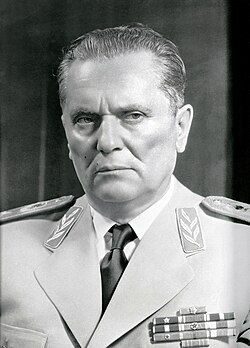
Governance and Federal Structure
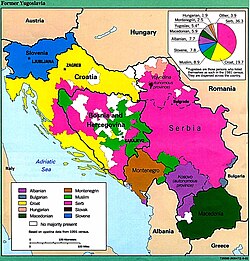
Yugoslavia was organized as a federation to manage its diverse ethnic and linguistic landscape. The state recognized several national languages, including Serbo-Croatian, Slovene, and Macedonian, and utilized both Cyrillic and Latin scripts.
The Federal Units
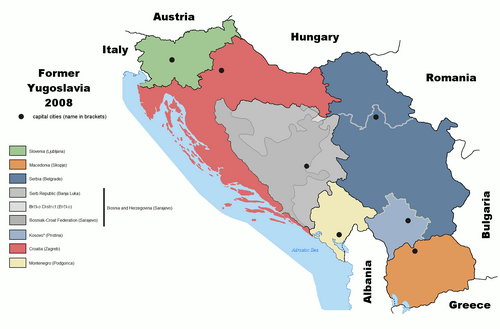
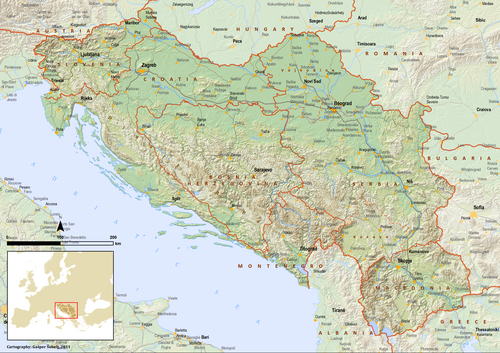
The country was divided into several Socialist Republics (SR) and Socialist Autonomous Provinces (SAP):
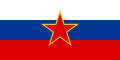
- SR Slovenia (Capital: Ljubljana)
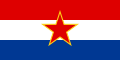
- SR Croatia (Capital: Zagreb)
- SR Bosnia and Herzegovina (Capital: Sarajevo)
- SR Serbia (Capital: Belgrade), which included the SAP Vojvodina (Novi Sad) and SAP Kosovo (Priština).
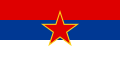
- SR Montenegro (Capital: Titograd, now Podgorica)
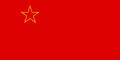
- SR Macedonia (Capital: Skopje)
Economy, Society, and Culture
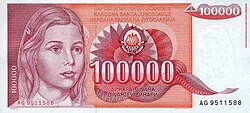
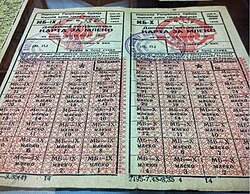
Yugoslavia's economy was characterized by a unique form of socialist self-management. While it achieved a very high Human Development Index (0.913 in 1990), the later years were marred by severe economic instability. By 1989, the country faced an inflation rate of 2,700% and a significant external debt of $17 billion.
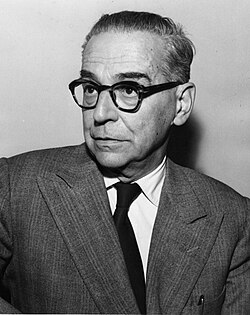
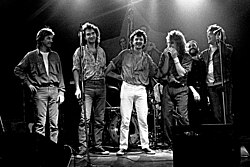
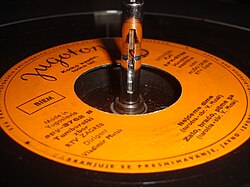
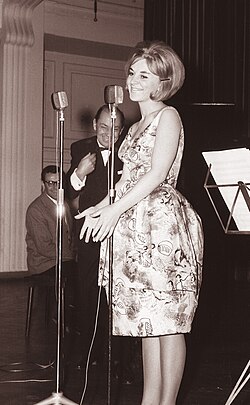
Despite economic woes, Yugoslavia fostered a vibrant cultural scene. It was home to world-renowned intellectuals, such as Ivo Andrić, who won the Nobel Prize for Literature in 1961. The music scene was equally diverse, ranging from the massive record label Jugoton to the immense popularity of rock bands like Bijelo Dugme.
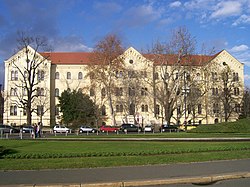
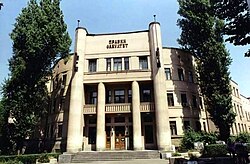
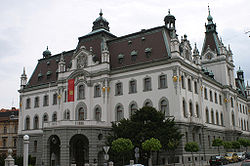
The state also invested heavily in education, maintaining historic institutions like the University of Zagreb, University of Belgrade, and University of Ljubljana, while establishing numerous new universities across the republics between 1949 and 1979.
The Path to Dissolution
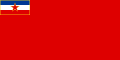
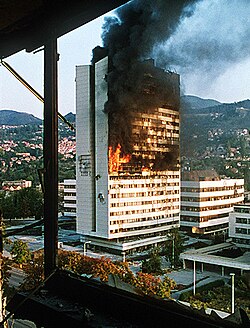
The death of Tito in 1980 left a power vacuum that the federal system struggled to fill. Ethnic tensions, which had been suppressed under Tito's authoritarian but unifying rule, began to resurface. The economic crisis of the 1980s further fueled nationalist sentiments.
The collapse accelerated in June 1991 when Slovenia and Croatia declared their independence. This triggered the Yugoslav Wars, a series of violent conflicts that led to the total disintegration of the state. By April 27, 1992, the SFRY ceased to exist, replaced by a smaller Federal Republic of Yugoslavia (consisting of Serbia and Montenegro) and several newly independent nations.
Summary of the SFRY and Successor States

| Entity | Independence/Formation Year | 1991 Population (Approx.) | 2011 Population (Approx.) |
|---|---|---|---|
| Slovenia | 1991 | 1,913,000 | 2,000,000 |
| Croatia | 1991 | 4,784,000 | 4,288,000 |
| North Macedonia | 1991 | 2,034,000 | 2,077,000 |
| Bosnia and Herzegovina | 1992 | 4,377,000 | 3,688,865 |
| Serbia | 1992 (as part of FRY) | 9,778,991 | 7,310,000 |
| Montenegro | 1992 (as part of FRY) | 615,000 | 662,000 |
Frequently Asked Questions






Who was the most influential leader of Yugoslavia?
Marshal Josip Broz Tito was the dominant figure, serving as the leader of the League of Communists and Prime Minister from 1945 until 1980. He is credited with maintaining the country's unity and establishing its independent foreign policy.
What was the Non-Aligned Movement?
Founded in 1961, the Non-Aligned Movement was a forum of countries not formally aligned with or against any major power bloc (specifically the US-led NATO or the Soviet-led Warsaw Pact) during the Cold War.
Why did Yugoslavia break apart?
The dissolution was caused by a combination of factors, including the death of Tito, rising ethnic nationalism, severe economic instability (including hyperinflation), and the collapse of the communist system in Eastern Europe.
What were the official languages of the SFRY?
There were no official languages at the federal level, but the state recognized several national languages, most notably Serbo-Croatian, Slovene, and Macedonian.
What happened to the Yugoslav dinar?
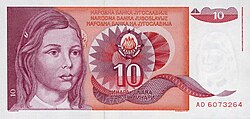
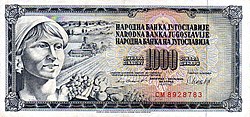
The Yugoslav dinar suffered from extreme inflation toward the end of the state's existence, exemplified by the issuance of high-denomination banknotes, such as the 100,000 dinar note in 1989, before the country's eventual collapse.