Socialism and the History of Sexual Liberation
The roots of modern socialist thought, emerging in Europe during the early 19th century, were not solely concerned with economics and class struggle. For many early thinkers, the quest for a just society was inextricably linked to the liberation of human desire and the dismantling of restrictive social norms. This intersection of utopian socialism—a philosophy focusing on the creation of ideal social systems—and sexual freedom laid the groundwork for future feminist and LGBT movements.
The Visionaries of Utopian Socialism
Leading figures such as Charles Fourier and Henri de Saint-Simon in France, and Robert Owen in Britain, viewed gender and sexuality as central to human emancipation. Charles Fourier was particularly radical; he argued that true freedom required the absence of masters and the end of the suppression of passions, which he believed was destructive to both the individual and society.
Writing before the modern concept of "homosexuality" existed, Fourier recognized that sexual needs and preferences are diverse and fluid. He defended same-sex sexuality and androgénité (the blending of masculine and feminine characteristics), suggesting that affirming one's differences could actually improve social integration, provided no one was harmed.
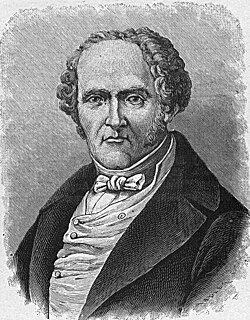
Fourier's detailed doctrine on human passions, known as Nouveau monde amoureux (New World in Love), and his broader works in Oeuvres Completes (first published in 1841), advocated for replacing monogamous marriage with a system that allowed for a "greater latitude of sexual passions." These ideas were instrumental in the early feminist movement and saw a resurgence in the 1960s, fueling modern LGBT activism.
The Shift Toward Social Science
While Fourier and Saint-Simon provided the utopian spark, later thinkers sought a more empirical approach. Émile Durkheim emphasized the need to understand these utopian ideals through the lens of the emerging social sciences. Durkheim focused on Sociology as a tool to shape philosophy, history, and psychology, eventually establishing L'Année Sociologique in 1898, France's first social science journal.
Socialism and Sexuality in Germany
In Germany, the relationship between the Left and sexual liberation was often contradictory. Early activists like Karl Heinrich Ulrichs and Magnus Hirschfeld sought support from socialist leaders. However, the response from the founders of scientific socialism was often hostile. When Karl Marx shared Ulrichs' writings on "Uranian" (homosexual/transgender) emancipation with Friedrich Engels in 1869, Engels responded with disgust, dismissing the platform as "turning smut into theory" and viewing such desires as "against nature."
Despite this, Marx and Engels did challenge the traditional family unit. They critiqued the hypocrisy of the bourgeois family and explored how family dynamics would evolve under a communist state. This stance on "free love" and the rejection of traditional family institutions often brought the socialist movement into conflict with the German government, which passed laws protecting the family institution from verbal or physical attack.
Political Pragmatism and the SPD
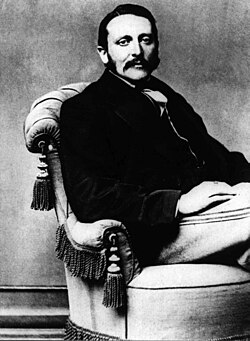
The German labor movement sometimes prioritized political unity over personal prejudice. A notable example is Jean Baptista von Schweitzer, a labor organizer arrested in 1862 on solicitation charges. Ferdinand Lassalle, a social democratic leader, defended Schweitzer, arguing that a man's sexual tastes had "absolutely nothing to do with a man's political character." Schweitzer eventually became President of the German Labor Union and the first Social Democrat elected to a European parliament.
August Bebel, a prominent figure in the Social Democratic Party of Germany (SPD), held an ambiguous position. In his 1879 work Woman under Socialism, he described same-sex love as a "crime against nature" and a vice of the upper class. Yet, Bebel also publicly campaigned for the decriminalization of homosexuality, attacking its criminalization in a 1898 Reichstag debate.
The Legacy of Magnus Hirschfeld
Magnus Hirschfeld became the most influential figure in the German LGBT movement until 1933. A socialist and supporter of feminism, he founded the Scientific-Humanitarian Committee to fight Section 175 of the German Penal Code, which outlawed male-male sex. Although his 1898 attempt to pass a reform bill in the Reichstag failed, his work established a scientific basis for understanding sexuality.
British Perspectives: From Anarchism to the Fabian Society
In Britain, the intersection of socialism and sexuality took a different form. Oscar Wilde, in The Soul of Man Under Socialism, advocated for an egalitarian society but warned against authoritarian socialism that might stifle individuality, later identifying himself as something of an anarchist.
Gender nonconformity also had a long, often persecuted history in England. Records show John Rykener being arrested in 1395 for prostituting while dressed as a woman. In 1870, Frederick Park (Fanny) and Ernest Boulton (Stella) were arrested for cross-dressing. Archaeological finds at Cataractonium in North Yorkshire suggest that gender-bending rituals, such as those of the Roman Gallus who served the goddess Cybele, date back as far as 4 BC.
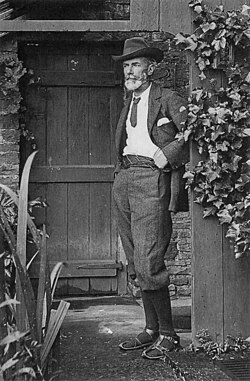
Edward Carpenter was a pivotal figure in the late 19th century, helping found the Fabian Society and the Labour Party. Carpenter viewed same-sex attraction as a natural orientation of a "third sex." His 1908 book, The Intermediate Sex, and his 1902 poetry anthology, Ioläus, became foundational texts for the 20th-century LGBT movement. In 1914, he co-founded the British Society for the Study of Sex Psychology to promote a rational, scientific approach to sexual conduct, birth control, and prostitution.
Key Facts
- Charles Fourier coined the word feminism in 1837 and advocated for the full expression of human passions.
- Friedrich Engels initially reacted with hostility toward homosexual rights, calling them "against nature."
- Jean Baptista von Schweitzer became the first Social Democrat elected to a European parliament despite being charged with homosexuality.
- Magnus Hirschfeld led the campaign against Germany's Section 175, which criminalized male-male sex.
- Edward Carpenter authored The Intermediate Sex (1908), a seminal text for the early LGBT movement.
- Émile Durkheim established the first social science journal in France, L'Année Sociologique, in 1898.
| Figure | Region | Key Contribution/Stance | Notable Work/Organization |
|---|---|---|---|
| Charles Fourier | France | Advocated for sexual liberty and coined "feminism" | Nouveau monde amoureux |
| Magnus Hirschfeld | Germany | Scientific approach to decriminalizing homosexuality | Scientific-Humanitarian Committee |
| Edward Carpenter | Britain | Theorized the "third sex" and natural orientation | The Intermediate Sex |
| August Bebel | Germany | Ambivalent views; supported legal decriminalization | Woman under Socialism |
| Oscar Wilde | Britain | Egalitarianism paired with individualist anarchism | The Soul of Man Under Socialism |
Frequently Asked Questions
Who coined the term feminism?
The term feminism was coined in 1837 by the French utopian socialist Charles Fourier.
How did Karl Marx and Friedrich Engels view homosexual rights?
While they were open to dismantling the traditional family unit to promote "free love," Engels specifically expressed disgust toward homosexual rights, describing them as "against nature" and "smut."
What was the significance of Section 175 in Germany?
Section 175 was the paragraph of the German Penal Code that outlawed male-male sexual acts; it was the primary target of Magnus Hirschfeld's Scientific-Humanitarian Committee.
What is the "third sex" theory?
Proposed by Edward Carpenter in The Intermediate Sex, this theory suggested that same-sex attraction was a natural orientation belonging to a transitional type of human, rather than a pathology or crime.
Did early socialists support the traditional family?
Many did not. Utopian socialists like Fourier and scientific socialists like Marx and Engels critiqued the bourgeois family institution, seeking to replace it with systems that allowed for greater sexual and social freedom.