Smallpox: History, Clinical Forms, and Global Eradication
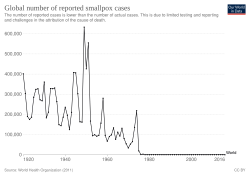
Smallpox, also known as variola or the red plague, was one of the most devastating infectious diseases in human history. Caused by the variola virus, it was characterized by high fever and a distinctive progressive skin rash. For centuries, it claimed millions of lives and left survivors with permanent scarring or blindness. However, through one of the greatest achievements in public health, smallpox became the first human infectious disease to be globally eradicated.
The disease is caused by the Orthopoxvirus variola, which exists in two primary forms: variola major, the more severe and fatal version, and variola minor, which typically resulted in milder symptoms. The virus spreads directly between people, leading to a systemic infection that progresses over several weeks.
Key Facts
- Cause: Variola major and variola minor viruses.
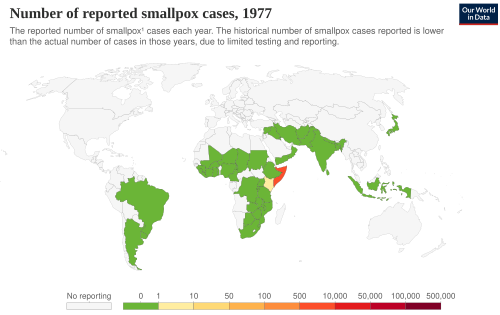
- Status: Officially eradicated; the last naturally occurring case was recorded in 1977.
- Fatality Rate: Approximately 30% overall, though it varied wildly by clinical type.
- Prevention: Prevented via the smallpox vaccine.
- Diagnosis: Identified by clinical symptoms and confirmed via Polymerase Chain Reaction (PCR) testing.
Signs, Symptoms, and Progression
The onset of smallpox typically occurs 1 to 3 weeks after exposure. The illness generally lasts about four weeks and progresses through distinct stages.
Early Stage
The initial phase is marked by non-specific flu-like symptoms, including high fever, vomiting, and the appearance of sores in the mouth.
Later Stage
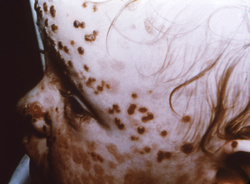
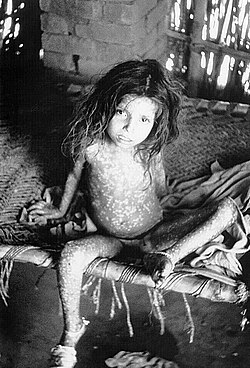
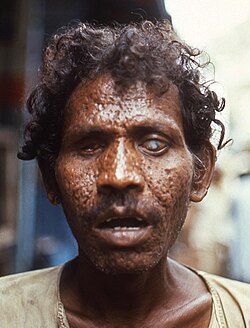
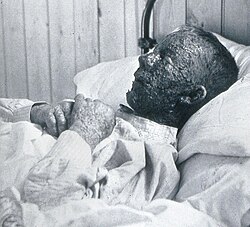
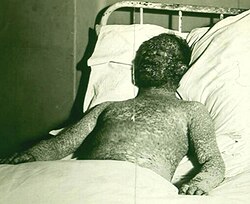
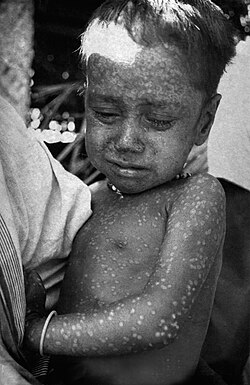
As the disease progresses, the characteristic skin lesions appear. These begin as small bumps that evolve into fluid-filled blisters. Eventually, these blisters scab over and fall off, often leaving deep, pitted scars in the skin.
Complications
Beyond the immediate risk of death, survivors often faced severe long-term complications. These included permanent skin scarring and blindness caused by corneal scarring.
Clinical Classifications and Fatality Rates
Smallpox manifested in several different clinical forms, ranging from mild to nearly always fatal. The risk of death was significantly lower for those who had been previously vaccinated.
| Disease Type | CFR (Unvaccinated) | CFR (Vaccinated) | Frequency (%) |
|---|---|---|---|
| Ordinary Discrete | 9.3% | 0.7% | 42.1% |
| Ordinary Confluent | 62% | 26.3% | 22.8% |
| Ordinary Semiconfluent | 37% | 8.4% | 23.9% |
| Modified | 0% | 2.1% | 25.3% |
| Malignant (Flat) | 96.5% | 66.7% | 6.7% |
| Early Hemorrhagic | 100% | 0.7% | 1.4% |
| Late Hemorrhagic | 96.8% | 89.8% | 1.7% |
The most severe forms were the hemorrhagic and malignant types, which almost always resulted in death, regardless of vaccination status in the case of late hemorrhagic smallpox.
Prevention and Treatment
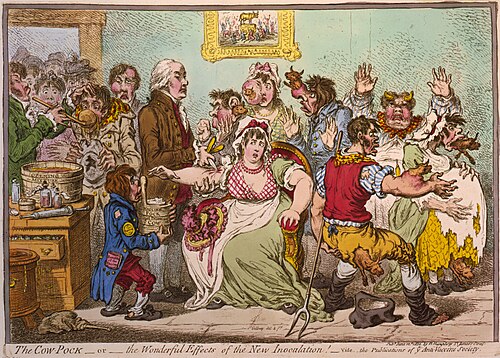
The primary defense against smallpox was the smallpox vaccine. Early efforts involved cowpox-derived vaccines, a breakthrough pioneered by Edward Jenner, though early public reaction was sometimes marked by hysteria.
Modern vaccination efforts utilized a bifurcated needle—a two-pronged needle that allowed for efficient, standardized delivery of the vaccine. This tool was central to the World Health Organization's (WHO) global eradication campaign.
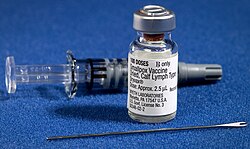

![Bifurcated needle used in the WHO's smallpox eradication program[141]](/images/54/a9/54a916f32f16962c53de9890c592fd657f611f70e3e8cea0d11467b977f1ac7b.jpg)
In terms of treatment, care was primarily supportive. However, the medication Brincidofovir has since been approved for the treatment of smallpox.
The Path to Global Eradication

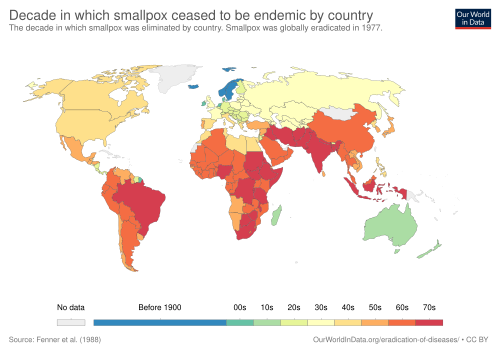
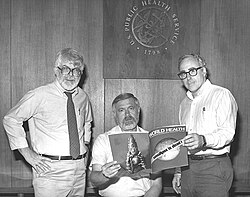
The eradication of smallpox is considered one of the most successful public health initiatives in history. The WHO led a massive global effort involving vaccination and surveillance. In many regions, this included the Smallpox Eradication and Measles Control Program.
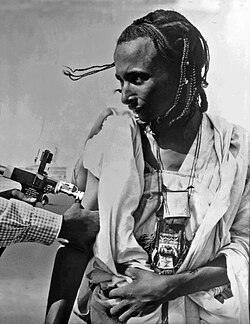
The final naturally occurring case of variola major was recorded in 1975 in Bangladesh, involving a three-year-old named Rahima Banu. By 1980, the WHO officially declared that smallpox had been globally eradicated.
Cultural and Historical Impact
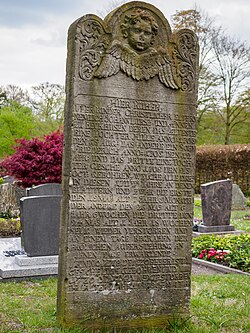
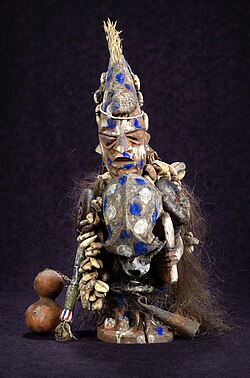
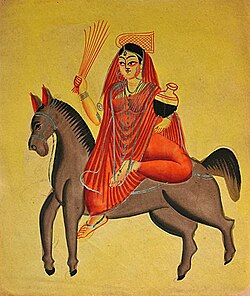
Smallpox left a deep mark on human culture and history. In various societies, the disease was associated with deities; for example, the Yoruba people worshipped Sopona, and in Hindu tradition, the goddess Shitala was worshipped to prevent or cure the disease.
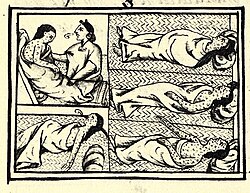
The disease also played a catastrophic role in the depopulation of indigenous peoples in the Americas during the conquest era, as they had no prior immunity to the Old World pathogen.
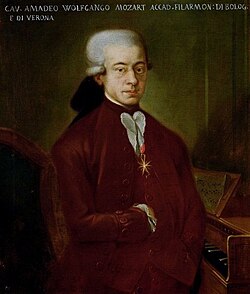
Notable historical figures were also affected. The composer Wolfgang Amadeus Mozart survived an outbreak in Austria in 1767, while other figures, such as Holy Roman Empress Maria Josepha, succumbed to the virus.
Frequently Asked Questions
What is the difference between variola major and variola minor?
Variola major is the more severe form of the virus with a higher fatality rate (approximately 30%), while variola minor typically caused a milder illness with a much lower risk of death.
How was smallpox finally eradicated?
Smallpox was eradicated through a coordinated global effort by the WHO, utilizing mass vaccination and the use of the bifurcated needle to ensure efficient delivery of the vaccine in all affected regions.
Can smallpox be confused with other diseases?
Yes, it is often listed in differential diagnoses alongside chickenpox, mpox, impetigo, and molluscum contagiosum due to the presence of skin lesions.
What are the long-term effects for survivors?
Survivors often suffered from permanent, deep pitting of the skin (scarring) and, in some cases, permanent blindness due to corneal scarring.
Is there a cure for smallpox?
While there is no cure to eliminate the virus instantly once infected, supportive care is provided, and the drug Brincidofovir has been approved for treatment.